

AI Architect & Builder - Inference, LLMs, SLMs GSoC Org Admin - Jenkins | Docker Captain | CNCF Ambassador
New Delhi
Joined December 2018
- Tweets7.5K
- Following1.3K
- Followers8.4K
- Likes38.8K






Pinned Tweet
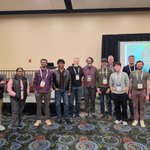
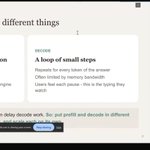
What an amazing day! Presented a poster at @PyTorch Conference: how we optimised the RLM paper with pre-fix caching & batched Sub calls with @vllm_project
And a full house for our Pytorch Conference talk on running LLMs using Executorch on Android!


I took part in a hackathon for the first time in a long while, and our team won 🥈 2nd place overall at the Personal Agents Hackathon by @tokensandai in San Francisco!
We built Pantry: a grocery agent for shared homes. Your own AI agent joins the household over MCP, it checks facts, splits the bill to the cent, and only pays when everyone approves.
Built with @cognee_ , @superlinked , @SingleStoreDB, and @nebiustf Token Factory.


The problem: in a shared flat nobody owns the shopping. Someone buys the wrong thing, someone forgets an allergy, and one person pays and spends the week chasing everyone else.
What Pantry does:
→ Everyone adds what they need in plain words, whenever they think of it
→ Your own AI agent can join: my roommate used his own Claude, connected to our household over MCP, to
add his items and save "detergent must be fragrance-free"
→ Pantry keeps a shared, private context layer: who needs what, each person's rules (the reason stays
private), and verified product facts
The agent does the whole run by itself. The one thing it won't do alone is spend your money.

4
106
Shivay Lamba retweeted

Exa now offers $15,000 in free credits to startups!
Join our Startups program here: exa.ai/startups

Shivay Lamba retweeted
At @argoproj ArgoCon, we showed a canary deploy that fixes itself.
No human ran anything. Argo Rollouts aborted a bad canary, an AI SRE agent figured out why from live cluster state, and it pushed the fix in 112 seconds. Then the same canary gate shipped it 👀
✅ The problem the talk was about
Your SLO alert won't catch a bad canary.
→ The canary was failing 31.25% of requests
→ The service-wide error rate was 0.0196%
→ At 1% of traffic, the canary never moves the service-wide number, so a 1% SLO alert never fires
The canary's own gate catches it, scoped to the canary's pod hash. So I gave the agent that same scoped signal.
✅ The setup
→ Argo CD and Argo Rollouts across two clusters, staging and prod
→ A failed canary sends a notification that wakes the agent
→ The agent gets three MCP servers: Grafana (Prometheus + Loki, read-only), a release ledger and GitHub
→ Its job is to fix the code, not just explain the failure
✅ What happened live
→ Prometheus by pod hash: 31.25% errors on the canary only
→ Loki: only sku-7, sku-8 and sku-9 were failing ("has no 'available' field")
→ It read the PR's commit and the inventory service: for multi-warehouse SKUs, v2 returns stock per warehouse, but the new client only read the top-level field
→ It pushed a fix that sums warehouse stock, plus a test, and commented the evidence on the PR
→ CI rebuilt, and the same gate passed it: 1% → 25% → 50% → 100%
✅ The model: Kimi K3.1 Pro on @nebiustf Token Factory
The reasoning in the loop is Kimi K3.1 Pro, served through Token Factory's OpenAI-compatible API.
→ 28 tool calls in one investigation: 13 Grafana (9 Prometheus, 3 Loki), 2 ledger, 13 GitHub
→ It chose its own queries: by pod hash, by environment and against the release ledger
→ 112s from abort to pushed fix, 128s to the full written report
→ Switching the agent to it meant pointing the agent at the Token Factory endpoint
✅ The takeaway
Give your agent the same scoped signal your deploy gate uses, and let it close the loop. Keep the merge button human.
Full run in the video 👇
Try Kimi K3.1 Pro: github.com/nebius/token-fact…
Shivay Lamba retweeted

You don't need a frontier model for every task in your pipeline.
On focused, structured work, thinkingmachines/Inkling-2-Small on @nebiustf cost 3.7x to 4.9x less per task than Claude Sonnet 5.5 (even after burning 67% of its output on hidden reasoning tokens) 👀
I ran Inkling-2-Small through 6 real capabilities: vision, document processing, 3D generation, scoped coding, web research, and knowledge work.
✅ The run
→ 5 of 6 passed fully, vision matched 5/6 fields
→ All six runs cost $0.036 total
→ Pricing: $0.30/1M input, $1.00/1M output
Then I ran Claude Sonnet 5.5 on two scoped tasks where outputs are objectively verifiable, just to measure the cost gap on smaller, well-defined work.
✅ Scoped Python bug fix (6/6 tests both)
→ Inkling-2-Small: $0.54/1K calls, 2.04s
→ Sonnet 5.5: $1.99/1K calls, 2.91s
→ 3.7x cheaper
✅ 3-way contract audit (5/5 checks both)
→ Inkling-2-Small: $2.37/1K calls, 8.30s
→ Sonnet 5.5: $11.61/1K calls, 7.36s
→ 4.9x cheaper (Sonnet was 0.94s faster)
✅ Fairness note
I priced Sonnet 5.5 on its raw API tokens ($2/1M input, $10/1M output), not Claude Code's ~27K-token cached harness bill. Including harness overhead would inflate the gap unfairly.
✅ One thing to know before you ship
→ 59.6% to 84.0% of Inkling's completion tokens were hidden reasoning
→ My Three.js GPU cluster scene got cut off at the default 8K and 16K max_tokens
→ It only finished at 32K (18.3K reasoning), then passed 5/5 checks
Budget for reasoning when you set max_tokens.
✅ Where it actually fits
Inkling-2-Small and Claude Sonnet 5.5 are in different tiers, so this isn't a head-to-head replacement.
→ Heavy multi-file coding and complex reasoning: keep Claude
→ High-volume vision, document audits, structured extraction, small scoped tasks: route to Inkling-2-Small and save cost.
Full breakdown in the video👇
Shivay Lamba retweeted

Many people have asked what @inferact is building and what it means for @vllm_project.
This is the answer: Inferact will build an autonomous inference system around vLLM, one that improves the engine and improves itself.

Shivay Lamba retweeted
Introducing Gemini 4 Neon! Pushing the frontier across domains and punching above its model class in a meaningful way. To me, Neon feels like the right balance of intelligence, speed, and usability. Available now across @GoogleAIStudio, the API, and more!


Shivay Lamba retweeted

2,000+ people. Two days. The first SGLang Summit.
Together, we announced SGLang v1.0, released Miles v0.2, and launched the SGLang Consortium with nine founding members: @nvidia, @AMD, @intel, @Google, @Meta, @thinkymachines, @Cloudflare, @modal, and @radixark.
SGLang is now used by 332 organizations. At Meta, it powers production inference for products serving billions of users. Teams from Modal, Cloudflare, LinkedIn, and others shared their production lessons.
Across 90+ technical talks and six hands-on workshops, the community explored what comes next for inference, reinforcement learning, and AI agents.
To everyone building, deploying, and contributing: thank you for making this possible.
Explore the announcements, engineering lessons, and moments from SGLang Summit 2026 in the link below.

Shivay Lamba retweeted

Crazy...this is Kubernetes moment for AI Agents.
Run millions of agents on Kubernetes. Idle agents go to sleep and wake up in under 500ms. 10x more agents on the same hardware.
100% Opensource.
github.com/agent-substrate/s…

Shivay Lamba retweeted
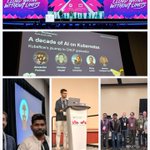
What an enriching @KubeCon_ NA 2026!
From the talks: @kubeflow graduation panel @mesheryio ContribFest to speaking at ArgoCon and BackstageCon on AI-powered self-healing, observability, and agentic AI security, to project booths
A packed week in SLC. Here's what I was up to 👇

Shivay Lamba retweeted

Over the past week, I’ve been overwhelmed by the love and support of friends, industry colleagues, and people I've never met. Thank you to everyone who has shown kindness to my family and me. It means the world to me.
I came to the United States 53 years ago, and becoming an American citizen is one of the greatest gifts and proudest moments of my life. NVIDIA has been my life’s work. Building it into the company it is today alongside my colleagues has been a privilege and an honor. Nowhere but in America could a company like NVIDIA be possible. I love our country, and I love NVIDIA.
I did not live up to the standards expected of everyone at NVIDIA, and I have made serious mistakes in my personal life. I created problems for the Board that I deeply regret. I own my mistakes completely, and I am committed to cooperating with the Board’s independent investigation.
Since my departure, I’ve seen an outpouring of calls from NVIDIA’s employees, investors, business partners, and customers for me to return as CEO. Many continue to reach out to me directly as the company navigates complex technology, market, competitive, and geopolitical dynamics. NVIDIA is a once-in-a-generation company. If the Board of Directors decides that my return is in the best interest of our shareholders, our employees, the company, and America, I would be honored to answer these calls and return as CEO.
Thank you again to everyone who has shared their good wishes. I am profoundly humbled by your support. To my family: I love you, and I will spend the rest of my life being worthy of yours.
Jensen
Shivay Lamba retweeted

GPT-6.2 Astra—a frontier model built for your hardest projects. It sets new highs on evals across professional work and scientific research at less than a third of the cost per task of GPT‑6 Astra.
You’ll see the difference in things like slideshows, websites, and 3D designs.


Shivay Lamba retweeted
Some of you have been asking very politely. Some of you have just been asking.
GPT-6.2 Astra and Sol are now available.
Super efficient and built to perform where it counts—the real world.
openai.com/index/introducing…

Shivay Lamba retweeted
We’re expanding free access to our frontier models for up to 200,000 scientists worldwide, with training and support.
Applications open Nov. 23. By default, we don’t use data shared through the program to train our models.
openai.com/index/expanding-c…


Shivay Lamba retweeted

Today, we release d1.2 and d1.2-ultra, the state-of-the-art omnimodal decision models. d1.2 and d1.2-ultra both can process text, images, and audio with new output capabilities.
> #1 on the @ArtificialAnlys Decision Index (75)
> Read a value from the input (text, number or date)
> Find every passage of a kind in a text (spans)
> Locate things in a picture (box for one, boxes for every instance)
> Estimate a number (number with a range)
> Pick every option that applies (choice)
1/ 🧵
