

Nutrition scientist & physio. Host of The Proof (50M+ listens). Author, The Proof is in the Plants. The evidence on living longer – minus the dogma.
Australia
Joined October 2019
- Tweets20K
- Following1.5K
- Followers38K
- Likes9.3K






Pinned Tweet
I found plaque in my coronary arteries at 38, after a decade of eating well. Here's what I've done since.

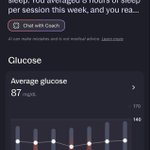
My average glucose: 87 mg/dL.
What I eat: high protein, mostly unsaturated fats, and plenty of carbs from whole foods.
The context is metabolic health. When fat builds up where it shouldn't (liver, pancreas, muscle) and insulin sensitivity drops, carb tolerance drops with it.
That's why I see carb tolerance as one of the best real-world signals of metabolic health.
Stay lean in the right places and subsequently insulin sensitive, and most people can handle high-fibre sources of carbs.

8
35
2,675

Simon Hill MSc, BSc retweeted

I rarely comment on posts like this, but this one needs a correction.
The Ennezat et al. meta-analysis (J Cardiovasc Pharmacol 2023) of 60 trials and ~324,000 patients does not show that “nobody lived longer.” It shows that active or more intensive lipid-lowering therapy reduced all-cause mortality (RR 0.92). What it did not find was an additional mortality benefit from more intensive LDL reduction beyond standard therapy.
More importantly, lack of a large mortality benefit in modern trials is not the right test of whether lipid-lowering (or other interventions) works.
Today, case fatality for acute myocardial infarction is under 4% thanks to primary PCI and modern acute care. The vast majority of patients survive an acute event. We are also very good at preventing recurrent events with secondary prevention. When acute events are highly treatable and further events are largely preventable, it becomes statistically very difficult to show large differences in total mortality.
In a recent study from our group of nearly 19,000 first-time STEMI patients treated with primary PCI, those who survived the first 90 days and received high rates of guideline-directed preventive therapy (including statins) had a 10-year mortality only 2 percentage points higher than an age- and sex-matched general population (HR 1.04).
jacc.org/doi/10.1016/j.jacc.…
Patients who were not well treated had higher mortality. Unless one believes that a STEMI does not identify someone at high long-term risk, this is hard to interpret as anything other than evidence that modern secondary prevention (including LDL lowering) largely eliminates the excess mortality that would otherwise be expected.
Not everyone needs lipid-lowering therapy. Not at all. The same applies to blood pressure–lowering treatment. One could even argue that many people with type 2 diabetes or who smoke will never develop cardiovascular disease, even without intervention. But that does not mean these risk factors should be ignored. This is precisely why absolute risk matters: the absolute benefit of treatment is small in people at very low risk. However, claiming that substantial LDL-C reductions do not reduce mortality, based on a selective interpretation of a single meta-analysis, is simply not supported by the totality of evidence.


I think this chart should be framed and hung in every cardiologist's office in the world.
60 trials. 323,950 patients. Every cholesterol-lowering drug ever made. Statins. PCSK9 inhibitors. Ezetimibe.
They reduced LDL by up to 80%.
Nobody lived longer.
In some trials, more people died.
(Ennezat et al., J Cardiovasc Pharmacol 2023) 🧵

Simon Hill MSc, BSc retweeted
Again - a correction is needed. This is a classic example of why study design and timing matter.
To understand risk, you need prospective data.
In our Danish general population studies involving >100,000 individuals without previous cardiovascular disease, fewer than 20% of those who subsequently developed MI had LDL-C <130 mg/dL in the years before the event. Not 75%!
So why the discrepancy? The cited study measured LDL-C during hospitalization, NOT in the years preceding a heart attack. In a previous study of ~2,300 first time AMI patients in Denmark, we observed that LDL-C could fall by up to 50% in the days following the event.
Why? The acute inflammatory response can upregulate LDL receptors, which remove LDL particles from the bloodstream. Similar reductions occur with infections, surgery, stroke, and other inflammatory conditions.
And LDL-C of 130 mg/dL still corresponds to several quintillion circulating apoB-containing particles. Yes, several billion billion particles. Thus, LDL-C <130mg/dL is hardly an absence of atherogenic lipoproteins.
Consider diabetes: only ~10% of those developing MI in our population had diabetes beforehand. Does that mean diabetes is unimportant because 90% of heart attacks occur in people without it? Obviously not.
Not everyone with elevated LDL-C, diabetes, or a history of smoking will develop cardiovascular disease. Atherosclerosis is highly heterogeneous, and absolute risk matters.
But using LDL-C measured during acute illness to dismiss its causal role in atherosclerosis is a fundamental epidemiological mistake.
I have been told there is growing demand for my cardiology office art collection.
Here is piece number three.
136,905 patients hospitalized with heart disease. The American Heart Journal published their LDL cholesterol levels at admission.
75% had LDL below 130.
Their doctors called their cholesterol normal. They had heart attacks anyway.
The peak of the distribution sits at LDL 90. That is the number most cardiologists look at and say you are protected. You are healthy. Go home.
They went to the hospital instead.
Nobody checked their fasting insulin. Nobody measured hs-CRP. Nobody looked at the inflammation inside the arterial wall. They measured one number. It was normal. And they missed the disease building underneath.
This is the chart that should sit between the board certifications. Right between the American Board of Cardiovascular Disease and the American College of Cardiology. Right where the patient can see it while their doctor reaches for the statin pad.
136,905 people trusted the number. The number lied.
The Neo Root Private Collection is growing. Limited edition. Signed and framed. One for every waiting room in America.
Accepting pre-orders.
The truth heals
Sachdeva et al. American Heart Journal, Vol 157, 2009.

What Happens If You Ignore Fatty Liver? A Liver Doctor Explains | Hirsh Trivedi
youtu.be/MiNh2sbMhoc
5
1,323
Weekend listening. The liver is arguably the centre of metabolic health.
Liver Doctor: Can Fatty Liver Be Reversed? What Actually Works | Hirsh T... youtu.be/VHCQ6PITG6k?si=1XT_… via @YouTube
2
8
1,595
You can have a normal waistline and still be storing harmful amounts of fat in your liver.
In this episode, transplant hepatologist Dr Hirsh Trivedi explains how fatty liver progresses to scarring, why it can be reversed, and which tests, meal timing, sleep and exercise habits protect your metabolic health.
For the full show notes head to: theproof.com/the-liver-probl…
5
23
2,076


I just published an article on my experience wearing a CGM and the evidence looking at CGM's in adults without diabetes.
I hope you find it useful.
substack.com/home/post/p-225…

Liver Doctor: Can Fatty Liver Be Reversed? What Actually Works | Hirsh Trivedi
youtu.be/VHCQ6PITG6k
The body is a wonderful machine that responds and adapts to stress by growing stronger. If you’re not challenging yourself physically most days … you’re moving faster towards frailty than you otherwise would be.
Thanks for subscribing🫶🏻
Lot of great episodes in the pipeline including one of the absolute giant scientists in metabolic health (who’s only been on 1 maybe 2 podcasts in their life).


I've been sceptical of glucose monitors for people without diabetes. So I wore one.
What I found, plus a new finding that makes a fair case for some people to wear one, is in my next Substack essay.
What do you want to know about CGMs?
*I have no affiliation with any CGM company

6
14
1,995
The most detailed response to my questions
Thanks @MaBMortensen
We’ll be chatting soon so if you have questions you want to hear us cover pls drop them below ⤵️

It’s complex, and these numbers alone cannot give a definitive answer about who is at higher risk. The answer will vary between individuals.
Some densely calcified plaques have very low rupture risk, but calcium is not automatically synonymous with stability. Calcification often develops in and around the necrotic core, and its pattern, location and density matter. Conversely, noncalcified plaque does not necessarily contain a large necrotic core.
CAC also reflects disease stage. In our JAMA Cardiology study of symptomatic patients with obstructive CAD, 58% of those aged <40 had CAC=0, compared with just 5% of those aged ≥70. The same degree of stenosis can therefore occur at very different stages of atherosclerosis.
doi.org/10.1001/jamacardio.2…
Further, in a previous JACC paper we also showed that obstructive CAD does not invariably imply high near-term event risk: patients with CAC=0 had low absolute event rates even when significant stenoses were present.
doi.org/10.1016/j.jacc.2020.…
At Aarhus, we have also investigated the cellular mechanisms underlying plaque development and calcification. For example, experimental work from our Aarhus/Madrid colleagues showed how cholesterol lowering depletes specific smooth muscle cell–derived populations, including fibromyocytes and chondromyocytes, during plaque regression.
doi.org/10.1038/s44161-023-0…
Early microscopic calcification, below the resolution of clinical CT, should also be distinguished from established, dense calcium deposits. With statin therapy, calcified plaque volume can increase, but calcium also becomes denser while lipid-rich plaque regresses.
Taken together, equal plaque volume does not necessarily mean equal risk, and mild calcification can have different implications in different clinical settings. We cannot yet answer this comparison with certainty: individual risk depends on plaque type, composition, disease stage and the time horizon considered.
