

@wildcatfi fine, we'll do it ourselves
Joined November 2021
- Tweets15K
- Following700
- Followers1.3K
- Likes67K


kethic retweeted

>"jensen is just another CEO"
>TSMC 1 week after you remove Morris Chang's drinking buddy of the past 30 years:

TSMC now wants the cash up front. With so much money moving in circles between chipmakers, cloud providers and AI labs, you can see why.
"Regarding orders, orders exceeding the credit limit are paid in cash, but some customers require upfront payment to secure designated production capacity."
news.mydrivers.com/1/1166/11…

kethic retweeted

Two things in life are certain:
1. Tomorrow's space is gon' be goated
2. The ETH to $140k thesis is alive and well
Set your reminder 👇

Open Orbit returns to X 🔥
This Friday we’ve got @functi0nZer0 from @WildcatFi, and we’re talking onchain credit. Aka trying to drag the “cool stuff” TradFi hoards into DeFi, without setting everything on fire.
Set your reminders for Friday 👇
www.nitter.gq/i/spaces/1OdWXAZQRegeb…
kethic retweeted

neets, you can earn $tac by providing compute
tacit.finance/prove/


kethic retweeted

On one hand, boards have to do what they have to do. On the other hand, he's a guy who's worth $150bn, knows everyone in hardware, named his company after the Latin word for "spite," and he lives in a state where you can't enforce noncompetes.
kethic retweeted

introducing sokobanteg frontier challenge
every room opens with the shortest route any model found in the realtime eval runs: opus 5.5 starts with 28 rooms, fable 5.2 with 25, astra with 7, sol with 4, sonnet and carbon with one each. the best segment run of the whole trilogy is 3,819 inputs total.
models already hit proven optimal in 44 of 66 rooms. in the remaining 22, my holdout routes tally to 3,064 keys, so 755 keys of slack, with only the target lengths shown so you can hunt them down yourself.
63/66 rooms are closed by lower-bound math proofs (part i = 748, part ii = 950, trilogy floor = 3,000). three rooms in part iii remain open:
- iii-14: 43 floor / 48 known / 116 model
- iii-20: 74 floor / 85 known / 145 model
- iii-21: 268 floor / 316 known / 589 model
sign in with x to claim first clears on all 66 rooms, shave shortest-route records off the models (by hand or with your own solver), or submit a reproducible lower-bound proof. every key replays in the original game.
soko.banteg.xyz/frontier
kethic retweeted

@tacitfi is now on ETHBEAT 💗
Private ETH payments, proofs generated in your browser, and an app stored on Ethereum.
Here’s how it works and what you can explore in our new review 👇

kethic retweeted

Tagging some people who have provided great takes over the past few days. Mostly a to see if the lay of the land is correct so far, let’s work together and openly as best we can.
@banteg
@pcaversaccio
@newmichwill
@functi0nZer0
@gretzke
@me_jango
@atiselsts_eth
@lightclients
@kennyistyping
@LaLiLuLeL0x
@EliBenSasson
@LibertySwapFi
@z0r0zzz
@duncancmt
@08xmt
@1d34h4z4rd
@kankodu
@lex_node
kethic retweeted

This is Wildcat V2.5 :)
It's all somehow Wildcat V2.5 :)
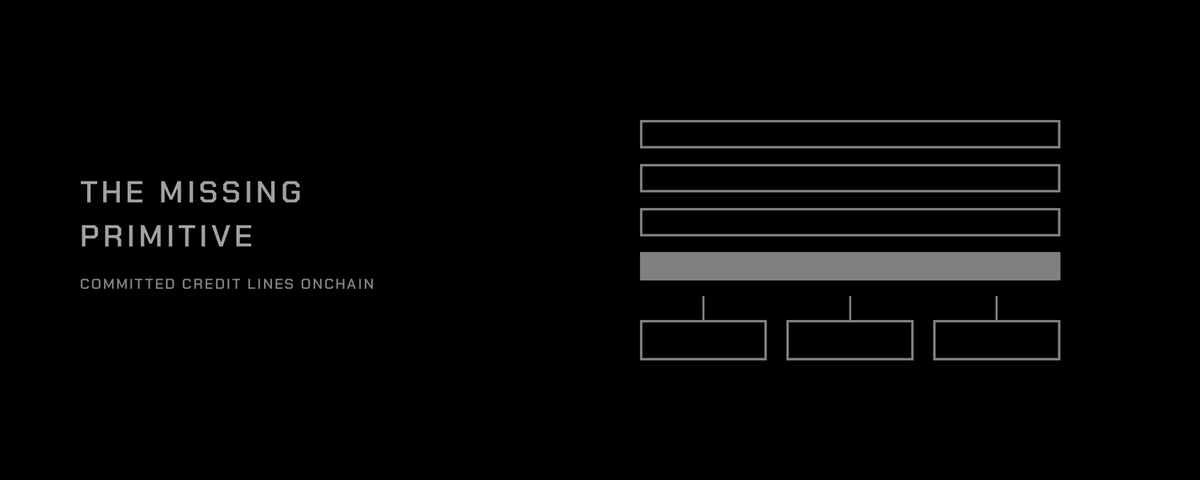
This qualifies as a vaguepost but demand is screaming for the thing we finally - after three years and two releases admittedly - managed to land on enshrining as borrower-defined, white-knight-capital committed markets :)

kethic retweeted

.@josephdelong left a CTO role at @SushiSwap to build his own visa
because every existing crypto card is just visa card with a logo on it.
@colossuspay is a 3-person team that's making an issuer, a credit card network and a processor from scratch.
And also one of the few crypto startups backed by @fdotinc
Podcast coming soon


kethic retweeted
PLEASE STOP FUCKING WITH ETHEREUM WITHOUT ASKING THE PEOPLE WHO BUILD ON IT: FIVE REASONS I AM TIRED
[feat. Wildcat Labs, a company that is filled with Ethereum die-hards and works exclusively on code that has originated over a billion dollars of economic activity for the chain, but these are my opinions not that of Labs itself etc]
---
REASON ONE: Our entire market deployment flow breaks on day one of Glamsterdam
Wildcat's core product involves a borrower creating a market that they've specified the way that they determine is best for them. That includes the core market itself (interest rate, underlying asset, debt token name), and a separate configuration (through hooks) granting access to the market and its functions (i.e. who can deposit, can debt be transferred, are withdrawal requests subject to a fixed-term tenor and so on).
In our currently deployed, immutable V2 code, what used to be a single transaction bundling those things together goes from 8.6M gas to ~62-71M, which means we can't fit it into a 60M block (don't you dare 'but ackshually' me, I am coming back to this).
Nothing in our contracts changed: the chain reprices bytecode deposits by 7.65x underneath already-audited code. We only have a workaround because our factory happens to expose the two halves separately, so we need to boot out an SDK and frontend release, plus pray folk are using a wallet that will sign a 35M gas field.
Every borrower's first market to date used a call that will no longer fit in a block as-is (I said I'm coming back to it).
The reason I am starting to... express opinions, is that this is the second time in a year that the execution layer has changed what a deployed contract costs to use (EIP-7825's cap in Fusaka, now state gas), and each time the burden of discovering it lands on us, the teams developing applications that drive economic activity on the chain, and we have to do it by replaying our own history on a testnet.
[This is going to be a long post. I am Not Pleased.]
---
REASON TWO: We are relying on social consensus for any hope of relief
The repricing aspect is consensus: at the fork, every validator must enforce it. The gas limit - the thing that would make a ~70M transaction possible post-Glamsterdam - is a validator-set preference with no mainnet schedule.
Sepolia was handed 200M, and things look fine over there. Hoodi had its 200M yeeted out the airlock the day the fork was postponed. So, the testnet that "proves" the fork works runs with over three times the headroom of mainnet, but the fork's own design assumes a headroom that nobody has committed to.
For a protocol that needs to tell institutional borrowers what a market costs to open, Wildcat's honest answer after Glamsterdam has to be "it depends on a social campaign to change validator config files," and that isn't a dependency that a credit product should carry. We are engineers, not lobbyists.
It also means Wildcat's capacity planning is hostage to the same ACD calls that are currently stalled on a security review of the very EIP that created the problem.
You know what, Ameen, you are a core dev now. Why not.
---
REASON THREE: As-is, Safe App deployments of mainnet Wildcat markets fail after the fork
Safes are the default custody mechanism for exactly the borrowers Wildcat wants, and just over a third of V2 markets (29 of 82) were deployed via one.
Under EIP-8037, the GAS opcode no longer reports the reservoir, so a Safe's execution check (GS010) can never be satisfied for a transaction that needs more than the execution cap.
On either deploy entrypoint: the core market itself or its hooks.
Historical Wildcat Safe deployments set safeTxGas to zero and survive. The Safe App and safe-apps-provider path set it from the estimate... and die. :)
We can patch our own route (send safeTxGas 0, which our testnet branch already does), and we will. What nobody owns is the default: every Safe App on Ethereum that lets the provider fill safeTxGas from an estimate above ~16.4M dies in the same way.
This is not Wildcat's bug, nor is it Safe's in any useful sense.
It is a consensus change that silently invalidates a safety check in the most widely deployed smart-contract wallet on Ethereum, with no deprecation path, and as of today nobody owns fixing it. Building on a platform where our users' wallets can be broken by a gas-accounting EIP is something that every single protocol team should be screaming things that would get us put on trial in The Hague about.
---
REASON FOUR: Every single part of the tooling stack currently assumes tx.gas stops before the reservoir
Fusaka taught Ethereum developers that a transaction cannot exceed 16.78M, and so tooling calcified around that number because... why wouldn't it? It's not even a year old yet!
As it stands, geth's default 50M RPC cap can't estimate the combined deploy of a Wildcat V2 market, and public nodes cap eth_call the same way.
Even our own release ceremony prices contract deployments statically at 200 gas per byte against the 1,530 already live on Sepolia (our simulation gate catches it, the planner doesn't).
Glamsterdam now says the gas field can be 4.29 billion, with the part above 16.78M living in a reservoir that neither GAS nor most estimators nor any wallet UI understands yet.
When our V2.5 audit is done and it's time for us to deploy the necessary factories, the install is sixteen transactions and about six blocks' worth of gas, at most one big creation per block, and every wallet and integrator that Wildcat touches has to re-learn gas at the same time.
With no shared reference implementation.
None of this is Wildcat's code, all of it is Wildcat's outage, and the execution layer will have shipped two contradictory gas models in consecutive forks.
Masterful gambit.
[and this last one's just me being me about my most hated and well-known bugbear]
---
REASON FIVE: Code bytes are now 96 percent of what one of our markets costs to deploy, but the spec is still moving
I have spent coming up ten years - near enough since its introduction - begging for the death of EIP-170, and I genuinely don't know why I dared to believe that anything except a monkey's paw would answer me.
At 1,530 gas per byte, the cost of deploying a V2.5 market (when it launches) is almost entirely the price of copying 23 KB of bytecode into state. A lender’s first deposit to a Wildcat market costs about 3x the gas it would pre-Glamsterdam, because every fresh storage slot went from 22,100 gas to 110,020.
EIP-7954's promised 64 KB contracts are capped in practice at about 38 KB by a 60M block, so the one concession to builders in this fork - the one I have been asking for since my age first started leading with a 3 - is muted on mainnet until the aforementioned social campaign gets the gas limit bumped to 200M. Which we have to take on faith right now.
Meanwhile, the refill and reservoir semantics of EIP-8037 are under review, Hoodi is unscheduled and mainnet has no date, which means that Wildcat Labs just paid six figures to get Wildcat V2.5 into external audit against gas semantics that may change before it ships.
The cost - and the apparent lesson - of being an early, careful team on Ethereum is that you run the risk of needing to audit twice: once against the chain you deploy to, and once against the chain it becomes.
---
WHAT WE ARE DOING ABOUT THIS: Upcoming SDK and frontend releases will, defensively and until we can safely revert to type, split market creation into two transactions and send safeTxGas 0 on the Safe App route. Existing markets will keep running. Lenders will be affected in cost only: first touches (first deposit, opening a withdrawal request, first approval) about 2-3x, everything else 1.1-1.6x. What we cannot do is make a 65M transaction fit in a 60M block.
That part is on you lot, the social layer.
Further to the above, Wildcat Labs will happily send an invoice for an audit rebate to anyone willing to provide it if we end up having to re-check things for V2.5 once semantics are finalised.
Mind you, we'd provide an EOA, as we're a bit wary of anything contract-based right now.
Enjoy your Sundays.


kethic retweeted

There were no lessons learned from what happened with EOF and that stack of EIPs was tame compared to the precedent being set here.
People that actually build on Ethereum start to understand the impact and it’s “testnets are live”, “too late to change”, “just ship it”.
No one is arguing that the intent of these EIPs - properly charging for state growth relative to other operations - is bad. The pushback is on how it erodes trust assumptions for builders and changes how they have to think about long term operations.
If we 5x storage costs and 5x black gas limits, did we really scale or did we just make bigger numbers? Sure, you can pack in more non-state ops if those stay the same but did anyone run the numbers on lowering the cost of non-state changing operations and keeping block gas the same?


We should continue towards Glam activation asap.
A lot of research went into Glam's strategy to increase opcode gas prices for state creation.
It seems fair to say that the timing of this debate is irrelevant as to its correctness or rightness for eth and our users... Yet, why did some of us (eg. quoted author who is an ef board member) only start looking in detail at Glam EIPs eg. after testnet forks started? This isn't a personal attack, it's an observation that there's a collective responsibility-- for OP, for me, for all of us-- to steward fork strategy at the right times in the process.
imo ethereum's commitments to apps do not extend to gas pricing, or to total ETH fee levels, or to USD fees. And also not to opcode pricing or gas introspection that depends on those prices. We guarantee maximally credibly neutral, maximally live access to the correct state transition function. Those guarantees imply that we always use a neutral pricing mechanism to clear congestion wherever possible. However, pricing opcodes can't use a neutral mechanism, we need to pick magic number opcode gas prices. Some of our best people researched this extensively and picked updated magic numbers, and that's something imo we should stick with now and continue our larger plans that are on track to grow to global ubiquity.
The good news and practical reality may be that the explosion of blockspace supply from 60M to 200M gas limit seems likely to absolutely crater the L1 gas price. It will take time for demand to grow to meet the new supply, including from net new entrants (eg. GENIUS and institutions), induced demand from lower prices, and the coming next gen of return-to-mainnet-type eth native apps.
By the time L1 blockspace demand catches up, we will be exploding supply again as we get closer to the full lean eth vision. That's eth's vision: postquantum and postAI ETH SoV, supported by ethereum's hypergrowing capacity, which is supported by best-in-class security and formal verification.
Looking back, it's unfortunate that we provided these affected contracts with a footgun that has put them in the situation where they were *able* to rely on fake guarantees that ethereum never promises (afaik, essentially just gas introspection). We're sorry.
imo it's time to roll forward on this. Let's do what we can in an appropriately scoped capacity for the affected contracts, then activate Glam asap, and continue our excellent progress towards global ubiquity.
kethic retweeted
in 2016, after the dao, @nicksdjohnson showed how to refund 11,440 people without trusting one person with the money. in 2020, arachnid’s proxy used the same trick. anyone could deploy it at the same address. hundreds of chains did, with a copy of one transaction.
it used 68,131 gas. he gave it 100,000 in case prices changed. on a fresh glamsterdam chain it costs 314,525. there was never a key to sign it again.
turning “anyone can deploy it” into “ask whoever writes genesis” feels like spitting on ethereum’s own history.
nick’s 2016 account weka.medium.com/how-to-send-…
original gas budget github.com/arachnid/determin…

kethic retweeted
For six months I've been pulling literally every fucking sound the metal hosting Ethereum has ever heard, transforming and normalising it all, then running queries over terabytes of data.
"And what rough beast, its hour come round at last, Slouches towards Bethlehem to be born?"


kethic retweeted
Bro really said


“He’s rage quitting...”
We filmed suspected North Korean operatives seeking crypto jobs for THE DEVELOPER. Evidence suggested fake identities and financial links to the DPRK.
SUPPORT THE MISSION to expose North Korea's operation by donating ETH or SOL: thedeveloper.movie
kethic retweeted

a local model won't censor or surveil you, impose weird refusal policies, ban your account, impose usage limits, exhaust your quotas, require internet connection, send your chats to third parties, watermark your work, remotely change its policies, force subscriptions, restrict modification, or depend on corporate subsidies to remain accessible

finally tried Daybreak (and openai has a problem):
it was the only thing i regret not getting to try before openai suspended my codex account was trying out daybreak.
today, i got to test it out for hours thanks to a kind subscriber who had access. time to find some vulnerabilities! oh wait.
openai explicitly advertises Daybreak Blue as a model (and toggle, we'll get to that) for vulnerability hunting, triage and patch validation.
the kind subscriber wanted to analyze the firmware of their 3D printer. literally a perfect task for daybreak. no blackbox testing against a remote target, isolated to his local network, and for defensive purposes.
so we're off to the races, I gave him a prompt, a very cautiously worded prompt specifically crafted to fit within the parameters of what daybreak blue claims to enable researchers to do.
it ran for less than 5 minutes and tripped Daybreak (withheld output and halted).
what.
alright, new prompt, this time more neutered.
halted within 5 minutes.
alright, new prompt, this time literally just asking it to "analyze the binary and write findings of importance", i had to completely strip the any mention reverse engineering out of it.
halted within 5 minutes.
alright new prompt, and you can probably guess what happened. that's right! halted. eventually after 5 rounds of removing even the slightest hint of "we should be able to verify the findings", except for asking for a regression test, it became evident that this model (Daybreak Blue xhigh) literally refuses everything.
having read a bit more into how refusals/daybreak tripping works now, tripping Daybreak isn't an additional classifier running alongide your prompt, it's baked into the model itself.
so, ironically, the same prompt on gpt-6-sol worked just fine.
alongside the model, you also get a toggle that runs every model between gpt-5.5 to gpt 6 luna with "reduced refusals". it still extremely unclear how this works, they seem to trip daybreak the same amount.
so uhh, what's the point of daybreak blue? you get a model which refuses even the tamest things a blue teamer might want to do, and you're out $100 (openai partnered with yubico and daybreak blue requires a yubikey to get access).
public communication has been that reverse engineering is fine, apparently it isn't under daybreak (and unfortunately, i'm seeing more and more people allegedly get banned/warnings for it, but can't really confirm if they were doing something more sinister).
i do hope they fix daybreak at some point and actually allow individuals who kyc'd and bought a yubikey to get what was advertised, but for now:
save the $100 and spend it on open model tokies or put it in your local compute piggybank. this program is hilariously bad.

kethic retweeted

I do not like you, Sam-I-am.
You will not have my fucking RAM.


kethic retweeted

Happy Sloptoberfest - "Destroyer of Worlds" @bipci_corp Furbomek edition ft Alex Karp @PalantirTech.
@PalmerLuckey @peterthiel