

Explaining how computers really work—from logic gates, CPUs, memory, C Language, and Linux to RISC-V, ARM, x86, FPGA, AI and LLM.
La Canada Flintridge, CA
Joined June 2018
- Tweets3.1K
- Following22.2K
- Followers22.3K
- Likes1.7K





What Is DNS? Understanding the Domain Name System
icstutorial.com/encyclopedia…
1. How Does DNS Work?
2. What Is the DNS Hierarchy?
3. What Are the Main Types of DNS Servers?
4. What Happens During DNS Resolution?
5. What Are DNS Records?
6. What Is DNS Caching?
7. What Is DNS TTL?
8. What Is DNS Propagation?
9. What Is a DNS Zone?
10. What Is Reverse DNS?
11. DNS vs. Domain Name vs. Web Hosting
12. What Is DNSSEC?
13. What Is Split-Horizon DNS?
14. How Can You Check DNS Records in Linux?

18
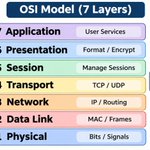
What Is the OSI Model? the Seven Layers of Computer Networking
icstutorial.com/encyclopedia…
1. How Does the OSI Model Work?
2. What Are the Seven Layers of the OSI Model?
3. What Is Data Encapsulation?
4. OSI Model vs. TCP/IP Model
5. Which Network Devices Operate at Different OSI Layers?
6. IP Addresses vs. MAC Addresses vs. Port Numbers
7. How Is the OSI Model Used in Network Troubleshooting?
8. OSI Model and Linux Networking Tools
9. OSI Model and Network Security
10. OSI Model in FPGA and Embedded Systems

1
9
375
What Is the Linux Kernel?
youtu.be/X0EY2WxYybY?si=Mm0n…
Kernel Types and the Major Linux Subsystems
1. The Linux Kernel and Linux Distributions
2. User Space, Kernel Space, and System Calls
3. The Modular Monolithic Kernel in Linux
4. Microkernel Architecture
5. Hybrid Kernel Architecture
6. Exokernel Architecture
7. Process Management and CPU Scheduling
8. Virtual Memory and Memory Management
9. The Virtual File System (VFS)
10. Device Drivers and the Block Storage Layer
11. The Linux Networking Subsystem
12. Inter-Process Communication (IPC)
13. Access Control, Isolation, and Resource Limits

3
129
What Is WSL? Understanding Windows Subsystem for Linux
icstutorial.com/encyclopedia…
1. How Does WSL Work?
2. What Is the Difference Between WSL 1 and WSL 2?
3. What Are the Main Components of WSL 2?
4. What Linux Distributions Does WSL Support?
5. How Do You Install WSL?
6. How Can You Manage WSL Distributions?
7. How Do You Use Linux Commands in WSL?
8. How Does WSL Access Windows Files?
9. How Can Windows Access WSL Files?
10. WSL in FPGA and Embedded-System Development

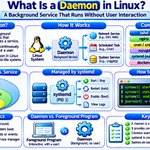
What Is a Daemon? How Do Daemons Work in Linux?
icstutorial.com/encyclopedia…
1. How Does a Daemon Work?
2. Why Is It Called a Daemon?
3. Common Daemons in Linux
4. Daemon vs. Process: What Is the Difference?
5. Daemon vs. Background Process
6. Daemon vs. Service: What Is the Difference?
7. How Does systemd Manage Daemons?
8. How Are Traditional Linux Daemons Created?
9. Daemons in Web Hosting and Cloud Computing
10. Linux Daemons vs. Windows Services

2
11
317
What Is Root in Linux? Understanding the Root User and Root Directory
icstutorial.com/encyclopedia…
1. What Is the Root User?
2. Root User vs. Regular User
3. What Is sudo?
4. What Is the su Command?
5. What Is the Root Directory?
6. Root Directory vs. Root Home Directory
7. How Does Root Relate to Linux Permissions?
8. What Is Root Access in Linux Servers?
9. What Is Root in Linux Containers?
10. How Can You Check Whether You Are Root?
11. Root in Android and Other Unix-Like Systems

Can You Learn FPGA Without Buying a Board?
youtu.be/Oxfr-jf0uB8
Absolutely.
You can complete the first several stages of FPGA learning using only a computer.
Start with CircuitVerse to understand logic gates and digital circuits.
Then learn Verilog and use a simulator to verify your designs.
You can also explore synthesis using supported open-source tools without immediately programming a physical FPGA.
A development board becomes useful when you want to connect your designs to real buttons, LEDs, sensors, communication interfaces, or other external hardware.


What Is Virtual Memory? How Does it Work in Operating Systems?
icstutorial.com/encyclopedia…
1. What Is a Virtual Address Space?
2. What Is the Memory Management Unit (MMU)?
3. What Are Memory Pages?
4. Virtual Memory vs. Physical Memory
5. What Is Copy-on-Write (COW)?
6. How Does Virtual Memory Protect Processes?
7. What Is Shared Memory?
8. Virtual Memory in Linux
9. Virtual Memory in Windows and macOS
10. Does Virtual Memory Make a Computer Faster?

FPGA Labs Without Rewiring
youtu.be/Oxfr-jf0uB8
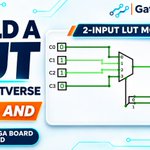
Build an FPGA LUT in CircuitVerse and Turn XOR into AND

What Is a Process? How Do Processes Work in Operating Systems?
icstutorial.com/encyclopedia…
1. How Does a Process Work?
2. Program vs. Process: What Is the Difference?
3. What Are the Main Components of a Process?
4. What Is a Process ID?
5. What Are Process States?
6. How Does the Operating System Schedule Processes?
7. Process vs. Thread: What Is the Difference?
8. What Is Process Memory?
9. How Are Processes Created in Linux?
10. How Can You View Processes in Linux?
11. Processes in Windows and macOS

What Is Zsh? How Does the Z Shell Work in Linux and macOS?
icstutorial.com/encyclopedia…
1. How Does Zsh Work?
2. What Are the Main Features of Zsh?
3. What Is Zsh Command Completion?
4. What Is Zsh Globbing?
5. What Is the .zshrc File?
6. What Is Oh My Zsh?
7. Zsh vs. Bash: What Is the Difference?
8. Zsh vs. Fish
9. How Does Zsh Scripting Work?
10. What Are Zsh Variables and Arrays?

What Is Bash? How Does the Bash Shell Work in Linux?
icstutorial.com/encyclopedia…
1. How Does Bash Work?
2. Bash vs. Terminal vs. Kernel
3. Basic Bash Commands
4. What Are Bash Built-in Commands?
5. What Is Bash Scripting?
6. What Are Variables in Bash?
7. What Are Environment Variables?
8. What Are Pipes in Bash?
9. What Is Input and Output Redirection?
10. What Are Conditional Statements in Bash?
11. What Are Loops in Bash?
12. What Are Bash Functions?
13. What Are Bash Aliases?
14. What Is the .bashrc File?


What Is a Shell? How Does a Shell Work in Linux and Unix?
icstutorial.com/encyclopedia…
1. How Does a Shell Work?
2. Shell vs. Kernel: What Is the Difference?
3. Shell vs. Terminal: What Is the Difference?
4. Main Types of Linux and Unix Shells
5. What Are Shell Built-in Commands?
6. What Is Shell Scripting?
7. What Are Pipes and Redirection?
8. What Are Environment Variables?
9. Interactive vs. Non-Interactive Shells
10. What Is a Login Shell?
11. Shells in Linux Server Administration

What Is a Kernel? How Does an Operating System Kernel Work?
icstutorial.com/encyclopedia…
1. How Does a Kernel Work?
2. Main Functions of a Kernel
3. What Is Kernel Space?
4. What Is a System Call?
5. How Does the Kernel Manage Processes?
6. How Does the Kernel Manage Memory?
7. What Are Kernel Device Drivers?
8. How Does the Kernel Handle Interrupts?
9. Monolithic Kernel vs. Microkernel
10. What Is the Linux Kernel?
11. Kernel vs. Operating System: What Is the Difference?
12. Kernel vs. Shell
13. What Is Kernel Mode vs. User Mode?


What Is an Operating System? How Does an OS Work?
icstutorial.com/encyclopedia…
1. How Does an Operating System Work?
2. Main Components of an Operating System
3. What Is the Kernel?
4. What Is Process Management?
5. What Is Memory Management?
6. What Is a File System?
7. What Are Device Drivers?
8. What Are System Calls?
9. What Is a Shell?
10. What Is Multitasking?
11. How Does an OS Manage Networking?
12. Operating System vs. Application Software
13. What Is the Difference Between Linux, Windows, and macOS?
14. What Are Real-Time Operating Systems?


🚨 AI IS NOW DESIGNING ITS OWN HARDWARE.
OpenAI has revealed that its AI models are helping design the very chips that power artificial intelligence.
Here are the reported results:
▪️ AMD chip designs: Up to 14% improvement in power, performance, and area (PPA).
▪️ OpenAI’s Jalapeño inference chip: Estimated area reductions of 13% and 10% across two compute blocks.
▪️ AI-redesigned multiplier: Approximately 15% estimated area reduction, while completing a calculation in one clock cycle instead of two.
OpenAI is also working with Synopsys to integrate AI-driven optimization into the semiconductor industry’s electronic design automation (EDA) tools.
These are OpenAI’s reported results, not independently verified benchmarks. But the implications are enormous.
AI designs better chips.
Better chips enable more powerful AI.
More powerful AI designs even better chips.
We could be entering a self-reinforcing cycle of AI and semiconductor innovation.
The next major breakthrough in AI may come not from a new algorithm, but from hardware designed by AI itself.
@grok, could this feedback loop accelerate semiconductor innovation beyond the traditional pace of human engineering?
#OpenAI #AI #Semiconductors #ChipDesign #AMD #EDA
3
7
625