Developing Dosu https://www.nitter.gq/t.co/fyEGY7J6p3
Joined August 2021
- Tweets822
- Following1.3K
- Followers751
- Likes540






Devin Stein retweeted

Thought: The anthropic IPO will unlock a new generation of super angels, which will have a profound impact on the pre-seed and seed market.
If you are a small seed stage fund, buckle up!

Devin Stein retweeted

Your agent opened the PR but did it do a good job? @devstein64 on what to benchmark: token spend, backtracking, human intervention and unproductive tool calls

Devin Stein retweeted

Today, we're launching Sazabi version 1.0.
The reality of shipping software as a team in the age of AI is actually crazy.
Agents merging their own PRs. Hundreds of deployments per day. A codebase that is constantly changing. Junior developers with 10x or 100x leverage. 😵💫
I spent the last year building a safety harness for teams that ship with AI. It's called @sazabi.
The premise is simple:
1. You send us logs.
2. We detect anomalies, investigate them, and send you back rich, actionable alerts about real problems in your app.
Sazabi helps you find issues before your users notice.
No monitors or noisy alerts. Just pure signal.
And today we're making it available for anyone to use.
Devin Stein retweeted

Introducing ShipBash
Your agent says it's done. ShipBash shows you it works.
Last week I asked it in Slack to check a CLI built for AI agents. It found a bug, recorded it, and Claude fixed it from that report.
It uses your web app and your CLI like a real user, on production, and every verdict comes with a recording. When something fails, your coding agent gets the whole report.
More and more of what we ship is used by agents, so ShipBash drives a real terminal as well as a browser.
Open source. Self-host it with one deploy button
github.com/dohooo/shipbash
Devin Stein retweeted
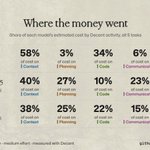
We replayed 49 @vercel AI PRs across two coding agents, with an estimated $44.00 on Claude Code (Opus 5.5) and $27.29 on Codex (GPT 6.1 Sol).
Where did the gap come from? Spoiler: Low- and mid-scope work came out about even...
go.dosu.dev/agent-cost-gap-x
Devin Stein retweeted
Does your coding agent still recommend a tool your team replaced? We found a Celery migration comment that survived the move to DBOS and the removal of Celery. Semantic memory needs to preserve when a fact no longer applies. dosu.dev/blog/semantic-memor…
Devin Stein retweeted
It's Dosu Drop Day! 🎒 For our back-to-school edition, Dosu does the studying. When a Claude Code, Codex, or Cursor session ends, Dosu reads it and writes down what your team would otherwise rediscover. 🧵 go.dosu.dev/drop-sep26-x

Devin Stein retweeted

I've frequently seen search use cases that need a vocabulary modeled hierarchically in a taxonomy, and almost never one that needed an actual knowledge graph.
Devin Stein retweeted
The team keeps working after the agent’s session ends.
@devstein64 on how merged PRs and resolved conversations keep agent memory current.
Recording + transcript: dosu.dev/webinars/agent-memo…
Devin Stein retweeted
Is it just me or are existing agent memory datasets underwhelming?
They to some extend assume retrieval will just work, they tell you roughly where the right answer is, and then they sit back and see if you can piece together a response.
This doesn't resemble what the work feels like in my experience...
Devin Stein retweeted
A summary of a summary keeps getting further from the source.
Michael Mangus, Head of Product at Dosu, explains how repeated summaries lose details in agent memory.
Recording + transcript: dosu.dev/webinars/agent-memo…
Devin Stein retweeted

yes!!! the analogy we use is like logic gates. look at how many incredible things were made from just a few dumb primitives. IMAGINE that with smart primitives!


Devin Stein retweeted
Wrong memory can be worse than no memory.
@devstein64 explains why stale agent memory can undo the value of remembering anything at all.
dosu.dev/webinars/agent-memo…
Devin Stein retweeted
Agent Memory: What Happens When It's Wrong? dosu.dev/webinars/agent-memo…