
Teaching AI Agent Engineering | Founder, @nomadcoderai
Gurgaon, India
Joined April 2010
- Tweets135K
- Following762
- Followers12.1K
- Likes43.9K




Pinned Tweet
We successfully delivered India’s first independent AI developer conference - AI-India 🇮🇳 on April 12 in Gurgaon. ❤️ 🌞
We had 300+ senior developers, 12 speakers, and 12 deep-dive sessions covering topics like RAG, agents, eval, security, migrating legacy systems using AI, vector search, Vercel AI SDK, Microsoft AI stack, and more. 🔥
What made this conference truly different was its independence.
It wasn’t tied to any single model provider or ecosystem. That gave us the freedom to explore, question, and learn across the entire AI landscape , not just within one platform.
The discussions were intense, technical, and meaningful , real developers talking to developers. No surface-level hype, no social media noise, just deep, honest conversations about building with AI.
📸 Please see photos from the conference here:
photos.app.goo.gl/CyiAAcwq9Y…
I’m proud of what we were able to create. 😊
A big thank you to all the speakers, attendees, and sponsors for the trust and support in making this happen. 🙏
Once again, thank you so much everyone, see you at the next edition of #AIIndia in November in Pune. 👏
#nomadcoder #AIIndia #conference


Want to know how an AI app lists your GitHub repositories using MCP?
This flow diagram explains how the App, MCP Client, MCP Server, and LLM work together.
Let me know your feedback and further questions !
#nomadcoder #mcp

ALT MCP Server and Client Flow Diagram
3
2
115
Dhananjay Kumar retweeted

AI ecosystem guide 2026:
- 120 tools covered
- across 18 categories
Compute, Data, Pretraining, Fine-tuning, Compression, Inference, Structured outputs, Gateways, Benchmarks, App evals, Ingestion, Retrieval, Memory, Observability, Agents, Security, Prompt

Dhananjay Kumar retweeted

stop blaming the f*cking MODEL
ANTHROPIC proved the same Claude acts like a different agent once you build the harness around it...
agent = model + harness. the harness is everything around the model: rules, checks, memory, limits
the Anthropic engineering team tested it on long coding jobs. give the model a feature list, a progress file, git and a real test, and it stops saying "done" before the job is done
Claude Code already has a slot for all 6 layers:
1. guides: CLAUDE.md and skills. every new failure becomes a rule
2. sensors: hooks that run your linter and tests after every edit
3. the loop: plan, build 1 feature, a helper agent checks it, fix, commit
4. memory: claude-progress.txt, feature_list.json and git, so a fresh session knows where to start
5. permissions: allow and deny lists. nothing gets pushed or deleted without you
6. tracking: every tool call and every dollar logged
prompt engineering shapes what the model is told
context engineering shapes what it sees
harness engineering shapes what it can do
the harness, not the hype
save this. my full 6-layer playbook is in the video ↓

Dhananjay Kumar retweeted

THIS IS AN ACTUAL F*CKING GOLDMINE
Fable 5.2 is insane for building self-evolving agent swarms…
send it this prompt and it will design a 40-agent team that plans, builds, reviews, benchmarks, remembers failures, and improves its next run
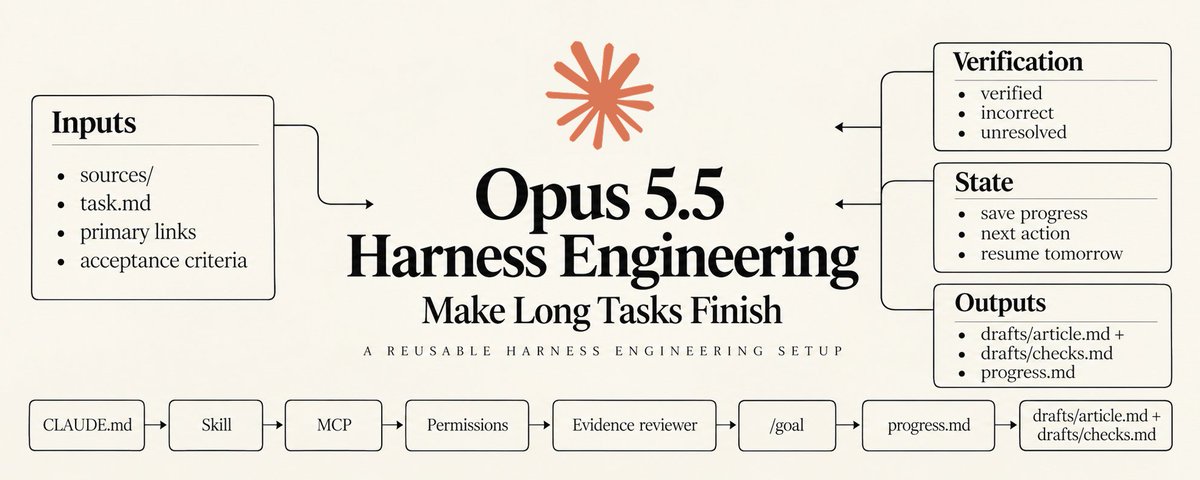
then read the full Opus 5.5 harness engineering guide below ↓

Dhananjay Kumar retweeted

Spotify's engineers published the Claude Code setup that cut their token usage by 90 percent. Here is how it works.
Most of what a coding agent does needs no thinking. It reads whole files to find a few lines it needs, and it writes routine code by copying examples that already exist. Spotify was paying top model prices for all of that.
So they handed this work to two cheap helpers. The first reads the files and sends back a short summary. The second takes an example, writes the repetitive code and saves it straight to disk. The main model never sees any of it.
The clever bit is how they enforced it. In the first version the rules lived in instructions, and the model often ignored them. Now any file over 350 lines gets blocked before the model opens it, and the job goes to the cheap helper.
Two things still cost full price. Edits need the real file, so short targeted reads still go through. And in testing, the cheap helper missed a bug that the main model found in seconds.


Dhananjay Kumar retweeted

Code Mode is an experimental new feature in Claude Code that can improve both speed and context efficiency when Claude needs to orchestrate multiple steps. Try it out and let us know what you think!
It enables Claude to perform multi-step tool calls by writing and running JavaScript. Rather than calling one tool at a time (e.g. Bash, Read, or Edit) and waiting to see the result before deciding what to do next, Code Mode allows Claude to write a simple script to run multiple commands in parallel, passing arguments and filtering outputs for subsequent tool calls to reduce context.
I'm excited about this work because Code Mode enables more efficient and streamlined multi-step coding flows. For example, rather than passing large amounts of raw search data into the context window or having to make a large number of sequential calls to perform the same refactoring across dozens of files, Claude can orchestrate these tasks programmatically in a single pass.
Still, you will be able to interact with Claude as normal through natural prompts. And if you ever need to see the exact JavaScript that Claude generated, you can always use Ctrl+O to expand the collapsed Code rows in the transcript viewer.
One of the most exciting practical improvements from Code Mode is its ability to perform long-running operations, like running test suites or complex builds, as background processes. When Code Mode is running in either auto or bypassPermissions mode, scripts can run in the background for up to two hours. You can continue to interact with Claude and perform other work within the same session. The /tasks command provides complete transparency and control over background scripts.
Each tool call that is generated within a script is still governed by your current deny and ask permission policies, sandbox constraints, and PreToolUse hooks. Hooks can even be defined specifically for the REPL tool to inspect the generated JavaScript before running, or redact sensitive tokens from the output before reading it into the context.
To enable Code Mode, just start your session with CLAUDE_CODE_EXPERIMENTAL_CODE_MODE=1 claude or set the environment variable in your ~/.claude/settings.json file.
Give it a try by running multi-file audits, batch edits, or any type of parallel search-and-filter operation. Code Mode is experimental and the team is actively iterating on it, so please run /feedback in your terminal to let us know what works well and where you hit any edges.
Hope it's helpful!

Check out Code Mode, a new, experimental way for Claude Code to work with tools. Claude writes scripts that chain your tools together in sophisticated ways, and it can answer you while long commands are still running.
Opt in with CLAUDE_CODE_EXPERIMENTAL_CODE_MODE=1 code.claude.com/docs/en/code…

Dhananjay Kumar retweeted

This is f*cking insane. Anthropic engineer:
"Most people are still tweaking prompts and calling it AI engineering
Here, 95% of engineers already run loops that improve themselves. The next step is graphs, and prompting is basically done"
In just 10 minutes, she builds her full Claude Code setup live, starting from a blank terminal
Blank Terminal → Agents → Loops → Graphs → A System That Gets Better On Its Own
A loop lets an agent grade its own output and keep fixing it until it passes
A graph wires those loops together, so agents hand work to each other while you're away
The model is the same for everyone. What's different is the system you build around it
Bookmark it and watch it today
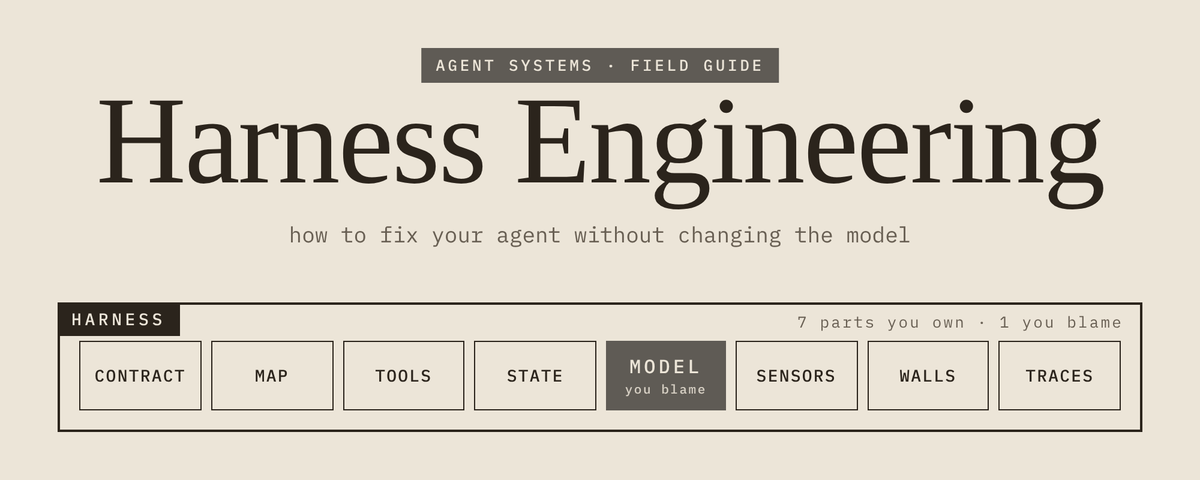
Then read the full harness engineering guide below and build your first self-improving system ↓

Dhananjay Kumar retweeted

This Anthropic MCP paper is f*cking gold
Anthropic's engineers cut an agent's tool context from 150,000 tokens to 2,000. Same tools, same task. And the model wasn't the upgrade.
The upgrade: the agent stops calling tools and starts writing code that calls them.
tools → files → code → filter → answer
The 6 parts of code mode:
Part 1 → tools as files
Every MCP tool becomes a .ts file in ./servers.
The agent lists the folder and opens only what it needs.
Part 2 → load on demand
150,000 tokens of tool definitions down to 2,000.
A 98.7% saving in time and cost.
Part 3 → filter in code
A 10,000-row sheet gets filtered in the sandbox.
The model sees 5 rows.
Part 4 → loops in code
Polling Slack for "deployment complete" runs as a while loop.
No round trip through the model on every check.
Part 5 → private by default
Emails and phones turn into [EMAIL_1] and [PHONE_1] before the model sees them.
The real data still lands in Salesforce.
Part 6 → skills
Working code gets saved to ./skills with a SKILL.md.
The agent builds its own toolbox.
An agent that loads every tool burns its context before you ask anything. An agent that writes code opens 2 files.
I packed all 6 parts into one prompt. Drop it into Claude Code and it sets code mode up for you.
6 parts. 1 prompt. 98.7% fewer tokens.
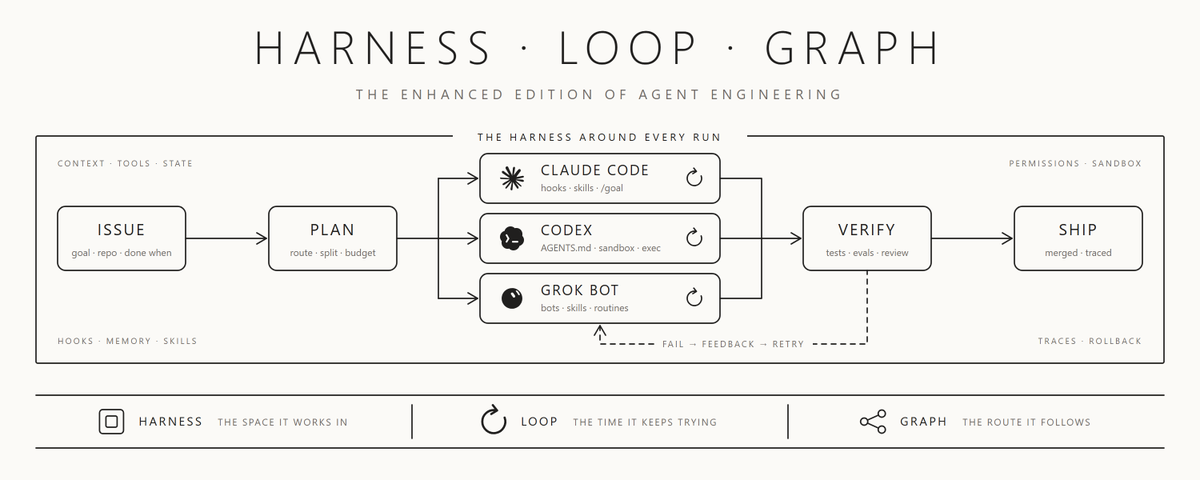
Then read the enhanced edition of agent engineering below ↓

Dhananjay Kumar retweeted

Anthropic, Skilljar üzerinden Claude Forward Deployed Engineer (FDE) adlı yeni bir eğitim programı başlattı.
Program toplam 9,5 saat ve 11 dersten oluşuyor. Kendi hızınızda tamamlayabiliyorsunuz.
Eğitimde ele alınan konular:
- Yapay zekanın yetenekleri ve sınırlamaları
- Claude API, model seçimi ve context yönetimi
- Claude Code ile uygulama geliştirme
- AI Agent geliştirme ve araç kullanımı
- Model Context Protocol (MCP) entegrasyonları
- Agent Skills oluşturma
- Gerçek müşteri senaryolarında AI pilot projeleri geliştirme
- Başarı metrikleri, risk yönetimi ve kurumsal AI adaptasyonu
Eğitimi tamamladıktan sonra Claude Certified Developer – Foundations sertifikasyon sınavına hazırlanabiliyorsunuz.
Program Claude Partner Network üyelerine açık. Daha önce Claude Developer eğitimini tamamlayanlar için yalnızca 2 ek ders, yaklaşık 100 dakika yeterli.
İncele: anthropic-partners.skilljar.…

Dhananjay Kumar retweeted
An overview of 16 eval frameworks - what each proposes to score: answers, steps, tool calls, paths, conversations, cost. How they grade and gate.

Dhananjay Kumar retweeted

How do you give AI agents real autonomy without letting them go off the rails in critical systems? 🚧
🎙️ A Guardrail Blueprint for Production AI Agents
Laxminarayan Chandrashekar takes the #AIIndia2026 stage next to share a practical architectural blueprint for production agent guardrails.
#AIIndia #TechConference

Dhananjay Kumar retweeted

Yesterday, I gave a talk at @aiPolandConf about potential use cases for local LLMs.
If you’re interested, here are the slides: soverius.ai/talks/on-premise…

Such an amazing talk … #AIIndia


1
9
410
Dhananjay Kumar retweeted
First talk of the day #AIIndia #AI #AIIndia1026 #TechConference
Self Improving Agent Architecture
@piyukore06 rocking on stage 🔥🔥


Dhananjay Kumar retweeted
Full package on evals, bookmark it:
Evals (general)
View article
Agentic evals
View article
Eval-driven development
View article
Skills evals
View article
Dhananjay Kumar retweeted

I'm hiring 50 staff software engineers on contract and 10 full time to join our team at g2i.ai
You'll work with top frontier labs creating datasets for coding/RL env
$1,000+ per task on contract
Apply here: jobs.ashbyhq.com/g2i/76286c1…
This Saturday, we are hosting AI-India – an AI Conference for Engineers in Pune!
If you are in Pune and want to become a better AI Agent Developer, don't miss this opportunity.
Learn from 10 experienced speakers covering various topics around AI Agents, explore practical engineering concepts, and participate in a mini-workshop.
Find all the details and register here:
ai-india.ai
#AIIndia #agents #nomadcoder
1
241