

Physician-scientist. Dad. Husband. Associate Professor @yaleibio @yale_labmed. We study host-viral interactions #covid #norovirus @wilenlab.bsky.social
New Haven, CT
Joined May 2011
- Tweets2K
- Following1.2K
- Followers2.7K
- Likes8.1K




Pinned Tweet
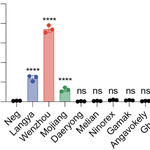
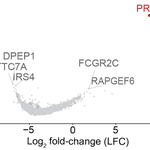
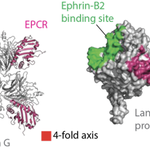
Excited to share our new preprint identifying endothelial protein C receptor (EPCR) as a receptor for Langya virus. Langya was identified in 2022 in patients with acute febrile illness and linked to shrews biorxiv.org/content/10.64898… @YaleMed @YaleIBIO @NIH

BRO is a proteinaceous binding receptor for human coronavirus OC43 biorxiv.org/content/10.64898…

Craig Wilen retweeted

Biorender 2.0 for free
biocartoon.com/

Craig Wilen retweeted
And a third article in the same issue of science, showing a reconstruction of the Bundibugyovirus outbreak science.org/doi/epdf/10.1126… the hanta and ebola papers have in common that they highlight the importance of combined detailed outbreak investigations, lab work and analytics

Craig Wilen retweeted

This is just the best study I've read all year. Just incredible epi/genetics work. Wow. Also shows always keep your samples!
nature.com/articles/s41586-0…

Craig Wilen retweeted

Suppression of epithelial proliferation and tumorigenesis by IgA
@rockefelleruniv @Nature @UCLA
nature.com/articles/s41586-0…

Craig Wilen retweeted

Our bodies are colonized by trillions of viruses that we live with in homeostasis. The most diverse and abundant of these viral families are anelloviruses. A new paper from us at @MSKCancerCenter explores what happens after we *all* have been infected
biorxiv.org/content/10.64898… 1/n

Craig Wilen retweeted

Today, we released the National Policy for Nucleic Acid Synthesis Screening to protect American biotechnology innovation while reducing the risk of misuse.
This policy establishes a new, government-wide screening requirements for synthetic DNA and the equipment used to make it. It will ensure companies selling nucleic acid sequences and synthesis equipment know their customers and prevent the malicious use of these materials and tools.
This policy strengthens our Nation’s biosecurity posture by establishing rigorous U.S. government-wide procurement screening and physical security standards for synthetic biology. It replaces outdated “self-attestation” systems with robust, independent verification. It creates a dynamic, SI-powered screening layer that assesses the biological risk from nucleic acid sequences, allowing the U.S. to anticipate and prevent malicious use and help stop dangerous gain-of-function research.
@NIST will issue rigorous new screening standards and @HHSGov and @USDA will certify synthetic biology providers. Together, these measures will strengthen American biosecurity, safeguard responsible innovation, and establish a global standard for safe and transparent synthetic biology tools and research.

Craig Wilen retweeted

Learning about Korean T cells from @Joshilabyale with @WilenLab @ishizukalab @VirusesImmunity @TsangLab

Together this gives important insight into the molecular basis for parahenipavirus entry, pathogenesis, and host range. This will also enable development of therapeutic antibodies and vaccines.
1
59
Great collaboration with Tongqing Zhou, Danny Douek, Leo Srebryannyy at the NIHVRC @SanghyunLeeLab and led by cofirst authors Zhe Zhao, Paul Tran, Ning Li, Li Ou, and Jaewon Song along with many other key collaborators.
64


Craig Wilen retweeted

Check out the human gut cell atlas. Amazing reference of normal states and cells

1/8 The Human Gut Cell Atlas (HGCA) v1.0 is out on bioRxiv! doi.org/10.64898/2026.10.09.…
Built by the gut community, for the gut community. For this HCA resource, we aimed for high-resolution healthy cell subtypes and robustness for downstream tasks like label transfer.

ALT HGCA Figure 1a-b. A workflow links global data contributions and public review to integration benchmarking, expert annotation jamborees, evidence review and consensus cell identities. The resulting atlas includes 944,390 cells from 24 datasets and 265 donors aged 0-89. A gut diagram and bar charts show coverage across intestinal regions and donor ages. The atlas combines healthy and disease-adjacent tissue.
Craig Wilen retweeted
Autophagy in macrophages curtails IL-1α-mediated immune priming against lung infections @NatImmunol
nature.com/articles/s41590-0…

Craig Wilen retweeted

Happy to share 2 preprints from my lab! 🎉
1) Cherry & team shows rotavirus NSP1 activates human NLRP1 via proteasomal degradation. Great collaboration with Alex Borodavka's lab at Oxford!
biorxiv.org/content/10.64898…