David Hendrickson (@TeksEdge) header
David Hendrickson (@TeksEdge) profile picture

CEO & Founder | PhD | Startup Advisor | @Columbia | Author Generative Software Engineering https://www.nitter.gq/t.co/VDwMbdbwrf | ๐Ÿ”” Follow for AI & Vibe Coding Tips ๐Ÿ‘‡

PNW
Joined July 2023
Photo by David Hendrickson (@TeksEdge)Photo by David Hendrickson (@TeksEdge)Photo by David Hendrickson (@TeksEdge)Photo by David Hendrickson (@TeksEdge)Photo by David Hendrickson (@TeksEdge)Photo by David Hendrickson (@TeksEdge)Photo by David Hendrickson (@TeksEdge)Photo by David Hendrickson (@TeksEdge)Photo by David Hendrickson (@TeksEdge)Photo by David Hendrickson (@TeksEdge)
Qwen3.5-4B running CPU-ONLY at up to ~11+ tps on a Ryzen 5 laptop. No GPU. Running models in RAM and CPU is something the Qwen4 team is already thinking about. ๐Ÿ’ก I built this standalone .exe because businesses are already deploying local models to save money and ensure privacy. (thumb drive friendly - just drag drop and doubleclick) My llama.cpp recipe ๐Ÿ‘‰ ๐Ÿง  Qwen3.5-4B Q4_K_M GGUF โš™๏ธ Ryzen 5 7540U โ€” 6C/12T ๐Ÿงต --threads 9 ๐Ÿงต --threads-batch 12 โšก --prio 2 ๐Ÿ”„ --poll 50 ๐Ÿ“ฆ --batch-size 2048 ๐Ÿ“ฆ --ubatch-size 512 ๐Ÿš€ --flash-attn on ๐Ÿง  KV cache: q4_0 / q4_0 ๐Ÿ”ง --repack ๐Ÿ’พ --mmap ๐Ÿ‘ค --parallel 1 ๐Ÿšซ --device none ๐Ÿšซ --gpu-layers 0 ๐Ÿšซ KV/op GPU offload ๐Ÿšซ MTP OFF Interesting result ๐Ÿ‘‰ MTP=3 was slower (~10 tps in benchmarks). Plain decode + 9 threads + Q4 KV hit ~11.4 tok/s. That's about 10% faster just from tuning llama.cpp โ€” on a basic laptop CPU.
18
6
2
94
41,089
๐Ÿชš Another steampunk Local AI build. ๐Ÿš‚ Someone built a complete local AI workstation with 32GB of NVIDIA GPU memory for just $1,400. And it's running Qwen3.8-27B at ~35 tok/s. ๐Ÿ˜ณ The GPU is almost 10 yrs old! A LocalLLaMA developer shared benchmarks from a Dell Precision 5820 workstation running a Tesla V100 32GB GPU from NVIDIA's Volta generation. Here's the hardware setup ... ๐ŸŸข NVIDIA Tesla V100 PCIe โ†’ 32GB HBM2 ๐ŸŸข Dell Precision 5820 workstation ๐ŸŸข 64GB DDR4 system RAM ๐ŸŸข GPU power capped at 225W ๐Ÿ’ฐ Total reported cost โ†’ ~$1,400 The builder tested Qwen3.8-27B using stock llama.cpp, with the model fully loaded into GPU memory. And here's the actual generation performance from the graph. ๐Ÿ‘€ Qwen3.8-27B dense / Q4_K_M ๐Ÿš€ Short context โ†’ ~35.5 tps ๐Ÿš€ 32K context โ†’ ~29.5 tps On a Tesla V100 from 2017! And compared different quantizations. ๐Ÿš€ Q4_K_M generated tokens 48% FASTER than Q8_0. But this is surprising ... Q8_0 actually processed prompts 16% faster at shorter context lengths, and about 10% faster at 32K. The builder also found generation slowed by about 15% at 32K context. Then they tried another model. ๐Ÿ”ฅ Qwen3.5-35B-A3B (MoE) โ†’ 104 tps! ๐Ÿ‘ˆ๐Ÿ˜ณ On a V100 from 2017. ๐Ÿ”‘No fancy custom inference engine required for the Qwen3.8 tests. Just stock llama.cpp and some very old NVIDIA data-center hardware. A complete local AI workstation with 32GB of GPU memory for $1,400 is pretty crazy No? Link in ALT
1
3
435
More Inkling 2 Mini optimizations, this time for an NVIDIA RTX 3060 w/only 12GB VRAM. Best reason to switch from Qwen3.8-27B so far (if it's true). Someone ran a local AI agent for 9.5 hours on an NVIDIA RTX 3060 with just 12GB VRAM. And the developer reports an average score of 94% across the 114 custom tasks it completed! The model? Thinking Machines' new Inkling 2 Mini, running through Claude Code. Here's the hardware and software setup ... ๐ŸŸข NVIDIA RTX 3060 โ†’ 12GB VRAM ๐Ÿ‘ˆ ๐Ÿ‘€ ๐ŸŸข System RAM โ†’ 16GB๐Ÿ‘ˆ ๐Ÿ‘€ ๐Ÿง  Inkling 2 Mini โ†’ 26.4B MoE ๐Ÿ’พ Unsloth Q4_K_M GGUF ๐Ÿ› ๏ธ Unsloth llama.cpp build ๐Ÿค– Claude Code agent harness ๐Ÿ“š 80K context window Reported performance: ๐Ÿš€ Token generation โ†’ ~14 tps ๐Ÿš€ Prompt processing โ†’ 150โ€“250 tps โฑ๏ธ Autonomous test duration โ†’ 9.5 hours ๐Ÿ“Š Tasks completed โ†’ 114 of 162 ๐Ÿ† Average score on completed tasks โ†’ 94% ๐Ÿ”‘The agent reportedly survived 5โ€“6 automatic context compactions during the run. And it kept working. The developer tested coding, reasoning, tool use, long documents, instruction following, and more. Some other results ... โœ… Coding with hidden tests โ†’ 100% โœ… Reasoning and math โ†’ 100% โœ… Tool calls โ†’ 100% โœ… Long-document tasks โ†’ 100% โœ… Instruction following โ†’ 100% โš ๏ธ Business data questions โ†’ 87% โŒ Memory tasks โ†’ 20% It also reportedly recovered from all 3 failed tool calls and avoided inventing answers to 12 deliberately unanswerable questions. I also need to try this to verify these results. Qwen3.8-27B fails in my long-horizon tasks. Link in ALT
4
1
10
1,359
๐Ÿ’ป New AI Box! Just saw another 128GB NVIDIA AI mini PC went on sale in ๐Ÿ‡จ๐Ÿ‡ณ China. It's smaller than most desktop PCs. But the price? $7,500! ๐Ÿ˜ฌ (but that's the going price) MECHREVO launched its Master Road X10, a 1.25-liter AI workstation powered by NVIDIA's RTX Spark N1X platform. And this thing packs some serious hardware into a tiny box. Hardware stats ... ๐ŸŸข NVIDIA RTX Spark N1X ๐Ÿ‘ˆ ๐Ÿ‘€ ๐ŸŸข 20-core NVIDIA Grace ARM CPU ๐ŸŸข Blackwell GPU with 6,144 CUDA cores ๐ŸŸข Up to 128GB LPDDR5X unified memory ๐ŸŸข 300GB/s memory bandwidth ๐ŸŸข Up to 1 PFLOP sparse FP4 AI compute ๐ŸŸข 140W platform power limit ๐ŸŸข Dual turbine fans / 70-fin heatsink ๐ŸŸข 10Gb Ethernet ๐ŸŸข 4ร— USB-C, HDMI 2.1, Wi-Fi 7 ๐ŸŸข Windows 11 on Arm Pricing ... ๐Ÿ’ฐ 64GB RAM + 1TB SSD โ†’ ยฅ32,999 (~$4,950) ๐Ÿ’ฐ 128GB RAM + 2TB SSD โ†’ ยฅ49,999 (~$7,500) Both configurations are listed for sale in China. For comparison, other RTX Spark N1X mini PCs include these in US ๐Ÿ”ต MSI EdgeMesa N AI+ 64GB โ†’ from $4,399 ๐Ÿ”ต ASUS ProArt GR1X 4GB โ†’ from $4,499 The CPU and GPU share a large unified memory pool, making it possible to load much bigger quantized models than most conventional consumer GPUs can hold in VRAM. Think large MoE models, private coding agents, document analysis and local multimodal workloads. And NVIDIA's CUDA ecosystem is already expanding to Windows on Arm, including llama.cpp and Ollama. And, tests confirm ~25%+ better decode than AMD's Ryzen AI Max 395. For $7,500, would you choose this tiny NVIDIA workstation, an AMD Strix Halo system, or build your own multi-GPU server? Image Source: MECHREVO
3
13
2,086
๐Ÿš€ Someone made Inkling 2 Mini nearly 3x faster on an AMD Radeon AI PRO R9700 32GB. A developer discovered that llama.cpp's Vulkan backend was accidentally sending parts of Inkling 2 Mini inference back to the CPU. The result? 194 GPU/CPU graph splits during inference. So he fixed it. ๐Ÿ”ฅ Here's the reported performance on a 1x AMD Radeon AI PRO R9700 32GB running Inkling 2 Mini Q8_K_XL. ๐Ÿš€ Token generation ๐Ÿ”ด Before โ†’ 19.1 tps ๐ŸŸข After โ†’ 53.8 tps (+182%) ๐Ÿš€ Prompt processing ๐Ÿ”ด Before โ†’ 507 tok/s ๐ŸŸข After โ†’ 1,605 tok/s (+216%) And even at 16K context depth ๐Ÿ”ด Before โ†’ 18.9 tps ๐ŸŸข After โ†’ 47.8 tps (+153%) Same Vulkan backend but better software. Why? llama.cpp's Vulkan backend was rejecting certain noncontiguous tensor views, forcing operations back onto the CPU. Developer "Revertron" fixed the handling so those operations could stay on the GPU. And the fix was merged into the official llama.cpp repository on November 22! Another user reports approximately 2ร— faster performance on an AMD Radeon RX 9060 XT 16GB. Anyone running Inkling 2 Mini on AMD GPUs with Vulkan? I'd love to hear your results. Link in ALT.
4
15
1,224
๐Ÿ˜ณ Ant Ling open-sourced 2x medical AI models in 1x day. ๐Ÿ˜ท One is a 124B model that can see ๐Ÿ‘€ and interpret medical images. The other is a massive 560B medical reasoning model with 25B active parameters. ... and Ant claims the 560B model beats GPT-6 Astra, Claude Opus 5.5, and Gemini 4 Argon on three selected benchmarks. ๐Ÿ”ฅ Welcome LingSante-3.1-flash, a new medical-specialized open-weight MoE from @AntLingAGI. Look at Ant's these benchmark results ... ๐Ÿฉบ HealthBench Professional โ†’ 65.72 ๐Ÿง  HLE (text-only, with tools) โ†’ 72.22 ๐Ÿ”Ž BrowseComp (with context) โ†’ 94.10 ๐ŸŽฏ The model is designed to go further than answering medical questions. It can also assist with ... โœ… Complex medical reasoning โœ… Evidence-based research and retrieval โœ… Long-horizon healthcare workflows โœ… Tool-assisted medical analysis โœ… Professional medical communication โœ… Multi-step tasks involving clinical information Ant also released an official MXFP4 quantization of the model! The original checkpoint is approximately 574GB. ๐Ÿ’พ Original โ†’ ~574GB ๐Ÿ’พ MXFP4 โ†’ 313GB ๐Ÿ‘ˆ ๐Ÿ‘€ That's ~46% less storage. And the MXFP4 version uses round-to-nearest quantization wo additional training or calibration data. Here are the model's stats ... ๐Ÿง  560B total / 25B active parameters ๐Ÿ”€ 512 routed experts, 8 active per token ๐Ÿ“š 262K-token context on the original model ๐Ÿ“š 262K configured context on MXFP4 ๐Ÿ”“ MIT license โœ… Open weights โœ… SGLang inference support โš ๏ธThe recommended MXFP4 deployment uses 4ร— NVIDIA H20-3e GPUs. I'd love to see the community make smaller GGUFs, optimize inference, and test how far this model can be pushed on enthusiast hardware. This is a research model, not an FDA approved medical device so it cannot replace qualified medical professionals. Image Source: Ant Ling
8
1
21
2,207
๐Ÿ”Š Big Strata Update! ๐Ÿ˜ณ This is a major local AI update. Special "Inkling 2 Mini" support for 12GB, 16GB, 24GB GPUs. This time it's not just making Qwen3.8-Flash-Next faster ... Niko Veit just released Strata 0.2.19 with native support for Thinking Machines' new Inkling 2 Mini. ๐Ÿ‘ˆ๐Ÿ‘€ Look at the reported performance on 1x RTX 5090. ๐Ÿš€ PP โ†’ 11,306 tps ๐Ÿš€ Single-request gen โ†’ up to 250.3 tps ๐Ÿš€ Aggregate output โ†’ 4,089.7 tps across 64 concurrent requests Remember that's total throughput across 64 requests, not a single user's generation speed. Strata also released 3x custom quants for Inkling 2 Mini. ๐Ÿ’พ SQ-10 โ†’ 10.47GB, targets 12GB GPUs ๐Ÿ’พ SQ-15 โ†’ 14.35GB, targets 16GB GPUs ๐Ÿ’พ SQ-20 โ†’ 19.35GB, targets 24GB GPUs The developer reports this performance ๐ŸŽฎ RTX 5070 Ti 16GB โ†’ up to 155.5 tps ๐ŸŽฎ RTX 5070 12GB โ†’ up to 101.4 tps ๐ŸŽ Apple M5 Max โ†’ up to 114.5 tps ๐Ÿ”ด AMD R9700 โ†’ up to 106.5 tps ๐ŸŸข DGX Spark โ†’ up to 74.3 tps ๐ŸŸ  Strix Halo โ†’ up to 48 tps Existing Qwen3.8-Flash-Next users get performance improvements too. Reported decode gains: ๐Ÿ”ฅ RTX 5090 Q4 โ†’ +36โ€“46% ๐Ÿ”ฅ RTX 4090 Q4 โ†’ +47โ€“59% ๐Ÿ”ฅ RTX 3090 โ†’ +13โ€“20% ๐Ÿ”ฅ AMD RX 7900 XT โ†’ +17โ€“22% The release also includes ... (this guys is on fire) โœ… NVIDIA, AMD, Intel Arc and Apple Silicon support โœ… Native vision support for Inkling 2 Mini โœ… Built-in speculative decoding โœ… Dual-GPU expert parallelism โœ… Windows, Linux and macOS โœ… Free, open-source Strata engine Note that the smaller SQ-10 pack has 92.35% next-token agreement with the original model on the developer's tests, while SQ-20 achieved 100%. Anyone running Strata 0.2.19 yet? Links in ALT.
23
10
2
167
12,525
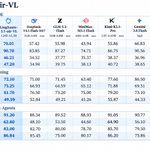
โš•๏ธNew Medical Model! ๐Ÿ“ Remember when @AntLingAGI open-sourced its 124B medical AI model in October? They just released something even better. โค๏ธโ€๐Ÿฉน A 124B-parameter medical AI that can actually see ๐Ÿ‘€ medical images. And the weights are open too. ๐Ÿ”“ ... and better than GPT 6.1 Sol in some benchmarks. LingSante-3.1-air-VL is a new medical-specialized multimodal MoE. It has 124B total parameters but activates only 5.5B per token. And look at the reported clinical visual-understanding benchmarks against GPT-6.1 Sol and Gemini 3.8 Flash. AFUMED-Derm ๐ŸŸข LingSante โ†’ 70.01 ๐Ÿ”ฅ ๐Ÿ”ต GPT-6.1 Sol โ†’ 63.99 ๐ŸŸฃ Gemini 3.8 Flash โ†’ 66.83 AFUMED-Report ๐ŸŸข LingSante โ†’ 90.70 ๐Ÿ”ต GPT-6.1 Sol โ†’ 89.44 ๐ŸŸฃ Gemini 3.8 Flash โ†’ 90.56 CheXpert Plus ๐ŸŸข LingSante โ†’ 46.21 ๐Ÿ”ฅ ๐Ÿ”ต GPT-6.1 Sol โ†’ 44.76 ๐ŸŸฃ Gemini 3.8 Flash โ†’ 36.96 MIMIC-CXR ๐ŸŸข LingSante โ†’ 47.20 ๐Ÿ”ฅ ๐Ÿ”ต GPT-6.1 Sol โ†’ 45.21 ๐ŸŸฃ Gemini 3.8 Flash โ†’ 38.65 Unlike the earlier text-focused Ling-Sante model, this one is designed to work directly with medical images. It can ... ๐Ÿฉป Analyze chest X-rays and draft structured radiology reports ๐Ÿ”ฌ Interpret skin images across 120+ conditions ๐Ÿฅ— Analyze food photos and estimate nutritional content ๐Ÿ“„ Read medical reports alongside clinical history ๐Ÿ”Ž Use image-based medical search to retrieve supporting evidence ๐Ÿค– Interact with healthcare apps through GUI agents Now the Localmaxxer details. ๐Ÿง  124B total / 5.5B active ๐Ÿ‘๏ธ Native text + image inputs ๐Ÿ“š 256K context window ๐Ÿ”“ MIT license โœ… Open weights on Hugging Face โœ… SGLang and vLLM inference support There's a catch. The original weights are approximately 250GB, and the official serving instructions use 4ร— 141GB-class GPUs or 8ร— 80GB GPUs. Can't wait to see the community produce optimized quantizations and benchmarks for smaller local systems. Always remember this is a research model, not a FDA approved medical device. Its outputs require professional verification. But this is a significant development for open-weight healthcare AI. Image Source: Ant Ling
7
7
1
68
4,904
Remember China's Lisuan LX 7G100 GPU I covered back in May? ๐Ÿ‡จ๐Ÿ‡ณ Here's an update (in light of Moore Threads 64GB GPU) Lisuan is now pushing beyond consumer gaming into professional GPUs and physical AI. Its lineup includes these new cards ... ๐ŸŸข LX 7G100 โ†’ 12GB GDDR6 ๐ŸŸข LX Pro โ†’ 24GB GDDR6 ๐ŸŸข LX Ultra โ†’ Rackmount/server workloads On November 20, the company announced a partnership targeting robotics simulation and physical AI. Independent gaming benchmarks put the original 7G100 much closer to an RX 580 than an RTX 3060. โ˜น๏ธ The software ecosystem is still maturing, and I haven't found reliable local LLM inference benchmarks for these cards yet. Meanwhile, another Chinese GPU manufacturer, Moore Threads, is teasing potentially record-breaking consumer VRAM with its upcoming Lushan GPU. More competition is welcome, but what Localmaxxers really need is affordable VRAM, mature inference software, and measured tps. Link in ALT
๐Ÿ†• New Chinese Gaming GPU Entry is Good News for Consumers! Good news for Local AI Lisuan Techโ€™s 7G100 arrives with: ๐ŸŽฎ 12GB GDDR6 memory (192-bit bus) ๐Ÿ’ฐ ~$500 price tag (similar to RTX 5060 Ti) ๐Ÿ“Š Performance close to RTX 3060 level in real games ๐Ÿ‡จ๐Ÿ‡ณ Chinaโ€™s first true consumer gaming GPU with Microsoft WHQL certification โœ… Out-of-the-box support for modern titles like Cyberpunk 2077, Black Myth: Wukong, and more Lisuan has not publicly disclosed the exact memory speed (in Gbps). ๐Ÿ› ๏ธ Early signs show decent driver stability, though performance still has room to grow. More competition in the GPU market is always welcome! ๐Ÿ”ฅ
3
6
2
86
6,965
๐Ÿ‡จ๐Ÿ‡ณ Is China about to release a consumer GPU with 2x the VRAM of NVIDIA's RTX 5090? Chinese GPU manufacturer Moore Threads is teasing a new graphics card called Lushan that could break the record for consumer GPU memory capacity. And the rumored number is 64GB. ๐Ÿ‘ˆ For quick comparison ... ๐ŸŸข NVIDIA RTX 5090 โ†’ 32GB GDDR7 ๐Ÿ”ด Moore Threads Lushan โ†’ 64GB? ๐Ÿ‘ˆ๐Ÿ‘€ Moore Threads previously claimed its next-generation architecture would deliver ... ๐Ÿš€ 4ร— graphics memory capacity ๐Ÿš€ 64ร— AI compute performance ๐Ÿš€ 15ร— AAA gaming performance ๐Ÿš€ 50ร— ray tracing performance These are manufacturer-reported generational targets, and not real comparisons against an RTX 5090. Its previous MTT S80 GPU had 16GB VRAM. Now a Moore Threads product manager has said that Lushan could offer the largest VRAM capacity ever seen on a consumer graphics card. Moore Threads already has its own GPU compute platform called MUSA, and llama.cpp has an upstream MUSA backend for existing Moore Threads GPUs. If Lushan really ships with 64GB and receives compatible inference support, it could potentially run 70B-class quantized models entirely in VRAM on ONE consumer GPU. ๐Ÿ‘ˆ๐Ÿ‘€ Of course, we still need to know details on โ“ Actual VRAM capacity โ“ Memory bandwidth โ“ FP4 inference performance โ“ llama.cpp tokens/sec โ“ Price and availability The card is expected to be discussed at Moore Threads' December 29โ€“30 developer conference. Would you consider a 64GB Chinese GPU for local AI if the price and inference performance were competitive? Links in ALT.
89
109
23
1,012
66,995
๐ŸŽ‰New #1 decision model, and it's from ๐Ÿ‡บ๐Ÿ‡ธ! @baseten released 2x new open-weight decision models built on Google's Gemma 4. These are bison-1 and groundhog-1. ๐Ÿ‡บ๐Ÿ‡ธ ๐ŸŽฏ These models evaluate multiple questions from a single shared input and return calibrated probabilities. ๐Ÿฅ‡ And the larger model just ranked #1 on Artificial Analysis's Decision Index v2.1. Here are benchmarks ... ๐Ÿ† bison-1 โ†’ 76 ๐Ÿฅˆ d1.2-ultra โ†’ 75 ๐ŸŸข Drex Max v1.1 โ†’ 73 ๐ŸŸข mammoth-1 โ†’ 71 bison-1 also achieved a Brier score of 0.14, indicating strong probability calibration. Model stats ... ๐Ÿฆฌ bison-1 ๐Ÿง  31B dense parameters ๐Ÿ“š 128K context ๐Ÿ† #1 of 19 decision models at release ๐Ÿฆซ groundhog-1 ๐Ÿง  26B total / ~4B active ๐Ÿ“š 128K context โšก Designed for faster, lower-cost decisions Both small and large models support ... โœ… Text and image input โœ… Open weights on Hugging Face โœ… MIT + Apache 2.0 licensing โœ… Multiple decisions from one input โœ… Probability scores instead of generated prose The weights are available, although consumer-GPU performance and a tested GGUF deployment still need to be established.
7
3
47
5,823
๐ŸคฏMind blown! โ‰๏ธSomeone with no Verilog experience used AI coding agents to build an FPGA-based LLM inference engine. ๐ŸŽฏ Then the agents optimized it from 6 to 213 tps! Remember my earlier posts about retired crypto-mining FPGAs running local LLMs and Lamb Labs squeezing 12,000 tps out of a $249 FPGA? Well, this is a different type of FPGA experiment. Ankit Gupta wanted to see whether AI coding agents could actually design and optimize the low-level hardware implementation needed to run an LLM. So he gave them access to an AWS F2 FPGA and let them work. ๐Ÿง‘โ€๐ŸŽ“He had never written Verilog before. Here's what happened according to his blog (link in ALT) ๐Ÿค– AI agents wrote C++ and Verilog ๐Ÿงช Ran hundreds of experiments ๐Ÿ”ง Debugged hardware and software failures โšก Optimized memory access and pipelining ๐Ÿง  Added speculative decoding ๐Ÿ’พ Improved ternary-weight packing ๐Ÿ”„ Repeated the optimization cycle Here is the progression ๐ŸŒ Initial working implementation โ†’ 6.43 tps ๐Ÿ”ต Improved pipeline โ†’ 49.21 tps ๐ŸŸข Speculative drafting โ†’ 105.63 tps ๐Ÿš€ Weight packing โ†’ 171.30 tps ๐Ÿ”ฅ Final implementation โ†’ 213.13 tps Holy ๐Ÿ’ฉ! That's 33.13ร— FASTER! The reported engineering effort involved ๐Ÿคฏ ~3 million lines generated across the experiment history ๐Ÿ“Š ~30 million lines of experiment output analyzed ๐Ÿง  ~$10,000 spent on Claude and OpenAI API tokens ๐Ÿ‘ˆ โ˜๏ธ AWS F2 FPGA with 16GB HBM ๐Ÿ‘ˆ ๐Ÿ’ฐ $1.98/hour reported FPGA instance cost The final implementation ran a ternary-weight MoE model and matched the pinned reference output on all 24 benchmark turns. โš ๏ธ This was a cloud-hosted FPGA experiment, not a home PC build. โš ๏ธ The model had an 8,192-token context limit. โš ๏ธ The 213 tps comes from a specific 24-turn benchmark. At 6Kโ€“8K context, decode speed fell to ~76 tps. ... the $10K in AI API spending certainly doesn't make this a budget project. But that's not the point. Previously, using FPGAs for local AI required considerable low-level hardware programming expertise. Now we're seeing AI agents help design, debug, validate, and optimize the inference hardware implementations themselves. We're using AI to help engineer the hardware that RUNS AI. Imagine where this goes when the same techniques are applied to inexpensive, secondhand FPGA cards. Anyone experimenting with AI agents for FPGA development? Source: Ankit Gupta
9
4
6
75
5,782
No I says dual thunderbolt 4 in the listing
1
278
Inkling-2-Mini is on ๐Ÿ”ฅ. The developer behind Basalt is at it again! Yesterday I posted about his inference engine running Tencent's massive 224B Hy4-Flash at up to 172 tps. Today he's running the new Inkling 2 Mini at up to 613 tps on a 1x RTX 5090! ๐Ÿ”ฅ And even an RTX 5060 Ti 16GB is reportedly hitting ~60 tps. Basalt 0.5.5 has been released with optimized NVFP4 support for Thinking Machines' new 26.4B looped-transformer MoE model. Here's the developer's reported RTX 5090 performance ... Token Generation ๐Ÿš€ Structured output โ†’ 613 tps ๐Ÿš€ Chat โ†’ 338 tps ๐Ÿš€ Prose โ†’ 287 tps Prompt Processing ๐Ÿš€ 2K context โ†’ ~14,100 tps ๐Ÿš€ 16K context โ†’ ~12,240 tps ๐Ÿš€ 128K context โ†’ ~8,900 tps The developer also tested llama.cpp on the same RTX 5090 using an IQ4_NL GGUF. ๐Ÿ”ต llama.cpp โ†’ ~95 tps decode ๐ŸŸข Basalt โ†’ 287 tps prose The model pack is just 19.7GB! And Basalt supports ... โœ… Native vision โœ… DSpark speculative decoding โœ… Tool calling โœ… Reasoning effort controls โœ… Up to 1M configured context โœ… FP8 KV cache โœ… OpenAI/Anthropic-compatible APIs โœ… NVIDIA Blackwell GPUs โœ… Open-source inference engine The developer even tested long contexts on 1x RTX 5090. ๐Ÿ“š 131K context โ†’ 173 tps ๐Ÿ“š 400K context โ†’ 108 tps With cold experts spilling into system RAM as needed. Needle-retrieval tests passed at both lengths. The 613 tps result is structured output, not normal prose. These are developer-reported benchmarks, not independent standardized tests. Anyone testing Basalt 0.5.5 yet?
๐Ÿ†• New Inference Engine! Tencent's massive 224B Hy4-Flash is already running at up to 172 tps on a local PCs! And it's doing it with an RTX 5090 + RTX 5060 Ti, using system RAM for the weights that don't fit in VRAM. Remember my earlier posts about Tencent's Hy4-Flash and whether we could squeeze it onto our own hardware? Well, Basalt 0.5.0 dropped, and the developer has already released an optimized NVFP4 model pack. And the reported performance is impressive! Here's the setup ... ๐Ÿง  Hy4-Flash โ†’ ~224B total / ~12B active ๐ŸŸข NVIDIA RTX 5090 ๐ŸŸข NVIDIA RTX 5060 Ti ๐Ÿ’พ 121 GiB system RAM โš™๏ธ Basalt 0.5.0 ๐Ÿ“ฆ 159GB NVFP4 model package Check out the performance of this setup! Decode speed ๐Ÿ“ Prose โ†’ 84 tps ๐Ÿ”ฅ Structured output โ†’ 172 tps ๐Ÿ‘ˆ ๐Ÿ’ฌ Chat โ†’ 92 tps PP speed ๐Ÿš€ 14K prompt โ†’ 3,454 tps ๐Ÿš€ 128K context โ†’ ~3,500 tps ๐Ÿš€ 1M context โ†’ ~2,090 tps And decoding after a 116K-token prompt still reaches approximately 70 t/s! These are developer-reported, single-stream results using DFly2 speculative decoding. Basalt supports ... ๐Ÿ“š 1 MILLION token context ๐Ÿ‘๏ธ Native vision through SigLIP2 โšก Built-in DFly2 speculative decoding ๐Ÿ’พ FP8 KV cache option ๐Ÿ Tool calling and thinking controls ๐Ÿ”— OpenAI/Anthropic-compatible APIs ๐ŸŸข NVIDIA Blackwell GPUs ๐Ÿ”“ Open-source inference engine And the model pack is available on Hugging Face! The interesting part? The developer says the runtime needs roughly 95โ€“100GB of memory, with system RAM holding the experts that don't fit in GPU VRAM. So you don't need hundreds of gigabytes of VRAM to experiment with this model. In the developer's comparison against the original BF16 model: ๐ŸŽฏ Basalt NVFP4 โ†’ 86.09% next-token agreement ๐ŸŽฏ Official Q4_K_M โ†’ 86.96% That's NOT an 86% coding accuracy score. It measures how often the quantized model selects the same next token as BF16. And it raises a real question about how much reasoning and coding quality survives compression. Basalt's developer also says that, in early hands-on testing, Qwen3.8-Flash-Next still felt competitive and ran considerably faster on the same hardware. Now we need independent agent benchmarks to see whether that speed comes with enough intelligence to make Hy4-Flash worth running locally. Video Source: jesdga95 Basalt Author
14
25
2
212
16,259
As an Amazon Associate, I earn from qualifying purchases. ASRock Intel Arc Pro B60 Creator 24GB Graphics Card: link.amazon/B09OnuMoo ASRock Intel Arc Pro B65 Creator 32GB Graphics Card: link.amazon/B0hrcUjX8
1
310
Here's another reason I'm keeping an eye on Intel Arc Pro GPUs for local AI. ๐Ÿ‘€ llama.cpp merged an optimization, delivering up to 73% faster prompt processing on an Intel Arc Pro B60 24GB. ๐Ÿ”ฅ Same GPU. Same model. Just better software. Here's what the developer measured with Qwen3-30B-A3B Q4_K_M on a 1x B60. Prompt Processing โ€” 512 tokens ๐Ÿ”ต Before โ†’ 1,338 tps ๐ŸŸข After โ†’ 2,314 tps ๐Ÿš€ +73% Prompt Processing โ€” 2,048 tokens ๐Ÿ”ต Before โ†’ 1,328 tps ๐ŸŸข After โ†’ 2,256 tps ๐Ÿš€ +70% Token Generation ๐Ÿ”ต Before โ†’ 87.2 tps ๐ŸŸข After โ†’ 87.3 tps And on 3x B60 GPUs running Qwen3.8-Flash-Next, prompt processing improved by approximately 21%. The optimization improves how Intel's XMX engines handle quantized MoE weights, avoiding unnecessary memory transfers and synchronization. These are prefill improvements. Token generation speed is essentially unchanged. Now, the interesting question for the 32GB B65 in my original post ... The B65 hasn't been benchmarked in this PR, but it's another reason I'm paying attention to Intel's growing local AI ecosystem. Anyone testing these improvements on a B65 or B70? ๐Ÿ›๏ธ Affiliate links in GPUs in thread
๐ŸŸฆ Another 32GB Intel GPU option is headed to Japan for local AI enthusiasts. ๐Ÿ›๏ธ ASRock's Intel Arc Pro B65 Creator 32GB is launching in Japan on November 27, and its dual-slot blower design looks particularly interesting for multi-GPU builds. The card is already available in the US, but it's getting new attention with its Japanese launch. Here's the hardware stats ... ๐ŸŸฆ 32GB GDDR6 VRAM ๐Ÿ‘ˆ (RTX-5090-32GB=$6K) ๐ŸŸฆ 256-bit memory bus ๐ŸŸฆ 19Gbps memory speed ๐ŸŸฆ 160 Intel XMX AI engines ๐ŸŸฆ PCIe 5.0 x16 ๐ŸŸฆ Dual-slot blower design ๐ŸŸฆ Vapor-chamber cooling ๐ŸŸฆ Honeywell PTM7950 thermal interface ๐ŸŸฆ 12V-2x6 power connector What interests me most is the potential for building dense, multi-GPU local AI workstations. Two cards โ†’ 64GB aggregate VRAM Four cards โ†’ 128GB aggregate VRAM With compatible inference software capable of distributing models across GPUs, that's enough memory capacity to experiment with some seriously large local models. And the blower cooling design could be particularly useful when packing multiple cards into a workstation. ๐Ÿ’ฐ Japan launch price: ยฅ289,800 ๐Ÿ“… Japan availability: November 27 This isn't a new GPU architecture or a brand-new card, but it's another option for local AI builders looking beyond NVIDIA. Affiliate links in thread
9
1
1
38
3,175
๐Ÿš€ Qwen3.8-Flash-Next got another inference speedup in vLLM. And this one makes a CUDA kernel up to 1.6ร— FASTER without changing the model. ๐Ÿ”ฅ A new optimization was merged into vLLM today, targeting Qwen3.8-Flash-Next's GDN (Gated DeltaNet) layers during multi-token prediction. The developer optimized the fused CUDA decoding kernel for 16-bit recurrent states (BF16/FP16). Instead of changing the model or reducing precision even more, the optimization makes the existing computation more efficient. Here are the results from vLLM ... ๐Ÿš€ Individual CUDA kernel โ†’ 1.3โ€“1.6ร— faster ๐Ÿš€ Memory throughput โ†’ up to 6.3 TB/s ๐Ÿš€ End-to-end decode steps โ†’ up to 5.3% faster also the performance gains increase with concurrent requests. ๐ŸŸข 4 requests โ†’ ~2% faster ๐ŸŸข 8 requests โ†’ ~3% faster ๐ŸŸข 16 requests โ†’ ~4% faster ๐ŸŸข 32 requests โ†’ ~5% faster The benchmark used ๐Ÿ”ต Qwen3.8-Flash-Next-FP8 ๐Ÿ”ต MTP3 speculative decoding ๐Ÿ”ต 4ร— NVIDIA GB300 GPUs ๐Ÿ‘ˆ ๐Ÿ”ต FP16 recurrent state ๐Ÿ”ต vLLM with expert parallelism I'd love to see whether similar optimizations eventually benefit consumer NVIDIA GPUs running local inference.
8
3
50
4,950
๐Ÿ’ก If your local AI model could learn from its mistakes while you're sleeping would you allow it? And wake up a better coding agent wo using the cloud. A new open-source project called Songe is doing exactly that. Here's how it works ... A) You use your local AI coding agent normally through OpenCode, Pi, or another compatible tool. B) Your model makes mistakes and you correct them. Tools fail and you give instructions and preferences. C) Songe captures those lessons. Then, when your computer is idle, it uses your local hardware to improve the model. It has 2x wasy to learn. ๐ŸŒ™ Quick Dream: Extracts your preferences and corrections and adds them to the model's instructions. No training required. ๐Ÿง  Deep Dream: Generates practice examples from those lessons, then trains a small LoRA adapter using your local GPU. And it doesn't simply replace your working model. Songe evaluates the updated version against the previous one and only adopts it if it passes its improvement checks. You can roll back to earlier versions. Here's what makes this particularly interesting for Localmaxxers. โœ… OpenCode and Pi integration โœ… LM Studio, Ollama, llama.cpp, vLLM and MLX serving support โœ… Apple Silicon training via MLX โœ… NVIDIA training via PyTorch โœ… AMD training support listed, but not yet tested end-to-end โœ… Automatically pauses when you return โœ… No cloud, accounts or telemetry โœ… Apache 2.0 ๐ŸŽฏ The project uses something called on-policy distillation where the existing model acts as the teacher, and a version with a small adapter learns from synthetic practice examples. Your original conversations aren't directly used as training examples. Imagine using a local coding agent for weeks and having it gradually adapt to YOUR coding style, tools, preferences, and recurring mistakes. Without repeatedly explaining the same things. Now, Hermes and OpenClaw already learn through memory and skills. Hermes even has a Hypnos plugin for overnight LoRA training. But Songe takes a different approach by adding an automatic learning layer to the local models and coding agents you already use. Link in ALT
22
5
1
62
3,234