

Scientist II and Assistant Professor, Tufts University Human Nutrition Research Center on Aging, Ophthalmology, Friedman School of Nutrition Science and Policy
Boston, MA
Joined February 2017
- Tweets1.3K
- Following135
- Followers234
- Likes5K





Sheldon Rowan retweeted

As part of my group's new focus on executing and analyzing the data from large-scale field experiments on biodiversity recovery, I have developed a method to use continuously operating field audio recorders to precisely localize vocalizing animals at massive scale - in the millions. And I want to introduce you to this work here.

The observation that heavier mice get more lifespan protective effects than lighter mice is quite important. This also explains some of the sex differences observed from geroprotective agents, where male mice are heavier than female mice.

Body weight modifies the efficacy of lifespan-extending interventions in ad libitum-fed mice biorxiv.org/content/10.64898…

1
36
Sheldon Rowan retweeted

Exceptional longevity in centenarians and mice linked to the gut microbiome's augmented ability to modify (deconjugate) bile acids @Cell_Metabolism
cell.com/cell-metabolism/ful…

Sheldon Rowan retweeted

Nature research paper: NRF2 is a mechanosensitive checkpoint for NLRP3 inflammasome activation
go.nature.com/4jd7JcM

Sheldon Rowan retweeted

Today I'm posting a new video to my YouTube channel! PubMed has stopped indexing Scientific Reports (for the time being at least)... Is anyone surprised? youtu.be/HXcrOkRUkLY

Sheldon Rowan retweeted

Liming Liang et al. from the Harvard T. H. Chan School of Public Health evaluate the association of metabolomic signatures reflecting adherence and metabolic response to dietary patterns with prevalence and structural severity of AMD.
doi.org/10.1167/iovs.67.13.1…

Sheldon Rowan retweeted

It's time to cast your vote for the 2026 @ARVOinfo Scientific Image Contest! View the stunning finalist images and select your favorite by Nov. 10: bit.ly/4mNNbq8

ALT Finalists for 2026 ARVO Scientific Image Contest: A collage of vibrant microscopic images depicting various cellular and molecular structures.
Sheldon Rowan retweeted
The retina photo will become a gateway to predict and prevent diseases @NatBME A foundation model tested and validated in 4 cohorts
nature.com/articles/s41551-0…

Saturated fats, as a whole, increase cardiometabolic risk, but not all saturated fats individually have this effect. My wonderful colleague Nirupa Matthan recently published how theses differences connect to bile acid metabolism and gut microbiome solutions.tufts.edu/approach…
Sheldon Rowan retweeted

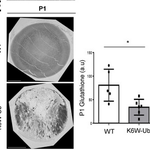
BrightFocus Foundation Macular Degeneration Research grant recipient Claudio Punzo, PhD, at UMass Chan Medical School, found that photoreceptors play an active role in age-related macular degeneration.
His team then developed a single-injection gene-silencing treatment designed to reverse that process, an approach that could open the door to a new way to treat the disease.
Explore the research. 🔎 🔬 ↘️ brightfocus.org/news/a-new-s…

Sheldon Rowan retweeted

In 2014, a 77-year old patient with failing eyesight got a transplant no human had ever received: her own cells, reprogrammed in a lab with Yamanaka factors and grown into retina. 👁️
A new paper checked on those cells 10 years later.
Here's what they found. 🧵

Sheldon Rowan retweeted

As someone living with retinitis pigmentosa who has received Ocugen's OCU400 gene therapy, I can tell you research like this means real hope for people like me. Thank you for backing the science that's turning "there's no treatment" into "there might be." Happy World CRISPR Day.
Sheldon Rowan retweeted

Another moment of pride! 🎉 Emily Tom’s PhD work is finally published! Her work reveals a fascinating consequence of aging: plasma membrane damage increases, and lysosomes step in to repair the membrane and keep cells alive. Repost it if you like it! link.springer.com/article/10…

Sheldon Rowan retweeted
Decline of chaperone-mediated autophagy in aging impairs macrophage clearance of senescent cells
nature.com/articles/s43587-0…

Sheldon Rowan retweeted

This @Nature paper on sugar & the gut microbiome is pretty crazy:
It is known that the gut microbiome (the bacteria living in the gut) has a powerful effect on health & disease, especially via immune modulation.
But one reason why this field has remained in a “hypothesis” state for so long is that, for all practical purposes, it’s almost impossible to rigorously connect the composition of the food a person eats with the composition of their gut microbiome and further to outcomes.
This is because nobody actually checks everything a person eats, and people are notoriously bad at self-reporting the food they consume.
This paper actually did this! It looked at 9,419 food items consumed by 173 hospital patients undergoing allogeneic haematopoietic cell transplantation during a course of antibiotics. In this therapy, donor-derived blood-forming stem cells are used to rebuild a recipient’s blood and immune system to treat blood cancers. Then they linked this to gut microbiome composition derived from repeated stool measurements.
Antibiotics are known to disrupt the gut microbiome, which can also facilitate resistance. So the links between all these (allo-HCT, antibiotics, gut microbiome, diet) are probably quite complex.
The paper is overall quite interesting, but essentially what it found was that, on antibiotics, the gut microbiome diversity was reduced if sugar was consumed vs no sugar. Outside antibiotic treatment, there was no change.
These are of course correlations and not causality, but it’s nevertheless impressive the rigor and level of depth with which this study was done.


People who underwent stem-cell transplantation and ate sugar-rich food had disrupted communities of gut microorganisms during antibiotic treatment.
go.nature.com/4jwALof

Sheldon Rowan retweeted

Our new paper in @Nature . Over 9K precisely recorded meals paired with longitudinal microbiome data reveals that dietary sugars consumed during antibiotic treatment exacerbate gut ecosystem damage. With @tsonipeled & @DrMvandenBrink labs.
nature.com/articles/s41586-0…
Sheldon Rowan retweeted
In people with heart failure compared with healthy controls, the gut microbiome changes and that is linked to severity of heart dysfunction and outcomes @NatureCVR
nature.com/articles/s44161-0…

Sheldon Rowan retweeted

A Mayo Clinic team just built the cleanest causal test I've seen for NAD's role in aging. They engineered mice whose NAD synthesis depends entirely on dietary niacin, then pulled the niacin. Result: kyphosis, muscle and bone loss, cataracts, frailty, cellular senescence, shortened lifespan. Put niacin back and most of it reverses, without fully restoring NAD.
That partial-restoration gap matters. It says NAD depletion triggers senescence programs that do not simply snap back when the cofactor returns. We flagged senescence as a load-bearing hallmark in the Biomarkers of Aging Consortium work (Moqri et al., Cell 2023); this is a rare in vivo model that makes the causal chain from cofactor to senescence to phenotype explicit and reversible.
Nat Commun, Benitez-Rosendo, Chini et al. doi.org/10.1038/s41467-026-7…

Sheldon Rowan retweeted
Adrian V. Cioanca et al. from The Australian National University use a multiomics approach to reveal novel miRNA–mRNA–protein expression profiles in the aged female retina.
doi.org/10.1167/iovs.67.11.3…
