






Model ML is no longer a productivity tool.
Today, we’re launching Lead. A persistent, proactive AI agent built for the enterprise.
Until now, I’ve described Model ML as an analyst in your pocket. I don’t think that description fits anymore.
Lead is much closer to a digital twin. We don’t just make your teams more productive, we scale up your best people.
It learns from you. It understands what you care about, how you approach a problem and how you like information presented.
But the ambition goes much further than learning your preferences.
Think about everything you’ve learnt over decades of doing what you do. The questions you know to ask. The small detail that makes you pause. The context behind a client relationship. Knowing when something doesn’t quite add up, even when everything looks right on paper.
That knowledge rarely lives in a document. It lives in your head.
As Lead works with you, it learns more of those nuances. The goal is to take the experience and judgement you’ve built over a career and extend it beyond the limits of your own time.
Not just helping you do more work. Putting more of what you know to work, around the clock.
Here’s how it happened.
About a month ago, James, Alex and the research team started experimenting with rebuilding our agent architecture from scratch.
The question was simple. What if, instead of building an AI that waits for you to give it work, we built one that was always working for you?
Persistent, proactive and continuously learning from you.
If you’ve used consumer products like Instinct and Muse, you’ll have a sense of what this feels like.
But bringing this into financial and professional services is an entirely different challenge. These are some of the largest and most highly regulated institutions in the world. Security, data privacy and compliance are fundamental to whether something like this can be deployed at all.
That’s where the last two years of building Model ML matter. This new architecture builds on the enterprise infrastructure and security foundations we’ve already established with our customers.
We weren’t starting from zero.
Four weeks later, we’re launching Lead.
Clearly, this isn’t something we’re going to roll out to everyone at once.
An AI that learns how you think is one thing. One that puts that understanding to work while you’re asleep is another.
At that point, the question is no longer just how much time it can save you. It’s how much responsibility you’re ready to give it.
We’re starting with limited access. We’ll be deliberate about who gets it, what Lead is allowed to do and how that expands.
I genuinely believe this changes financial and professional services forever.
🤖 Made with AI
We’ve raised $250M at a $1.5B valuation, 18 months after launching from stealth.
@generalatlantic and @QEDInvestors co-led the round, joined by @EvolutionEquity , @airtreevc , Forestay Capital, @ycombinator , @FTPartners , @phxcrt , @inceptionfundvc and @13bookscapital .
Model ML gives every banker, consultant and investor their own personal AI agent, running on their firm’s own systems and data. In Q3, our annual recurring revenue grew 12x year on year and daily active users grew 26x.
We’ll use the funding to expand our research and engineering teams in London and New York, and to support wider customer deployments. Our new offices in Paris, Madrid, Tokyo, Singapore and Dubai mean we can serve clients wherever their teams are. And this is just the beginning of our global expansion, with many more office openings to come, starting with Sydney.
Thank you to our investors and our customers for backing us.

Claude Fable 5.2 is out, and it’s the best model we’ve tested for creating presentations.
Ahead of the launch, we worked closely with the @AnthropicAI team to test it against the Model ML Composite, our proprietary benchmark for AI in financial services, alongside 18 other closed and open-source models.
A few things stood out to our evals team:
- It builds better decks than any other model we have tested. On PowerPoint creation it scores about 7.5% higher than our current best model, Opus 5.5, and uses 17% fewer tokens to do it. That’s a big jump on one of our hardest benchmarks, requiring complex tool use, visual reasoning and aesthetic taste.
- It’s the leanest of the strong models on analytical finance. Gemini 4 Argon, GPT-6 Astra, and Fable 5.1 also score highly, but every one of them uses more tokens to get there.
- It’s Anthropic’s best model on multi-document work, ahead of Opus 5.5 and behind only GPT-6.1 Sol, GPT-6 Astra and Gemini 4 Argon.
It doesn’t win everywhere, though. Gemini 4 Argon and GPT-6 Astra are still the strongest all-rounders on raw score, and on pure-play financial workflows and single-document work Fable 5.2 sits mid-table.
Lean also doesn’t mean cheap. Fable 5.2 sits at the top end of the cost range, at 2 to 2.6x the cost of Opus 5.5 per task.

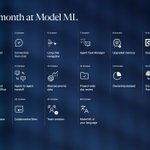
Here’s what we built and put into production in the last 30 days:
- Twice as fast, everywhere: Improved agent speed by 2x.
- Agent Task Manager: Requests from Outlook, Teams and meetings become finished drafts, no prompting needed.
- Upgraded memory: Every chat and agent already knows who you are, what you cover and who you work with.
- Agent-to-agent handoff: Type / to hand your next message to another custom agent.
- Connectors from chat: Your agent suggests the right connector, and you connect it without leaving the conversation.
- Macroeconomic data: Official series for the US, China, the UK, Japan, the euro area, Canada and Australia, with every figure cited to its source.
- Ownership dataset: Structured holdings data for over 8,000 institutional managers each quarter, with every figure cited to the exact line in the filing.
- Dun & Bradstreet partnership: D&B company profiles, ownership data and risk scores, now in Model ML through MCP.
- Quartr partnership: First-party IR materials from more than 16,000 public companies across 65+ markets.
- Create files and carry chats across Office plugins: Create Word, Excel and PowerPoint files from any plugin, and carry over chats from the desktop app with full context.
- Excel sources in PowerPoint: Click any Excel source in a deck to open the workbook at the cited sheet and range.
- Google Workspace exports: Send files to Google Docs, Sheets, Slides or Drive in one click.
- Collaborative Sites: Work on one Master copy and see where colleagues and agents are editing live.
- Team creation: Set up a team for any group you work with, straight from the Teams page.
- Project-wide doc review: Check a document against a whole project, and MP4, HTML and EML files.
- Long chat navigation: Hover the index to preview each question and answer, then jump straight to the one you need.
- Model ML in your language: Choose from Japanese, Simplified or Traditional Chinese, Spanish or French.
Huge thanks to the team. We’re still shipping the fastest.


Nice to make the AI Disruptors 60, alongside our friends at @WeAreLegora , @p0 , and @Starcloud_
Thanks @GreenfieldVC and @TechCrunch
Read the full list here: disruptors60.ai/winners/2026

Last week on the @theallinpod , @chamath , @DavidSacks , @Jason and @friedberg flashed up a chart from Vercel: In six months, AI volume on its platform went from 80% closed source to 80% open source. What does that tell us?
Open source is now good enough for a lot of work. The hard part is knowing which work. Thats an evals problem.
Accuracy, latency and cost need to be measured continuously and per workflow.
Without that, you can't intelligently route between frontier models, open-source models and anything you've fine-tuned yourself. You just pick one and hope. Or you leave it to users, who will either guess, default to the newest and most expensive model, or set it once and never touch it again.
And the pressure to get this right is growing from two directions.
The first is cost. Running your own models is getting dramatically easier. You can rent and scale GPUs much the way you'd provision a database. Fine-tuning, self-hosting and eventually training are becoming economical for far more companies. I expected that. I didn't expect it this fast.
The second is IP. Researchers are getting more and more concerned about what they send to frontier models, because novel work has a way of ending up in someone else's training run. Zero data retention helps, but it isn't the end of the conversation.
Both point away from running one default model, and towards a routing decision you make thousands of times a day.
That's why evals are now mission-critical infrastructure.
Here's how ours work: modelml.com/articles/introdu…

3
363
We're delighted to welcome Alex Kayyal to Model ML as our Chief Financial Officer.
Alex has spent more than two decades building, investing in and advising some of the world’s leading technology companies.
Most recently, he was CFO of The Trade Desk (NASDAQ: TTD), a public technology company with nearly $3 billion in revenue. His history with the company actually goes back more than a decade: he was one of its early investors, later joined the board as an independent director, and ultimately became CFO.
Before that, Alex spent nearly a decade at Salesforce, where, as SVP and Managing Partner of Salesforce Ventures, he helped build the investment business globally and oversaw more than $5 billion invested across 300+ companies.
He later became a General Partner at Lightspeed, and across his investing career has backed and worked closely with companies including Algolia, Atlan, monday.com, Gong, Snyk, Tennr and Wiz.
He started his career at Merrill Lynch, first in the Office of the CFO and then advising companies on IPOs and M&A, much of the same work our customers now run on Model ML.
Across his career, Alex has sat on 11 boards and worked closely with more than 30 technology companies. As a banker, operator, investor and board member, he’s seen how great technology companies are built and scaled from almost every side of the table.
Hiring a CFO at this stage can sometimes feel like hiring another founder.
Being exceptional at the job is only one piece of the puzzle. Finding someone who thinks about the world the way you do, shares the ambition for what you’re building, and is willing to do whatever it takes to win is a whole different ball game.
Welcome to Model ML, Alex. Let’s get to work.

Sonnet 5.5 is out, and we're excited about this one.
Ahead of its launch, we worked closely with the @AnthropicAI team to test it against the Model ML Composite, our proprietary benchmark for AI in financial services. Several findings stood out to our evaluations team:
- Near-Opus quality at a fraction of the cost. Anthropic's latest model stays close to Opus 5.5 in four of our five categories and costs 56–78% less in all five. That puts it right on the cost–performance frontier for analytical finance, PowerPoint creation and multi-document work.
- A standout slide builder for the cost. On PowerPoint creation, Sonnet 5.5 comes close to the top slide builders (Opus 5.5, GPT-6 Astra and Fable 5.1) at less than half the cost of any of them. It also beats GPT-5.6 Sol, GPT-6 Sol and Gemini 3.8 Flash on both quality and cost, and it comfortably outscores the best open model, DeepSeek 4.1 Flash, while costing less.
- Among the leaders on multi-document work, at a mid-range cost. Sonnet 5.5 sits on the cost–performance frontier, just behind Opus 5.5 and Gemini 3.8 Flash, with GPT-6 Astra leading the category. It also comes in ahead of Fable 5.1 at a fraction of its cost.
- On pure-play financial workflows, open models outperform Sonnet 5.5. DeepSeek 4.1 Flash and Kimi K3 both outscore Sonnet 5.5, with DeepSeek at a fraction of the price.
Try Claude Sonnet 5.5 in Model ML today.


We just fine-tuned GLM 5.3 and it outperformed GPT-6 Astra and Claude Opus 5 on this task, while costing ~95% less.
Here’s what we did.
First, we identified a high-volume task where we had a very clear definition of right and wrong. We chose “PowerPoint slide quality checking”: our agent looking at a slide it has built and deciding whether it contains a defect or is clean.
We started by running GLM 5.3 out of the box against our test set. It was okay. Precision on defects was 43%, with an F1 score of 52%.
Then we built a synthetic training pipeline. We took high-quality slides, programmatically introduced different visual and layout defects, and used frontier models to independently identify and verify the defects before accepting them into the training set. We split the source material before generating corruptions to make sure variations of the same slides couldn’t leak between training and testing.
We fine-tuned GLM on 3,244 of these slides, with another 180 held out for validation, then tested it against a completely separate set of 193 slides containing 346 defects.
The result was pretty insane.
Precision went from 43% → 88%.
F1 went from 52% → 77%.
That put the fine-tuned GLM ahead of GPT-6 Astra and Claude Opus 5 on the same test set, at ~95% lower cost.
Great work by the team - Damiano, Joseph, James and Iñaki.

Excited to announce the expansion of our partnership between Bigdata.com and Model ML.
Bigdata.com users from the world’s largest financial institutions have already been accessing Model ML's proprietary Global Filings data on the platform. Now it runs both ways.
Model ML users with a Bigdata.com license can pull licensed content and analytics directly into Model ML, including premium news, podcasts, expert interviews, filings and transcripts, and entity-level sentiment. This gives the custom agents they build richer context and full source attribution for memos, models, and client deliverables.
Live now for all Model ML users with a Bigdata.com license.

1
197
We're pleased to share that HSBC is working with Model ML to help support adoption of AI across the bank.
Teams are using Model ML to assist with research and analysis and to help draft content in HSBC formats and templates. The underlying approach can be configured for different desks, helping colleagues apply AI in a way that fits existing workflows.
Model ML is proud of the partnership and grateful to the teams we’ve worked alongside.
We’re excited to announce that Model ML is partnering with Entropia, the agent-native data room built for M&A.
Entropia's agents read, understand, and act on deal documents, from preparing the data room to running diligence, turning what used to be days of work into minutes, all within the permissions your deal team already has in place.
Through MCP, Model ML users can now access their Entropia data rooms directly in Model ML, alongside everything else in the workflow.
Available today for anyone with an active Entropia data room.

146
Model ML has shipped a lot in the last four weeks. Across everything we built, two themes stood out: enhancing collaboration with your team, and streamlining the work you do together.
Here's what went live:
- OpenAI feature (10 Aug): We worked with OpenAI behind the scenes on the release of GPT-5.6, running it against Model ML’s Composite, the leading benchmark for AI in financial services. The full paper detailing our work together has been published on their website.
- HSBC Asset Management investment (11 Aug): We shared that HSBC Asset Management has invested in Model ML through its flagship VC Strategy.
- Image generation (12 Aug): You can now ask the agent to generate or edit an image and it will appear inline in the conversation. Iñaki made this one possible.
- Agents sharing skills (14 Aug): Thanks to Simone, agents can now look up skills from your library and share them with each other.
- User management (17 Aug): Client admins can provision and deprovision users, promote or demote admins, and export member activity. Great work from Diogo and Dominic.
- TresVista (18 Aug): We shared how TresVista scaled their Model ML usage 10x without their costs going up. A huge win from Milan and Vaqar.
- Scratch Pad (19 Aug): James brought a new collaborative feature where you and the agent can write, edit and shape together, even mid-run.
- Select what the agent edits (24 Aug): Click on specific elements on a PowerPoint slide or Excel sheet and the agent will work on those. Shipped by Mihir.
- Document cross-checks (25 Aug): Give the review agent a draft plus the source it should match, and it flags every number and claim that doesn't line up. By Somesh and Diogo.
- Setting up teams (26 Aug): Admins can build teams as distribution lists, so work gets shared with the right group. By Diogo.
- Word document review agent (27 Aug): Our agent that specialises in document review came to Word, with fixes landing as native tracked changes. Credit to Somesh.
- Shared chats (1 Sep): Thanks to Mohit, colleagues can now work with chats you choose to share in a project.
- Comments on Sites (2 Sep): Savish and Chester have brought comments to Sites. Get started by clicking anywhere to pin a comment, reply, or mention a teammate.
- Financial Technology Partners / FT Partners Firmwide Rollout (3 Sep): I sat down with the great Steve McLaughlin, Founder & CEO of FT Partners to discuss their firmwide rollout of Model ML.
- Parallel agents in Excel (4 Sep): Run multiple agent sessions on the same open Excel file. A single workbook no longer means a single task at a time. Shoutout to the Plugins team Isaac and Luca.
Much more to come soon as we continue to expand across the globe.
Stay tuned.

2
3
355
Next Tuesday, 15 September, Model ML will be running a hands-on workshop at AI Pathfinder's Private Equity AI Strategy Day in London.
Tyler Sisk will be joined by Fred Kinsman, Investment Director at Three Hills, to talk about how Model ML and Three Hills have been working together to transform the firm's day-to-day workflows.
This will be followed by an interactive session, where they’ll show PE teams how to start doing the same with their own day-to-day work.
If you're there, come and find us.

2
132
It's become very obvious that the product is now the harness. But we realized that when we talked to our customers, most people didn’t actually know what an agent harness is, and why it matters.
Language models like ChatGPT and Claude take text in, and send text out. That's it. The harness is everything we build around it to turn that into real work. It assembles the context (the information the model needs) sends it to the model, and reads what comes back.
When the model wants to act, like creating a PowerPoint deck, all it can do is write text asking to use a tool. The harness reads that request, executes the tool, and actually builds the deck, pulling information from the relevant sources to tell the model what happened. Then it loops, until the work is done.
Get the harness right and the same model produces better work on fewer tokens.
Watch James, our Head of AI (and by the way, a PhD in Theoretical Physics from @imperialcollege ), explain what an agent harness is, and why it’s necessary, in more detail.
Explainer videos about agentic infrastructure are usually a special kind of boring. We tried to make one you'll actually finish. Let us know what you think.
8
185
Claude Fable 5.1 is now live in Model ML. From testing out Fable 5.1 pre-release, a few things stood out to our evals team when they ran it through Model ML’s Composite, the leading benchmark for AI in financial services:
- Fable 5.1 displays best-in-class financial reasoning: @AnthropicAI 's latest model leads on financial workflows and is narrowly ahead of Opus 5 and GPT-5.6 Sol on analytical finance.
- It’s better at holding context: The clearest gain over Fable 5 is carrying financial context through a multi-step analysis, from connecting the reasoning, to keeping assumptions consistent and evidencing conclusions.
Gemini 3.7 Flash remains ahead of Fable 5.1 on multi-document work, and GPT-5.6 Sol leads on complex Excel model construction.
On cost, Fable 5.1 is significantly cheaper than Fable 5 for comparable or better performance, but continues to sit at the top end of the cost range for most tasks.
Fable 5.1 watermarks its text outputs in line with EU AI Act transparency requirements. This will not have any practical impact on the quality or content of Claude’s outputs. Other major model developers have signed the same Code of Practice and will be implementing their own watermarks.
And as with Fable 5, @AnthropicAI 's safety architecture requires 30-day data retention on all Fable 5.1 traffic, so depending on your setup we'll work with your compliance team to determine whether we can switch on access.
Try Claude Fable 5.1 in Model ML today.
