
Stanford Neurobiology and Bioengineering Precision molecular design / synbiochem. Also @michaelzlin
Greenberg → Tsien →
Joined July 2022
- Tweets1.8K
- Following215
- Followers2.8K
- Likes1K



Prof. Michael Lin retweeted

SfN is closely monitoring the detention of Princeton University neuroscience graduate student Eva Yi Xie by USCIS. We are in close contact with Princeton University & stand ready to provide any support that may be needed.
Our thoughts are with Eva, her family, & her colleagues.
Social medialization has come to science too:
"People with integrity are essentially punished for being meticulous... Entire research areas become saturated with unreliable findings and unsupported interpretations, reinforced by citation networks, press coverage, and awards"

Many of my recent conversations with other neuroscientists revealed a common concern: the alarming proportion of essentially worthless systems neuroscience papers appearing in the top journals.
Not exactly fraudulent (real fraud is actually not that common), but a familiar combination of weak data, arbitrary interpretations, and elaborate statistical or computational analyses that create an illusion of rigor. Basically highly polished garbage, with a fashionable topic and a narrative designed to appeal to editors.
Of course, none of this is new, but it's getting worse and I don't think outsiders can even get an accurate picture of the latest systems neuroscience any more. As one colleague recently put it, if the public knew just how shaky much of the evidence really is, confidence in the entire field might collapse, and we might all go down if the public loses trust in the whole enterprise, especially now that AI seems to be improving so quickly.
The deeper problem is systemic: our mechanisms for evaluating, rewarding, and propagating scientific results are broken. Scientists who produce reliable work are often marginalized. Their progress is considered too slow, and because of their perceived lack of productivity, often they can't even secure enough funding to keep their labs running. Some can't even get a job. I have seen many examples of this over the years. People with integrity are essentially punished for being meticulous. Meanwhile, the most relentless storytellers and opportunistic careerists accumulate funding, prestige, and influence, as they expand their academic families and place their people throughout the field. Criticizing a member in one of these "Corleone families" carries enormous professional costs.
The result is not just a lot of bad papers. Entire research areas become saturated with unreliable findings and unsupported interpretations, reinforced by citation networks, press coverage, and awards. The longer this continues, the harder it will be to separate fact from fiction, and the greater the eventual damage to neuroscience itself.
Prof. Michael Lin retweeted

Yi (Eva) Xie 事件后续:
据网友提供的线索,Yi Xie 14岁时随父母移居纽约,全家申请了政治庇护。此次遭 ICE 羁押,很可能与当年入境时的身份状态及后续身份问题有关。
Yi Xie 是 2020 年 Regeneron Science Talent Search 40 名决赛选手之一。以下是她当年接受采访时的相关内容:
“我14岁的时候,父母因遭受政治迫害,被迫逃往美国寻求庇护。我几乎有一年无法上学。2016年夏天,我和父母得知,在纽约我可以获得平等的受教育机会。我抓住了这次机会,参加了专门高中入学考试(Specialized High School Admission Test),并在那个夏天被布朗克斯科学高中(Bronx High School of Science)录取。作为一个对美国的语言、文化和社区了解不多的人,我不断走出舒适区。在纽约继续接受高等教育的过程中,我明白了:只要勇于拥抱并追求任何可能性,就有可能带来划时代的突破。我也意识到,自己同样有潜力成为我梦寐以求已久的英雄——一名科学家。”
Sources: societyforscience.org/blog/r…


Statement from Dean of the Graduate School Rodney Priestley about third-year graduate student Yi (Eva) Xie, who has been detained by federal immigration authorities:
"News of Eva’s detention is distressing for me and many members of the Princeton University community. The University has arranged for Eva to be represented by legal counsel, and we will remain in contact with her legal team, her family, and colleagues to provide support. We hope Eva will soon be able to resume her studies at Princeton."

ALT “News of Eva’s detention is distressing for me and many members of the Princeton University community. The University has arranged for Eva to be represented by legal counsel, and we will remain in contact with her legal team, her family, and colleagues to provide support. We hope Eva will soon be able to resume her studies at Princeton.” Rodney D. Priestley Dean of the Graduate School Princeton University
Prof. Michael Lin retweeted

Our colleague Eva Yi Xie, a Princeton neuroscience PhD student, was detained by ICE at Reagan National Airport on her way home from SfN, where she’d just presented her poster. She’s being held in Chantilly, VA. Please help us bring her home. 📷


Prof. Michael Lin retweeted

Susan Collins proposes a 1% increase in NIH budget and keeping existing indirect cost protections for universities and the same multi-year funding cap in the latest FY27 draft bill. Some may find it reassuring, and it is to some degree, but the truth of the matter is these flats or lower-than-inflation increases make it impossible for labs to sustain their research.
Addiction and mental health research are barely getting any increase..
NIDA +$5M (+0.3%)
NIAAA +$0M (flat) Where is the love?
NIMH +$10M (+0.5%)
news.bgov.com/bloomberg-gove…

Prof. Michael Lin retweeted

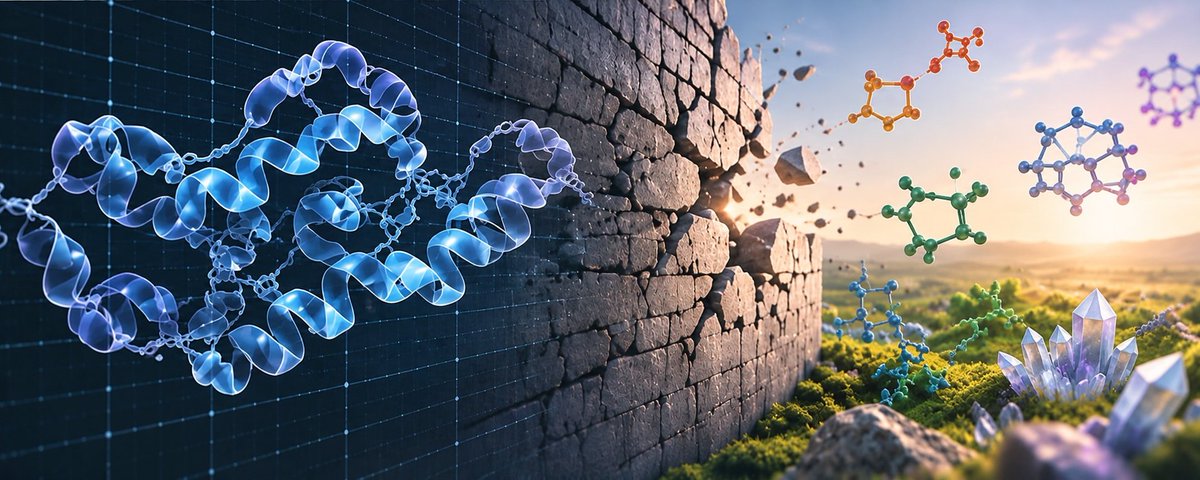
From the article:
"Confidence in a predicted shape is not evidence of function. It's time we stopped treating it like it is. Because ultimately the goal is not to design proteins that look right, but that work in the real, messy world."

Come see our poster at #SFN2026 for the latest in both one- and two-photon voltage imaging!
ASAP6c: dim-to-bright for high-contrast action potential imaging
ASAP7y: bright-to-dim for sensitive subthreshold imaging
... plus more voltage imaging from collaborators!

and
PSTR115.20: miniOEG: Spatially-resolved optical read/write of neural activity across rodent dorsal cortex during naturalistic behavior

1
56
Don't miss @ewadorotaz's nanosymposium talk today at 9am (Wed) in WCC Rm 201:
NANO44.05: Enhanced High-Speed In Vivo Voltage Imaging Through Engineered Two-Photon Excitation

Prof. Michael Lin retweeted

Post-poster session rehydration! at the Society for Neuroscience meeting in Washington DC. I'm inspired by our talented team of presenters– and it's exciting to see all the energy and opportunity in modern neuroscience coming from the global community...

Wonder if NIH will extend deadlines by 1 day now that we have no officially allowed way to email grant drafts or data to collaborators (or budgets to institution officials)
6
783
Prof. Michael Lin retweeted

Will biology/medicine face a similar fate as math??
I don't think so...
🤖 Made with AI

Prof. Michael Lin retweeted

Would be rad if an EEG lab/startup just showed good cursor control (driven by brain activity!) in a rigorous way. The fact that this still hasn’t happened in 2026 despite the thousands of hours of data collection and modern AI is discouraging
Good essay on how to understand the brain, but the electrodes it emphasizes can only record neuronal outputs.
Understanding neural calculation and coordination requires detecting dendritic inputs and oscillations. For that there is only voltage imaging (mentioned briefly).

Your brain is composed of a wide range of cell types connected into intricate circuits. The properties of these cell types underpin our ability to perceive, reason about, and interact with the world.
Cell types coordinate their electrical signals to drive behavior. When something goes wrong with one of these cell types, we develop diseases like Parkinson’s or blindness.
Many other mental health problems may stem from problems with a single cell type, but we currently lack an easy way to link neural activity to cell type identity.
Cell types have been cataloged extensively in fixed brain tissue, but they are difficult to identify in recordings from living brains. So how do we overcome this gap?
Josh Siegle has a plan that he outlines in a new piece in the Launch Sequence: ifp.org/brain-cell-types
Prof. Michael Lin retweeted

We wrote a biological light sheet into the brain🤯
SPress confines expression to a thin chosen plane for kilohertz, large-scale voltage imaging with a standard widefield microscope.
Optical sectioning, encoded through gene expression.
Preprint: doi.org/10.64898/2026.10.30.…


Prof. Michael Lin retweeted

First post in months - and photo of my first day in my new office!!!
I never ever ever imagined leaving UCSD. UCSD gave me remarkable support: Tenure, a Chancellor’s Endowed Chair, and the chance to serve as inaugural director of the Goeddel Family Technology Sandbox. My brilliant & kind UCSD colleagues and community will always inspire and feel like family to me.
But as of July 2026, I’m honored to be at St. Jude Children's Research Hospital as an Associate Member (equivalent to Associate Professor) in the new Department of Imaging Sciences.
My mission has increasingly centered on translational work focused on helping children with disabilities - perhaps this is a soft spot for me since I also grew up with a disability.
Personally, this is a dream come true: I’ve always cried at St. Jude commercials, but visiting in person gave me goosebumps. Few missions are more universal - or more urgent - than helping children facing cancer, rare diseases, and the lasting effects of treatment. I can barely believe that I now get to be a part of that St. Jude mission and do my damndest to move the ball forward on these devastating diseases.
Scientifically, this feels like a match made in heaven: I’m thrilled to join the department led by Elizabeth M. C. Hillman - a true force of nature - alongside Francisco Robles and so many other brilliant collaborators across St. Jude. Our deep learning-based imaging work on CMT2A, hearing loss, and mitochondrial dynamics in disease fits perfectly here.
My main priority right now is helping every Manor Lab member through the transition. Then we build.
And yes, we are hiring! More details soon, but I’m seeking in vivo biologists, inner ear experts, peripheral nerve experts, and, of course, imaging scientists.
Grateful, energized, and experiencing imposter syndrome all over again 😅
Onward!!! 🚀🚀🚀


