
Medscape (@Medscape) header
Medscape (@Medscape) profile picture

Medscape provides breaking medical news and expert perspectives, drug and disease information, and free CME across 30+ medical specialties.

New York
Joined October 2008
Photo by Medscape (@Medscape)Photo by Medscape (@Medscape)Photo by Medscape (@Medscape)Photo by Medscape (@Medscape)Photo by Medscape (@Medscape)Photo by Medscape (@Medscape)Photo by Medscape (@Medscape)Photo by Medscape (@Medscape)Photo by Medscape (@Medscape)Photo by Medscape (@Medscape)
A Royal College of Physicians survey found 76% of respondents reported discharge delays, most often involving social care. mdsc.pe/4AKA8gg
2
3
3
720
ADHD is often described as a lack of attention, but researchers say it may be more accurate to think of it as difficulty controlling focus. Many people with ADHD can concentrate deeply on things that interest them, but struggle when a task feels less rewarding. A new commentary explains why this matters for how ADHD is understood and treated. mdsc.pe/4t8rK7F
2
3
10
1,567
Many of us breathe unconsciously and automatically, unaware of each inhale and exhale. While breathing is fundamental to life itself, there’s still so much we do not yet know about how our brains monitor it. To be more specific, how our forebrain interprets internal breathing signals has long been a mystery: Some patients fail to recognize life-threatening shortness of breath caused by asthma, opioid use, and infections such as COVID pneumonia, while other people can experience persistent breathlessness with lungs that appear healthy and function as normal. In a recent study led by researchers from the Feinstein Institutes for Medical Research in Manhasset, New York, the team discovered a dynamic brain circuit deep within the anterior insular cortex (AIC) that can act as an “internal alarm system” and rapidly detect breathing sensation mismatches, or when inhaling suddenly feels harder than expected, for example. mdsc.pe/3WTkdxB
1
1
6
1,287
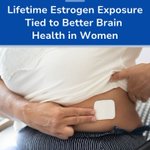
Longer exposure to estrogen over a woman’s lifetime is associated with better cerebrovascular health in later life, including less damage to the brain’s small blood vessels and healthier tissue. In a population-based study of more than 300 women, a longer reproductive span — the time between the first menstrual period and menopause — was associated with 8% lower odds of having two or more signs of cerebral small vessel disease (SVD). The condition affects tiny blood vessels in the brain and can damage surrounding brain tissue. A history of menopausal hormone therapy (MHT) was also associated with lower burden of cerebral SVD and greater white matter integrity. Women who had used oral contraceptives earlier in life and MHT after menopause had the lowest disease burden and greatest white matter integrity. mdsc.pe/4jnc11f
3
2
9
1,405
Once an orphan disease that drew little research attention, hidradenitis suppurativa is now the focus of hundreds of recent papers and dozens of potential therapies. What can this journey teach us? mdsc.pe/4eHa9hp
1
2
3
2,084
LIVE TOMORROW ➡️ mdsc.pe/3VmtD4e Transform patient insights into powerful vitiligo clinical results with Dr. Pearl Grimes & Dr. Iltefat Hamzavi. 📅 23 Nov 2026 ⏰ 4:30 PM ET Earn free 0.25 AMA PRA Category 1 Credit™. #Dermatology #Vitiligo #MedEd
4
1,111
Learn from one of the leading voices in pigmentary dermatology at #PDElive27! 🎤 Join Symposium Chair Pearl E. Grimes, MD, FAAD, for the Melasma Masterclass: What Drives Melasma? 🧬 🔬 Explore the science behind melasma, medical and procedural treatment strategies, and a LIVE chemical peel demonstration! ✨ Gain expert insights you can bring back to your practice. mdsc.pe/4zSZmZS
1
1,264
Recently, a major betting platform called Kashi started letting users bet on whether new medical treatments will succeed in clinical trials. In response, doctors and medical researchers are speaking out about this, warning that research centers would have to spend more time and money enforcing red tape in an effort to safeguard patients' trust. Clinical trials rely on volunteers. Without new laws banning these bets, patients' may be less likely to volunteer for clinical trials and extra red tape could slow down the release of new medicine. Kalshi argues that doctors are overreacting, are regulated by the federal government, and have added safety rules to protect traders and patients alike. To learn more about how it started and what happens next, tap the link: mdsc.pe/4jp8O1a
2
2
2
1,294
A patient with myasthenia gravis asks about joining a clinical trial. What would you need to know to assess eligibility? Explore how to match a patient’s clinical history to a study’s entry criteria. 🔗 mdsc.pe/4sJ4zkg
1
2
4
1,152
If you find it hard to keep patients exercising, you’re not alone: even in carefully designed studies, attrition ranges from 25% to 50%, and those who finish adhere only about 66% of the time. Motivational messages usually focus on the benefits of starting, such as a stronger heart, better balance, lower blood pressure, and improved brain health. But what happens when you stop? That may or may not motivate someone, but understanding the cellular effects of quitting could help patients recovering from injury or surgery, undergoing cancer treatment, or on bed rest, as well as people taking a break after a goal like a marathon. Tap the link to read more: mdsc.pe/3U9RqE6
1
4
7
1,505
The British Heart Foundation report cites smoking, obesity, and fragmented care among the factors behind the gap. mdsc.pe/4iTsDxF
3
6
1
7
2,048
After avocado, salted caramel, viral Dubai-style pistachio treats, matcha, and mango-flavored drinks and desserts, ube is now attracting attention from influencers. Amali, Atlanta-based tea influencer and recipe developer on Instagram @milkteamali, is known for her home café drinks, including layered ube creations such as her Fig Matcha Latte with Ube Coconut Cream. Recently, she told her more than 790,000 Instagram followers that matcha with ube coconut cream is “the flavor combination you didn’t know you needed.” Others have promoted ube as a superfood that balances hormones, delays menopause, and combats inflammation. Are these claims supported by medical evidence? As in the other articles in this series, we examined the trend in light of the available scientific evidence: mdsc.pe/4zZ0nji
1
4
1,882
For decades, medical educators relied on the availability of anesthetized, unknowing patients’ bodies to train medical students how to perform sensitive exams, including those of the pelvis, rectum, prostate, and breast. Patients, students, clinicians and society are all harmed by these covert exams. A commitment to the essential practice of informed consent makes it possible to end these exams. Obtaining patients’ explicit consent before sensitive exams under anesthesia is crucial for maintaining trust and doesn’t have to be time consuming, an anesthesiologist and medical ethicist explains: mdsc.pe/4fB0WHE
3
4
12
2,180
Where fat is stored in the body plays a key role in the relationship between fat-free mass and metabolic health, found a new study based on a UK Biobank cohort. “Our study points out that it is quality of muscle and the distribution of fat in the body that determine metabolic health and not just lean mass quantity,” said principal author Candida Rebello, PhD, director of the Nutrition and Chronic Disease Program Laboratory, Pennington Biomedical Research Center, Louisiana State University, Baton Rouge. “Where fat is stored in the body matters, particularly fat around internal organs and fat that accumulates within muscle tissue,” she told Medscape Medical News. mdsc.pe/4iLpVKt
7
5
20
3,486
More patients are asking to record their doctor visits, and more doctors are using AI scribes during them. Experts say recording can help patients remember what was said, but they urge patients to ask permission first, and to know that recordings uploaded to apps may not be protected by health privacy law. Tap the link to read more: mdsc.pe/3VqVMas
3
6
11
1,565
A nationwide survey conducted in 2025 found that 9.8% of US adults reported using a GLP-1 medication in the past year. Among users, 44% said they modified their use from how it was prescribed, and 22.6% reported taking a compounded product. Among users who modified how they took the drug, 38% attributed the changes to cost and 36% to supply problems. mdsc.pe/4zUb6eI
6
3
1
10
4,509
Which patients with advanced emphysema should you refer for endobronchial valve evaluation? Explore how to identify candidates earlier and coordinate referrals between COPD care teams and interventional pulmonologists. 🔗 mdsc.pe/48v4S90
2
4
1,394
In Germany, men account for nearly three quarters of traffic deaths and about 85% of drowning fatalities, underscoring prevention opportunities beyond the clinic. mdsc.pe/3VKwqo5
1
5
1,689
A novel, once-daily antiseizure medication (ASM) significantly reduced focal seizures in adults with drug-resistant epilepsy, with the higher dose showing benefit within the first week of treatment. Results of a phase 3 randomized, placebo-controlled trial showed that azetukalner, an investigational agent that opens Kv7 potassium channels, reduced monthly seizures by a median of 53.2% at 25 mg and 34.5% at 15 mg, compared with 10.4% with placebo. The trial “demonstrated that azetukalner demonstrated robust, rapid, and durable reductions in seizure frequency with a favorable risk-benefit profile,” the investigators, led by Jacqueline French, MD, an epileptologist at NYU Grossman School of Medicine and NYU Langone Health in New York City, wrote. mdsc.pe/4zSV9W4
4
2
8
1,676
After spinal cord injury surgery, hours matter. One researcher says “the difference between 2 hours is somebody not moving their hands.” A tiny ultrasound implant could help doctors spot problems faster. Here’s what experts say about its promise and its limits: mdsc.pe/3VawhKq
3
2
7
1,475