

Cardio-Immunologist, Macrophages. Associate Prof, Univ of Toronto. UHN. Research Director Peter Munk Cardiac Center. Loretta Rogers Chair. #Cardioimmunology
Toronto, Ontario
Joined October 2013
- Tweets2.6K
- Following609
- Followers1.5K
- Likes3K




Pinned Tweet
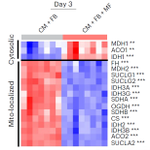
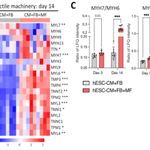
Our latest study, led by @Homaira_H. Hard to study #macrophages (MFs) in early human heart development (no tissue). Homaira integrated human ES-derived-MFs into beating cardiac microtissues & improved🫀function. rdcu.be/dHbj0. #cardioimmunology #regeneration.

Slava Epelman retweeted

The CARDINAL project, with 4 preprints released yesterday, is a massive initiative involving single-cell profiling of peripheral blood mononuclear cells from >6,000 individuals across UK Biobank and Genes & Health.
Across the 4 studies, single-cell profiles are linked to:
👉 genetic variation
👉 aging, sex, adiposity, and smoking
👉 diseases and clinical phenotypes
In terms of donor-level scale and integration with demographic, clinical, and phenotypic data, it represents one of the largest single-cell resources of its kind, with a lot to learn from.

Slava Epelman retweeted

Our CellularAI algorithm won @arcinstitute’s Virtual Cell Challenge! 🏆🧬 Here’s how we built a method to predict cellular responses to perturbations in unseen cell lines. 🧵👇

Slava Epelman retweeted

We are hiring! The Ardehali lab at
@UAZHeart and @UAZMedTucson is hiring postdocs and technicians. Our research focuses on metabolism, Immunology, iron biology and cardiovascular disease. Qualified applicants can contact me directly.

Slava Epelman retweeted

Our new article in Nature Metabolism - Multi-workflow plasma proteomics in 161 clamped people gives most comprehensive signature of insulin resistance. A 13-protein model of insulin sensitivity predicts T2D & cardiometabolic disease in UK Biobank. doi.org/10.1038/s42255-026-0…

Slava Epelman retweeted

In ACS Nano: a ligand-free lipid–mineral nanoparticle delivers siRNA to peripheral myeloid cells — silencing TREM1 eased neuroinflammation in Alzheimer's mice. @UHN's Gang Zheng lab at @pmcancercentre contributed to the work. doi.org/10.1021/acsnano.6c10…

Slava Epelman retweeted

Congratulations to the 15 @UHN Principal Investigators named on @ClarivateAG’s #HighlyCited2026 list, recognizing researchers whose work has been highly cited by their peers over the past decade.
Their research spans cancer and drug discovery, heart and kidney disease, critical care, Parkinson disease, and mental health, including new therapies, biomarkers, brain stimulation, focused ultrasound, and precision medicine.
Four UHN researchers also received the Cross-Field distinction for research with influence across multiple fields.
🔗 Learn more about the researchers and their work: uhnresearch.ca/news/11-18-20…

Slava Epelman retweeted

Exciting new work led by Sarah Urbut (@tigerstatdoc) in the growing longitudinal EHR methods family -- now unifying polygenic and monogenic paradigms.


Our preprint led by @tigerstatdoc & @SashaGusevPosts enabling refined risk stratification for those with strong monogenic or polygenic predispositions modeling age-dependent effects & longitudinal EHRs medrxiv.org/content/10.64898… @medrxivpreprint

Slava Epelman retweeted

PFAS are a group of more than 14,000 compounds that manufacturers began using in the 1940s. They’re designed to be strong and long-lasting thanks to their carbon-fluorine chemical bonds.
These chemicals were created with good intentions — to keep people safe, offer convenience, and toughen up products to resist heat, oil, stains, grease and water.
We interact with forever chemicals through a long list of everyday products, including:
Nonstick cookware
Waterproof clothing
Cosmetics and personal care products
Food packaging
Stain-resistant carpets, rugs and furniture
Collected data suggests that forever chemicals can bring harmful health effects. But how much these environmental toxins impact your health varies depending on:
-How much and how often you’re exposed
-Your age, sex, ethnicity, health and genetics
Nothing in medicine ever happens by itself. Exposure to these chemicals is probably not the only reason you develop a chronic disease, but it can contribute.
You may be exposed to forever chemicals when you:
-Use products that contain PFAS
-Eat food packaged in PFAS-treated material
-Drink contaminated water
-Eat fish from contaminated water
-Eat food grown near factories making or using PFAS
-Use cosmetics and healthcare products packaged in PFAS-treated containers
Repeated or high exposure to PFAS chemicals can cause them to build up in your blood. Today, nearly all people in the U.S. have a detectable level of PFAS in their blood. High levels may lead to health issues such as:
-Increased cancer risk
-Slowed development in children
-Reduced immune function
-Reproductive challenges
-Thyroid issues

Slava Epelman retweeted

Heart failure doesn’t only affect the heart. 🫀🧠
New in JACC: Advances - people with heart failure in Ontario had a higher risk of dementia, with frailty and past stroke as key predictors.
Congrats to Paul Tieu, Dr. Douglas Lee & the UNEARTH CVD team!
jacc.org/doi/10.1016/j.jacad…

Slava Epelman retweeted

Brain border-associated macrophages rhythmically scavenge amyloid-beta and regulate vascular amyloid pathology. @ImmunityCP cell.com/immunity/fulltext/S…

Slava Epelman retweeted

Discovery of a liver-heart axis.
Prior liver injury-> heart attack risk
How the immune system transmits inter-organ impact
cell.com/cell-metabolism/ful…

Slava Epelman retweeted

Blake et al found multi-omic profiling of progressive #RV dysfunction nominates ribotoxic stress response, ineffective macrophage #efferocytosis, & suppression of the mitochondrial #UPR as druggable drivers ahajrnls.org/3US5yly
@jenna_mendelson @kurt_prins

Slava Epelman retweeted

Our new paper, “Simply Aging,” is out in @PNASNews!
What is aging, when does it begin, how do we measure it, and what would it take to extend lifespan? We tackle these questions directly and simply.
📄 Read: pnas.org/doi/10.1073/pnas.26…
💬 Discuss: simplyaging.xyz/

Slava Epelman retweeted
There still in no approved or highly effective treatment for postural orthostatic tachycardia syndrome (POTS), which can be debilitating.
Now there's hope with very encouraging results of a Phase 2 randomized trial: an antibody vs natriuretic peptide receptor 1 (NRP-1)
firstwordpharma.com/story/84…

Slava Epelman retweeted

instagram.com/p/DfsD12SFWks/…
Thanks to @A_Gramolini for this amazing collaboration.
@PMunkCardiacCtr @UHN @bradwouters @UHNTransplant @TBEP_UofT @trogersresearch

Slava Epelman retweeted
ClinicalAge, an AI-derived metric from longitudinal electronic health records, varies widely from an individual's chronological age. And it's correlated with risk of many diseases and cancers, as shown below, from 2 huge cohorts @uk_biobank @LancetDigitalH
thelancet.com/journals/landi…

Slava Epelman retweeted

Excited to share our new @brooks_lab paper in @cellpressblue! We discovered two mechanisms by which interferons suppress T cells, revealing a new layer of immune regulation with exciting implications for #immunotherapy!
tinyurl.com/a8jpue2w
@UHN @pmcancercentre @thePMCF

Slava Epelman retweeted

Love this! Amazing breakthrough and it is not an LLM (finally!) 😅🔥
Someone just made k-means 10x faster with no new hyperparameters, shipped in FAISS, works on CPU and GPU.
A 70-year-old algorithm, rebuilt with modern optimization!

Slava Epelman retweeted

UMAP 0.6 is out! A new initialization, new optimizers and faster nearest neighbour search make UMAP much faster and far better at large scale. On 3 million arXiv papers it finishes in under 5 minutes, before UMAP 0.5 has even found its nearest neighbours.
Slava Epelman retweeted
Getting it wrong for many decades.
Since the 1950's, pacemaker leads have been placed in the right ventricle. A new randomized trial challenging that dogma found marked superiority of outcomes for pacing from the left bundle branch. nejm.org/doi/full/10.1056/NE…
