

Decoding #Python #programming for everyone! Master #coding with easy-to-follow tutorials, daily tips, and projects. Let's learn and build together. 🐍
Joined April 2019
- Tweets1.5K
- Following159
- Followers1.2K
- Likes218






Decode Python retweeted

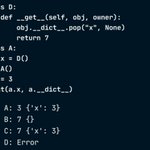
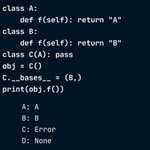
💬Drop your answer in the comments!
🔁Tag a friend who thinks they know Python.


Decode Python retweeted
If you're learning Data Science… SQL is NOT optional ❌
Most beginners ignore SQL
And that’s why they struggle later.
Here are 20 SQL basics you MUST practice 👇
✔️ SELECT, WHERE, ORDER BY
✔️ GROUP BY, HAVING
✔️ JOINs (very important)
✔️ Subqueries & CASE WHEN
✔️ NULL handling
💡 Simple truth:
No SQL = No Data Skills
Start practicing TODAY.
📌 Save this (you’ll need it)


Decode Python retweeted
These are the Python functions you’ll keep using again and again 🐍🔥
From print(), len(), type(), and range() to map(), filter(), zip(), enumerate(), any(), and all(), knowing these built-ins can make your code much cleaner and faster to write.
Save this Python cheat sheet for the next time you code 🔖

Decode Python retweeted
Python isn’t just a programming language… it’s an entire kingdom of possibilities 👑🐍
From building websites and automating boring tasks to analyzing data, training AI models, creating visualizations, and working with APIs, Python has a powerful library for almost everything.
Inside this post, you’ll discover popular tools for:
🌐 Web Development
📊 Data Science
🤖 Machine Learning and Deep Learning
📈 Data Visualization
🗣️ Natural Language Processing
⚙️ Automation and DevOps
🧩 Image Processing, APIs, and databases
The real power of Python begins when you stop learning only syntax and start exploring its frameworks and libraries 🚀
One language. Huge community. Endless possibilities.
Save this post as your Python library guide 📌

Decode Python retweeted
17 Python functions every beginner should know 🐍💡
From the basics (print(), input()) to the ones that do the heavy lifting with lists (sum(), sorted(), enumerate(), zip()) — save this post so you always have it on hand.
Which one do you use the most? Drop it in the comments 👇

Decode Python retweeted
🚨 DATA CLEANING IS NOT JUST “REMOVE NULL VALUES”
Real industry data is messy. 😵💫
CRM + Excel + APIs + ERP + databases = data chaos.
A real Data Analyst has to handle:
❌ Missing values
❌ Duplicates
❌ Wrong data types
❌ Inconsistent formats
❌ Outliers
❌ Invalid business values
❌ Messy text & categories
❌ Data quality issues
And the real process is:
RAW DATA → PROFILE → CLEAN → VALIDATE → STANDARDIZE → QUALITY CHECK → TRUSTED DATA → INSIGHTS 📊
Because remember:
Garbage In = Garbage Out.
If you’re learning Data Analytics in 2026, don’t just learn Pandas, SQL & Power BI.
Learn how companies actually deal with dirty data. 🔥

Decode Python retweeted
RAG used to feel advanced. Now it looks basic.
__________
Here’s the simple breakdown:
RAG stands for retrieval-augmented generation.
It sounds complex.
But the basic flow is pretty simple.
→ A user asks a question
→ The system searches a document store
→ It pulls back similar documents
→ The LLM uses those documents to write an answer
That is useful.
But it is also limited.
Because traditional RAG usually follows one path.
Query in.
Documents out.
Prompt built.
Answer generated.
No real checking.
No real planning.
No real second attempt.
That is where Agentic RAG changes the picture.
Instead of only retrieving documents, the system starts making decisions.
What changed:
→ RAG searches once using the original query
→ Agentic RAG can rewrite the query before searching
→ RAG usually pulls from one vector database
→ Agentic RAG can choose between a database, APIs, tools, or the web
→ RAG sends context straight to the model
→ Agentic RAG can ask if the context is enough first
→ RAG gives an answer
→ Agentic RAG can check if the answer is relevant before sending it back
The difference is not cosmetic.
It changes how the product behaves.
Static RAG is useful when the question is simple.
Use it for:
→ Internal policy search
→ Support articles
→ FAQ answers
→ Known documents
→ Simple knowledge base retrieval
Agentic RAG is better when the question needs judgement.
Use it for:
→ Multi-step research
→ Customer support with missing details
→ Compliance checks across several sources
→ Product assistants that need APIs and live data
→ Workflows where the first answer may not be enough
The risk:
→ Basic RAG can return the wrong context confidently
→ Similarity search can miss the real intent of the question
→ A vector database can only answer from what it contains
→ One-shot answers create cleanup work when the task is messy
The practical check:
→ Ask whether your AI system can rewrite a bad query
→ Check if it can decide when more context is needed
→ Map every source it can use, including documents, APIs, and web search
→ Add a relevance check before the final response reaches the user
→ Log failed answers so retrieval improves over time
This is the real move.
RAG retrieves information.
Agentic RAG works out how to retrieve better information.
If you are building AI products, this is where the next layer of quality comes from.
Which part would you fix first in your own AI system?
#RAG #LLM #AIAgents #MachineLearning

Decode Python retweeted
⚡ API vs Database
🔹 API = A bridge that allows applications to send and receive data.
🔹 Database = A storage system that saves, manages, and retrieves data.
Think of it this way:
📦 Database stores the data
🚚 API delivers the data
Both work together to power modern web applications. 🚀
#API #Database #WebDevelopment

Decode Python retweeted
⚡ Python One-Liners That Will Save You Hours! 🐍
Why write 10 lines when 1 line does the job? 😎
Master these Python one-liners to write cleaner, faster, and more professional code.
💡 Save this post for your next coding session. 📌


Decode Python retweeted
SQL Roadmap 2026
Master SQL step by step:
✅ Database Fundamentals
✅ SQL Basics
✅ Filtering Data
✅ SQL Functions
✅ DDL & DML Commands
✅ Constraints
✅ Joins
✅ Group By & Having
✅ Subqueries
✅ Set Operators
✅ Views
✅ Indexes
✅ Stored Procedures
✅ Triggers
✅ Transactions
✅ Advanced SQL
✅ Database Design
✅ Performance Tuning
✅ SQL Interview Questions
💡 Learn SQL by writing queries every day. The best way to master SQL is through practice and real-world scenarios.


Decode Python retweeted
🐍 List vs Tuple in Python – Know the Difference!
Confused between List and Tuple? Here's the easiest way to remember:
Save this post for your next Python interview! 🚀

Decode Python retweeted
🐍 Python Developer Journey 🚀
Every expert Python developer started with a single line of code.
From variables and loops to APIs, databases, frameworks, and cloud deployment, each step builds the foundation for the next.
Don’t rush the journey. Master the basics, practice consistently, and keep building projects.
Remember:
Skipping basics won’t skip the struggle.
Which step are you currently learning? 👇

Decode Python retweeted
🐍 Learn Python in 10 Days – Beginner Roadmap 🚀
Want to start Python but don't know what to learn first?
Follow this simple roadmap and build a strong foundation step by step.
📚 10-Day Learning Plan:
✅ Day 1 – Variables & Data Types
✅ Day 2 – Lists & Operators
✅ Day 3 – Strings, Loops & Conditions
✅ Day 4 – Functions, Sets & Dictionaries
✅ Day 5 – Modules & Packages
✅ Day 6 – Data Structures
✅ Day 7 – Object-Oriented Programming (OOP)
✅ Day 8 – Basic Algorithms
✅ Day 9 – Build a Mini Project (Pygame)
✅ Day 10 – Revise & Practice
💡 Don't rush. Build projects alongside learning—it's the fastest way to improve.
💾 Save this roadmap for your Python journey.
📤 Share it with a friend who's starting Python.
💬 Which day are you on right now?

Decode Python retweeted
🚀 Top 10 SQL Interview Questions Every Data Analyst Should Know! 💻
Preparing for SQL interviews? Save this reel and revise these must-know SQL concepts:
✅ WHERE vs HAVING
✅ JOINs
✅ GROUP BY
✅ UNION vs UNION ALL
✅ Primary & Foreign Keys
✅ Aggregate Functions
✅ Second Highest Salary Query
📌 Save this for your next interview.
💬 Comment your favorite SQL topic.
❤️ Share with a friend preparing for placements.
