

Cell Reprogramming in Hematopoiesis and Immunity. @LuWcmm @Lund_Stem @lunduniversity. Tweets by Filipe Pereira (signed FP) and Malavika Nair (for CFP lab).
Lund, Sverige
Joined June 2016
- Tweets667
- Following1.4K
- Followers2.4K
- Likes825





2/2 Many thanks to Dr. Juliana Idoyaga for an engaging scientific discussion. Congrats to Abby on this outstanding achievement and on the impact of her work in the field!
#PhD #CellReprogramming #DendriticCell #CancerImmunotherapy
1/2 We are proud to announce that @AbigailRAltman successfully defended her PhD yesterday! Programming dendritic cell diversity was the hot topic, and it was great to see how Abby contributed to further connect cell reprogramming and immunology research. 🙌

Can we move TLSs from biomarkers of response to active therapeutic tools? Harnessing cDC1 reprogramming to engineer immunogenic tertiary lymphoid structures within tumors may help answer that question. Exciting opportunities ahead!#TLSs #CellularReprogramming #CancerImmunotherapy
1
145
Have you read our recent paper? In “Multidimensional Views of Immunotherapy” (@ImmunityCP), I share my perspective on how type 1 conventional dendritic cells (cDC1s) can shape intratumoral lymphoid niches and anti-tumor immunity. Check here: cell.com/immunity/fulltext/S…

3/3 Ultimately, we aim to determine whether induced imgTLSs can transform the treatment of refractory cancers. We thank our collaborators Dr. Inge Marie Svane and Dr. Göran B. Jönsson, and are grateful to the Swedish Research Council for making this possible. #TLSimmunotherapy
1
101
2/3 We will identify the molecular drivers of imgTLS formation and develop an imgTLS-inducing gene therapy capable of combining dendritic cell-driven immune activation with the generation of these specialized immune hubs.
1
1
155
1/3 Following our recent Immunity publication, we're excited to announce a new Swedish Research Council grant: “Engineering Immunogenic Tertiary Lymphoid Structures by Tumour-to-Dendritic Cell Reprogramming.” This project will take our discoveries one step further.🙌
2
15
777
15) 🙏🏻 A big thank you to all the funding agencies for making this possible: @CancerResearch, @EUeic, @Cancerfonden, @Vetenskapsradet, @vinnovase, @theABTA, Mats Paulsson Foundation, @KAWstiftelsen, LUCC, @fct_pt, and @FEEICOMPETE2030.
14) 👥 We are grateful to our collaborators Göran B Jönsson, Anna Darabi and Johan Bengzon, and @AsgardThx for their incredible contributions!
1
55
13) 📖 This study was led by Ervin Ascic and Camille Chatelain, with contributions from Pereira Lab members.
1
48
12) Our findings establish tumor-to-cDC1 reprogramming as a strategy to engineer immunogenic tertiary lymphoid structures and may provide a new avenue to overcome immune resistance in low-immunogenic tumors. 🎉
1
49
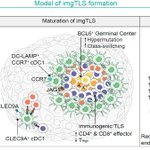
11) Our proposed model:
· Tumor-to-cDC1 reprogramming induces mature imgTLSs across cancers
· cDC1-like cells orchestrate TLS formation by interacting with T cells
· imgTLSs coordinate T-cell and B-cell immunity
· Local immune remodeling drives systemic anti-tumor responses

1
53
10) Remarkably, humoral immunity was also enhanced. imgTLSs supported durable tumor-specific antibody responses, highlighting a role for B-cell immunity in long-term tumor control.

1
54
9) ImgTLSs promoted systemic immunity beyond the treated tumor. We observed expansion of shared T-cell clonotypes in distant untreated tumors, indicating broad anti-tumor immune responses.

1
56
8) Migratory DC-LAMP⁺CCR7⁺ cDC1s act as organizers of immune niches enriched for T cells and B cells.

1
61
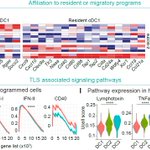
7) Spatial transcriptomics and imaging of imgTLSs revealed that DCs acquire conserved spatially restricted resident and migratory signaling programs in TLS-containing tumors. Both proximal and distal DC subsets promote rapid induction of lymphotoxin, TNFα, and CD40.

1
77
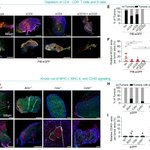
6) How does this happen? Reprogrammed cDC1-like cells interact with T cells through MHC class I and CD40 signaling to drive imgTLS formation.

1
72
5) Of note: reprogramming cancer cells into cDC1-like cells rapidly induced mature immunogenic TLSs with germinal centers in melanoma, colon, bladder, breast, and pancreatic cancer models. This happened independently of endogenous cDC1s and correlated with long-term survival.


1
98
4) First, we show that tumor-to-cDC1 reprogramming immunotherapy is effective across tumor contexts, including immunosuppressive environments such as brain tumors, and synergizes with anti-PD-1 in refractory tumors.


1
100
