
Aging lab @Stanford - Epigenomics and metabolism in #aging; Brain aging and rejuvenation; Neural stem cells; C. elegans; African #killifish
Stanford, CA
Joined March 2010
- Tweets2.5K
- Following4.7K
- Followers11.2K
- Likes13.1K



Pinned Tweet
How do lipids influence aging?
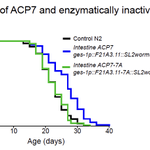
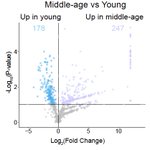
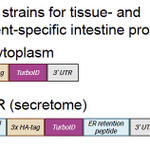
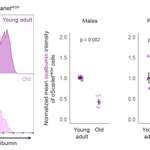
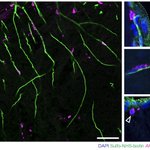
We find that membrane lipid composition impacts neural stem cell aging and 'rejuvenation'!
HUGE congratulations to @xiaoaizh on her paper just published at @ScienceAdvances!! 🤩🍾
And a big thank you to all our collaborators!
A thread 🧵...

Brunet Lab retweeted

Congrats @RichieHakim ! and team on this work. The ability to decompose facial movements into interpretable potentially overlapping components, even from n=1 video, is very useful. Excellent correlation with neural data too


Brunet Lab retweeted

Pioneer factors are more complicated than the textbook picture! Our latest, led by the phenomenal Aidan Keith in collaboration with @sdomcke: in a multiome CRISPRa screen of 60 developmental TFs, chromatin opening is autonomous, opportunistic, or hierarchical. Thread by Silvia 👇

Excited to share our latest preprint with @JShendure, led by Aidan Keith. We wanted to know which, where and how TFs open chromatin when they are newly expressed in a given cell state, using CRISPRa and single cell multiome. 1/7 biorxiv.org/content/10.64898…

Brunet Lab retweeted

Seniors with a passion for chemical biology! Thinking of taking some time off to explore research more deeply before applying to grad school or medical school? Come work with us at Stanford! We have a full-time open position for a research associate + lab manager starting next summer (2027). Come join our team and work on protein design, biosensor development, spatial proteomics, directed evolution, programmable cells, proximity labeling, ML, and other cool molecular technologies.
Apply here: fa-exuf-saasfaprod1.fa.ocs.o…
Reach out to me or Brynne ([email protected]) with any questions!

Brunet Lab retweeted

As part of my group's new focus on executing and analyzing the data from large-scale field experiments on biodiversity recovery, I have developed a method to use continuously operating field audio recorders to precisely localize vocalizing animals at massive scale - in the millions. And I want to introduce you to this work here.

Brunet Lab retweeted

Great thread from @mgteneche on his and @knmiller71 bioRxiv MS on p53 supports healthy aging. Contrary, to antagonistic pleiotropy hypothesis, we find that p53 is beneficial- not detrimental- in aging. At least based on p53 KO in liver and systemic MDM2 inhibitors.

9/9 Thank you so much to all of our funding sources, our collaborators, co-first author @knmiller71, and my mentor @AdamsBioAging.
Find the full manuscript here: biorxiv.org/content/10.64898…

Brunet Lab retweeted

Check out our new preprint on the aging enteric nervous system. Congratulations to Jack Marciano! Thank you to our amazing collaborators Shaul Druckmann and Laren Becker! biorxiv.org/content/10.64898…
Brunet Lab retweeted

Hypothalamic volume and cell-type changes in ageing and Alzheimer’s disease: nature.com/articles/s41586-0…

Brunet Lab retweeted

Young neurons in the adult brain matter for precise social memories
Excited to share our study in Nature Neuroscience (rdcu.be/AfRHPb1kzKqa) identifying a circuit mechanism that may explain how a small number of immature neurons in the adult human hippocampus significantly contribute to cognition. This work was led by talented postdocs, @ain_chung (now Professor at KAIST), @Jason_Alipio (K99/R00), other Sahay lab members @TravisDGoode Iyanah Mehta and Liam Evans, collaborators @omarahmedlab and Megha Ghosh (Michigan).
Background.
The 1965 discovery that the adult mammalian brain generates new neurons in the Dentate Gyrus (DG) subregion of the hippocampus, the memory center, in adult rodents stimulated research over next several decades characterizing this phenomenon and investigating the functions of new neurons in memory. Not surprisingly, these studies fueled vigorous debate over the extent to which this unique form of network plasticity exists in the human hippocampus. What is unequivocally clear today is that a population of immature neurons persist in the DG of the monkey and human hippocampus and that these immature neurons exhibit “neoteny” or delayed maturation. Postmortem analyses of human tissue have revealed that numbers and features of these immature neurons are altered during aging and in AD. What is the significance of neoteny and how can a small population of immature neurons make significant contributions to cognition?
What we found.
Using genetically engineered mice to model neoteny of new neurons, we showed that immature, but not mature, new neurons in the DG, preferentially recruit fast spiking Parvalbumin inhibitory neurons (PV INs) to exert feed-forward inhibition of downstream excitatory neurons in hippocampal CA2 and CA3. This in turn, enhanced network oscillations called sharp-wave ripples (SWRs), a conserved neural substrate for memory consolidation and decision making, in hippocampal CA2 and CA1. These circuit and network modifying effects resulted in formation and consolidation of precise social memories.
Takeaway and Translation.
Extensive studies in rodents have shown that immature neurons are endowed with distinct physiological properties and exhibit heightened synaptic plasticity. Here, we causally implicate a hitherto unrecognized circuit mechanism that amplifies the contribution of a small number of immature neurons by potentially promoting sparsity and hippocampal network oscillations to influence social cognition.
Neoteny of new neurons in higher mammals may represent an evolutionary adaptation that offsets the precipitous decline in neurogenesis by keeping neurons in an immature state for a longer period.
Targeting feed-forward inhibition in the hippocampus and PV IN cell plasticity, as our other studies also demonstrate (sahaylab.com/publications), represents a strategy to restore or preserve cognition in aging and MCI.
Thanks to @NIH and NIA for funding this work.

Brunet Lab retweeted

Introducing Helios: measuring 1,000+ protein biomarkers from a drop of blood to help you live younger, longer.
Here’s how it works:
• Self-collect blood at home with a painless, needle-free device
• We measure the proteins carrying signals from cells and organs throughout your body
• Your Helios AI agent explains your results, highlights risks, and offers personalized guidance
Proudly backed by Y Combinator and Formation VC.
Join the waitlist at myhelios.com
Brunet Lab retweeted

Brain border-associated macrophages rhythmically scavenge amyloid-beta and regulate vascular amyloid pathology. @ImmunityCP cell.com/immunity/fulltext/S…

Brunet Lab retweeted

@seresanu, @genophoria, Matthew Wong, Shaopu Zhou, and team reveal that unspliced intronic RNA directly regulates HP1α condensates, the structures that package heterochromatin and keep genes transcriptionally silent.

Brunet Lab retweeted

Our new paper, “Simply Aging,” is out in @PNASNews!
What is aging, when does it begin, how do we measure it, and what would it take to extend lifespan? We tackle these questions directly and simply.
📄 Read: pnas.org/doi/10.1073/pnas.26…
💬 Discuss: simplyaging.xyz/

Brunet Lab retweeted

A special start to the Society for Neuroscience Meeting #SfN26 in Washington DC as the new issue of @NeuroCellPress is dedicated to human stem cell neuroscience, bringing together a collection of articles from leading scientists reflecting on the progress, opportunities, and challenges in this rapidly evolving field.
The issue includes contributions on brain evolution from Madeline Lancaster, Alex Pollen and colleagues; human brain development from Paola Arlotta, Christopher A. Walsh and colleagues; disease mechanisms and translation from Jürgen Knoblich, Guo-Li Ming and Sally Temple; and important questions about cognition, ethics, and oversight from Lucia Melloni, Stanislas Dehaene, Brie Linkenhoker, Alison Singer and others.
I had the pleasure of contributing an opening Perspective reflecting on how our ability to generate human neural cells, assemble them into circuits, and study their development and function in vitro and in vivo is changing the questions we can ask. What began largely as approaches rooted in stem cell biology is increasingly becoming an integral part of neuroscience, contributing to what we might call stem cell neuroscience.
Important challenges remain. Yet this is an exciting time for human neuroscience, as stem cell-based approaches, together with animal models, are expanding our ability to investigate human nervous system development, function, and disease in ways that were previously difficult or impossible.
Very grateful to the Neuron editors for bringing together this collection, to all the contributors for sharing their perspectives, and to the many scientists whose work over the years has made this progress possible.
All articles in this special issue are open access!
Link below
#stemcellneuroscience

Brunet Lab retweeted

Can science tell us how long we’re going to live? By recording every moment of the lives of African turquoise killifish, researchers are learning about possible longevity markers for these short-lived fish.
Learn more: scim.ag/4dm1GA9
Brunet Lab retweeted

What if the blood-brain barrier were more than a barrier?
Led by Haoyue @zho30045, we mapped the BBB transportome: diverse blood proteins imported and routed for brain health.
This peripheral support withdraws early in Alzheimer’s models, and restoring APOA1 rescued dysfunction

ALT Labeled blood plasma proteins (white) trace BBB vessels and cross to enter an astrocyte (magenta). Cell nuclei (blue).

Excited to share our work from the @andcyang lab, now out in @CellCellPress! 🧵 1/7
We asked what the blood-brain barrier lets in, not just what it blocks. It turns out to import neuroprotective blood proteins, and Alzheimer’s models lose this early. 🔗 cell.com/cell/fulltext/S0092…

Brunet Lab retweeted

Why does the whole body age together when damage starts in one organ?
👉 We propose an initiator→communicator→effector model defined by intervention rather than molecules and what would refute it.
Out today, open access ⬇️
doi.org/10.1098/rstb.2025.03…

Brunet Lab retweeted

Cool write-up on a very talented PhD student in my lab, Tate Yawitz. This is just one of his projects.
What Naked Mole Rats Can Teach Us About Pain cuimc.columbia.edu/news/what…

Brunet Lab retweeted

In 1 week, I will start a new series of lectures at College de France on Bioenergetics & Metabolism. Energetics is arguably as much a «secret of life» as heredity. It has puzzled many for eons.
Stay tuned. I will post videos (en francais) and links to pdfs in English as usual 😊

Brunet Lab retweeted

Our bodies are colonized by trillions of viruses that we live with in homeostasis. The most diverse and abundant of these viral families are anelloviruses. A new paper from us at @MSKCancerCenter explores what happens after we *all* have been infected
biorxiv.org/content/10.64898… 1/n
Brunet Lab retweeted
One of the major challenges in the neural #organoid field has been the difficulty of systematically screening large numbers of perturbations. This is important not only for identifying potential therapeutics, but also for uncovering mechanisms that regulate cell-state transitions during human development.
In a new @biorxivpreprint from our lab, we describe a simple, cost-effective, and scalable platform for high-throughput screening in human cortical organoids. The system uses a compact plate washer/dispenser that fits inside a standard biosafety cabinet and can process medium changes for more than 7,000 organoids per hour, substantially reducing the labor required for large-scale organoid culture and screening.
Using this approach, we screened 1,280 compounds targeting major signaling and regulatory pathways across more than 6,000 organoids and identified translational regulation as a modulator of cortical cell-state progression. Transient inhibition of translation elongation shifted cortical progenitors toward neuronal differentiation, with changes in newly synthesized proteins preceding detectable transcriptional changes. We further validated this effect across multiple human stem cell lines, nonhuman primate organoids, and primary human cortical tissue. More on this discovery soon.
This was an enormous effort led by Merve Avar, whose persistence and dedication were remarkable. Grateful for the collaboration with Maria Barna’s lab and to everyone who contributed to this work!
