

Making bitcoin everyday money across @blocks @cashapp @square @bitkey @protomining @spiral_xyz
Joined February 2026
- Tweets1.8K
- Following33
- Followers28.9K
- Likes5.5K




Pinned Tweet
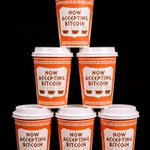
Some things don't make sense.
Bitcoin does.
block.xyz/bitcoin/does


Bitcoin at Block retweeted

Block is making it super easy for merchants to accept bitcoin at Square
and Cash App, Strike, and Wallet of Satoshi are doing an incredible job of making ₿ easier to pay with
over nearly a year of bitcoin payments at Square:
43% came from Cash App, 57% came from other wallets
and 72% went to food and drink
making bitcoin everyday money
one iced matcha at a time


Bitcoin at Block retweeted

New data from @crypto_council member @blocks, covering nearly a year of payments at Square sellers, shows the median BTC payment is about $13. Nearly 75% happen at food and drink businesses, and nearly two-thirds are under $20.
As for the businesses that don’t accept Bitcoin, nearly a quarter of them cite tax and accounting complexity as the reason.
A de minimis exemption for small transactions is a practical, commonsense fix. Congress has an opportunity to make everyday payments simpler for consumers and businesses.

Today we're releasing The State of Bitcoin Payments report, one of the first datasets on how people spend bitcoin in the local economy, based on nearly a year of bitcoin payments at U.S. @Square sellers.
What did we find?
Most bitcoin payments are small and routine:
– The median BTC payment at a Square seller is about $13
– 72% happen at food and drink businesses
– 86% of repeat BTC payments happen within 30 days
– 42% of BTC payments are under $10, and nearly two-thirds are under $20
Under current U.S. federal tax rules and regulations, paying with bitcoin generally means determining a capital gain or loss, even for spending $10 on a quick bite or coffee – a BTC spender would have to figure out which bitcoin they spent, what they paid for it, and what it was worth at the time of checkout.
Not only do consumers feel this burden, but businesses do too. In a Morning Consult survey commissioned by the @Blocks team, nearly a quarter (23.6%) of businesses that don't accept bitcoin cited tax and accounting complexity as a reason.
Congress is currently considering a crypto tax package. A de minimis tax exemption, which would exempt small gains on qualifying digital asset purchases and ease friction for everyday payments, is one approach under discussion. We hope these findings help inform those conversations.
We think tax policy should account for how people spend bitcoin as well as how they hold it.
Read our report to learn more: block.xyz/bitcoin/payments-r…

Bitcoin at Block retweeted

Imagine being on vacation in Rome and buying gelato for 8 euros.
Now imagine the IRS hounding you for not reporting how much those 8 euros appreciated relative to the dollar since the first day you arrived in Italy.
This would be an absurd and unworkable state of affairs, no?
Thankfully, the IRS doesn't do this because there is a de minimis exemption when you spend money using a foreign currency.
Yet Bitcoiners face that same absurd and unworkable state of affairs every day because there is no de minimis exemption for digital assets.
If you so much as buy the classic smash burger at @PubKey using Bitcoin, the IRS requires that you report the capital gain/loss on that bitcoin at the time of purchase.
The irony is that, by imposing this massive administrative burden, the federal government slows economic activity and actually foregoes $859 million in federal tax revenue.
TLDR: We need a de minimis exemption for digital asset payments. And the government does too.
Today we're releasing The State of Bitcoin Payments report, one of the first datasets on how people spend bitcoin in the local economy, based on nearly a year of bitcoin payments at U.S. @Square sellers.
What did we find?
Most bitcoin payments are small and routine:
– The median BTC payment at a Square seller is about $13
– 72% happen at food and drink businesses
– 86% of repeat BTC payments happen within 30 days
– 42% of BTC payments are under $10, and nearly two-thirds are under $20
Under current U.S. federal tax rules and regulations, paying with bitcoin generally means determining a capital gain or loss, even for spending $10 on a quick bite or coffee – a BTC spender would have to figure out which bitcoin they spent, what they paid for it, and what it was worth at the time of checkout.
Not only do consumers feel this burden, but businesses do too. In a Morning Consult survey commissioned by the @Blocks team, nearly a quarter (23.6%) of businesses that don't accept bitcoin cited tax and accounting complexity as a reason.
Congress is currently considering a crypto tax package. A de minimis tax exemption, which would exempt small gains on qualifying digital asset purchases and ease friction for everyday payments, is one approach under discussion. We hope these findings help inform those conversations.
We think tax policy should account for how people spend bitcoin as well as how they hold it.
Read our report to learn more: block.xyz/bitcoin/payments-r…
Bitcoin at Block retweeted

Policy should be built on data.
Thanks to CCI member @blocks for one of the first real looks at how people spend bitcoin in their local economy.
The findings underscore the need for a workable de minimis exemption in any crypto tax package.
Today we're releasing The State of Bitcoin Payments report, one of the first datasets on how people spend bitcoin in the local economy, based on nearly a year of bitcoin payments at U.S. @Square sellers.
What did we find?
Most bitcoin payments are small and routine:
– The median BTC payment at a Square seller is about $13
– 72% happen at food and drink businesses
– 86% of repeat BTC payments happen within 30 days
– 42% of BTC payments are under $10, and nearly two-thirds are under $20
Under current U.S. federal tax rules and regulations, paying with bitcoin generally means determining a capital gain or loss, even for spending $10 on a quick bite or coffee – a BTC spender would have to figure out which bitcoin they spent, what they paid for it, and what it was worth at the time of checkout.
Not only do consumers feel this burden, but businesses do too. In a Morning Consult survey commissioned by the @Blocks team, nearly a quarter (23.6%) of businesses that don't accept bitcoin cited tax and accounting complexity as a reason.
Congress is currently considering a crypto tax package. A de minimis tax exemption, which would exempt small gains on qualifying digital asset purchases and ease friction for everyday payments, is one approach under discussion. We hope these findings help inform those conversations.
We think tax policy should account for how people spend bitcoin as well as how they hold it.
Read our report to learn more: block.xyz/bitcoin/payments-r…
Square bitcoin is not available to New York residents. Bitcoin is a non-deposit, non-bank product that is not FDIC insured and involves risk, including monetary loss. Bitcoin services provided by Block, Inc. are not licensable activity in all U.S. states and territories.
Availability may be subject to regulatory approval, where applicable, and may change. Block, Inc. operates in New York as Block of Delaware and is licensed to engage in virtual currency business activity by the New York State Department of Financial Services.
See disclosures (squareup.com/us/en/legal/gen…) and licenses (squareup.com/us/en/legal/gen…).

1
3
602
Bitcoin at Block retweeted

The most bullish stat here isn't adoption. It's retention.
86% of repeat Bitcoin payments at Square sellers happen within 30 days.
People don't try it once and leave. They come back for the next coffee ⚡️
www.nitter.gq/BitcoinatBlock/status/…
Today we're releasing The State of Bitcoin Payments report, one of the first datasets on how people spend bitcoin in the local economy, based on nearly a year of bitcoin payments at U.S. @Square sellers.
What did we find?
Most bitcoin payments are small and routine:
– The median BTC payment at a Square seller is about $13
– 72% happen at food and drink businesses
– 86% of repeat BTC payments happen within 30 days
– 42% of BTC payments are under $10, and nearly two-thirds are under $20
Under current U.S. federal tax rules and regulations, paying with bitcoin generally means determining a capital gain or loss, even for spending $10 on a quick bite or coffee – a BTC spender would have to figure out which bitcoin they spent, what they paid for it, and what it was worth at the time of checkout.
Not only do consumers feel this burden, but businesses do too. In a Morning Consult survey commissioned by the @Blocks team, nearly a quarter (23.6%) of businesses that don't accept bitcoin cited tax and accounting complexity as a reason.
Congress is currently considering a crypto tax package. A de minimis tax exemption, which would exempt small gains on qualifying digital asset purchases and ease friction for everyday payments, is one approach under discussion. We hope these findings help inform those conversations.
We think tax policy should account for how people spend bitcoin as well as how they hold it.
Read our report to learn more: block.xyz/bitcoin/payments-r…
Bitcoin at Block retweeted

What do people actually buy with bitcoin? Until now, that's been somewhat of a black box.
Today, @blocks unveils nearly a year of bitcoin payments data from U.S. @Square sellers. Think coffee, lunch, and a median payment of $13.
We believe policy should be rooted in data, and hope these findings help inform those conversations.
Check out the report here: block.xyz/bitcoin/payments-r…


Why we bitcoin.

#BREAKING: Chase, Bank of America, Wells Fargo and U.S. Bank hit by nationwide outage, users report.

More ways to use your bitcoin coming soon ⏳

Cash App is building a way to borrow cash using bitcoin as collateral
i saved about 0.22 bitcoin by borrowing $14,000 instead of selling ₿ for a surgery in mid-August
the rate was 10.5% APR, and i repaid it at the beginning of October
Block lent $19B through Cash App and Afterpay in Q3, up 40% in a year
and applied for a federal charter to hold bitcoin
soon i'll borrow from a company that already understands credit, with my collateral sitting under federal oversight

Lightning Network and Square Bitcoin are not available to NY customers. Bitcoin is a non-deposit, non-bank product that is not FDIC insured and involves risk, including monetary loss. Cash App and Square bitcoin services provided by Block, Inc. and are not licensable activity in all U.S. states and territories. Availability may be subject to regulatory approval, where applicable, and may change. Block, Inc. operates in New York as Block of Delaware and is licensed to engage in virtual currency business activity by the New York State Department of Financial Services. See Cash App (cash.app/us/en/legal/bitcoin…) and Square (squareup.com/us/en/legal/gen…) disclosures and Block licenses (block.xyz/legal/licenses).
1
389