

🥑DevRel | 🧑💻Co-Founder ➝ @Studio1HQ 📤Newsletter ➝ @DailyAI_Insight ⚡️Check ➝ https://www.nitter.gq/t.co/IEMldaIjad
Jezero Crater, Mars 🇮🇳
Joined June 2019
- Tweets15.4K
- Following672
- Followers2.2K
- Likes15.7K






Mr. Ånand retweeted
Ask a coding agent to make a page "look more premium" and you mostly get a gradient and a bigger shadow. Ask for "Inter at 14px, 8px spacing, only the two greens from the logo" and you get a lot closer.
So technical skills aren't useless. Knowing what things are called is exactly the kind of language Thariq says he's missing.
What term did you only learn because an agent kept misreading you?

Mr. Ånand retweeted
deepseek's api can now run web search on its own servers. you declare deepseek_web_search on deepseek-flash, the model decides when to search, and your code never executes the tool
turn thinking on and it becomes deep search: up to about 20 tool calls before it answers
if you're building an agent on it: search results and pages it opened don't carry into later turns, only the answer text does. a follow-up that depends on what it read won't have those pages anymore
also new: an OCR endpoint (100 MiB and 1,000 pages per file) and TTS in 10 languages


🚀 The full DeepSeek App experience, now via API
Search, files, links, safety, and voice. The capabilities behind the DeepSeek App are now available through the DeepSeek API.
Enable built-in features with a few parameters, or call standalone APIs such as OCR, ASR, and TTS. Build richer conversations or recreate the full DeepSeek App in your own application.
Try our open-source frontend demo, with support for importing DeepSeek conversation history.
🔗 Demo: cdn.deepseek.com/chat-demo
📦 Code: github.com/deepseek-ai/chat-…
📖 Details: api-docs.deepseek.com/guides…
1/4
Mr. Ånand retweeted
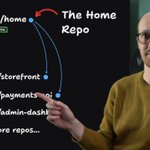
Monorepo or split repos: which one do your coding agents actually work better in, and why?

When I first told @MParakhin that we were planning to move to a monorepo he said wisely:
Moving to a Monorepo is an idea that every engineer absolutely hates, and that once its there, no engineer would ever want to work at a company that doesn't use one. We will definitely do it.
Mr. Ånand retweeted
Vercel's agent-desktop lets an agent use Mac, Windows and Linux apps through the accessibility tree, the same tree screen readers use.
Which means your a11y labels are now part of your agent API, whether you planned for that or not.
Every element comes back as a ref in JSON and the agent acts on the ref, no pixel matching. A button with no label comes back as a ref with no name, and the agent has to guess what it does.
Teams that took accessibility seriously years ago get this almost for free. Everyone else should run agent-desktop snapshot on their own app and look at what an agent actually sees 👀

Mr. Ånand retweeted
𝗡𝗲𝘀𝘁𝗝𝗦'𝘀 𝗼𝗳𝗳𝗶𝗰𝗶𝗮𝗹 𝗮𝗴𝗲𝗻𝘁 𝘀𝗸𝗶𝗹𝗹𝘀 𝗮𝗿𝗲 𝗮𝗶𝗺𝗲𝗱 𝗮𝘁 𝗯𝘂𝗴𝘀 𝘁𝗵𝗮𝘁 𝘀𝘁𝗶𝗹𝗹 𝗽𝗮𝘀𝘀 𝘆𝗼𝘂𝗿 𝘁𝗲𝘀𝘁𝘀
Like a sign-in response that reveals which emails have accounts, or the IsOptional() decorator letting null through to a 500.
6 skills: nestjs, feature, auth, data, testing and production. Every recipe was run on the released packages.
One npx command copies them into .agents/skills/ for Codex and Cursor, or .claude/skills/ for Claude Code.
github.com/nestjs/agent-skil…


🚀 Introducing the official NestJS agent skills!
Today’s APIs, first-party packages and the mistakes that still pass tests, for your coding agent 🧠
⚡ npx @nestjs/skills add
✨ Built into nest new
🤖 Claude Code, Codex, Cursor & more
👉 github.com/nestjs/agent-skil…

Mr. Ånand retweeted
𝟯𝟭% 𝗼𝗳 𝘁𝗵𝗲 𝗿𝗲𝗾𝘂𝗶𝗿𝗲𝗺𝗲𝗻𝘁𝘀 𝗖𝗹𝗮𝘂𝗱𝗲 𝗢𝗽𝘂𝘀 𝟱.𝟱 𝗿𝗲𝗽𝗼𝗿𝘁𝗲𝗱 𝗮𝘀 "𝗱𝗼𝗻𝗲" 𝗳𝗮𝗶𝗹𝗲𝗱 𝘁𝗵𝗲𝗶𝗿 𝘁𝗲𝘀𝘁𝘀
SWE-CoWork is a new benchmark from TokenWave AI. It drops a coding agent into a simulated team of 26 colleagues, on 101 tasks from 101 real repos. The agent starts from a short handoff and has to ask around for the requirements.
→ Opus 5.5 passes 63.84% of the test checks, GPT-6 Astra 62.91%. They fully finish 7 and 8 of the 101 tasks
→ Give Astra the full spec up front and passed checks go to 78.84%. Fully finished tasks stay at 8
→ In Opus 5.5's runs, 153 of 450 questions a teammate put off never got a follow-up, with a median 7.1 hours of budget left

Handoff capabilities are something I am looking at closely with agents. They are still hard to code for agents.
SWE-CoWork measures this by putting an agent in a simulated team with tickets, docs, and teammates it can ask. It then has to deliver a patch that passes hidden tests across 101 real repos.
The best model fully finished 8 of 101 tasks. For Claude Opus 5.5, more than half of the failed checks came after the agent already had the requirement.
Great work from @TokenWaveai.

Mr. Ånand retweeted
Good to see this approach to a shared company brain👀
Any small org using Claude Code can do wonders with token maxxing, but non-technical people sometimes get left behind.
Now set up the whole thing once, and it works anywhere, even from phones.
Anyone on the team can:
→ work from the same files
→ use the same skills and MCP servers
→ pick up a teammate's session

We just open-sourced Trina AX, a Claude Code server for your whole team.
I help companies roll out Claude Code. The hard part is getting the whole team to use it well.
Usually one or two people get good at it. Everyone else opens it in an empty folder with zero company context.
And the best Claude skills are stuck on one person's laptop.
So we built Trina AX. One person connects the team's files, skills and MCP servers once, and everyone's Claude has them from the first prompt. Nobody else has to install Claude Code or copy skills around.
In a shared project, you can open a teammate's session and pick up where they left off.
In the video, a new hire asks for a proposal on her first day and gets a draft that reads like the team's last 12 proposals.
AGPL-3.0, free to self-host.
If it looks useful, a GitHub star really helps:
github.com/trina-app/trina-a…
Mr. Ånand retweeted
DeepSeek V4.1 Flash used 83,012 output tokens on this dragonfly. Hy4-Flash used 20,661 on the same prompt
most of that gap is thinking: 68,304 tokens vs 15,456. both one-shot, high setting, no tools
and you can see where it went. the DeepSeek one has gears all the way down the tail

Hy4-Flash vs DeepSeek-v4.1-Flash-1017 !
Left: deepseek-v4.1-flash-1017 (high)
Right: hy4-flash (high)
Both one-shot, no harness, no tool calls, same prompt to create a mechanical flying dragonfly !
Two flash models, but way different token count for same task.
Looking at the result itself, deepseek-v4.1-flash one is better, it's more mechanical. Hy4-flash does the job, but it's more basic and fall short on the expectation.
When it comes to token usage:
Deepseek-v4.1-flash:
think 68,304 | answer 14,708 | out 83,012
Hy4-flash:
think 15,456 | answer 5,205 | out 20,661
Mr. Ånand retweeted
𝗽𝗼𝘁𝗲𝘁𝗼'𝘀 𝘁𝗲𝗮𝗺 𝘀𝗵𝗶𝗽𝗽𝗲𝗱 𝗮𝗯𝗼𝘂𝘁 𝟭𝟭,𝟬𝟬𝟬 𝗣𝗥𝘀 𝗶𝗻 𝗢𝗰𝘁𝗼𝗯𝗲𝗿, 𝗮𝗻𝗱 𝗮𝗿𝗼𝘂𝗻𝗱 𝟬.𝟱% 𝗴𝗼𝘁 𝗿𝗲𝘃𝗲𝗿𝘁𝗲𝗱
when an agent keeps making the same mistake, she moves the fix into a lint rule, a type, a test or the API itself. AGENTS.md is the bottom of her list
in their desktop app, lint rules stop electron-main code and electron-renderer code from importing each other

Mr. Ånand retweeted
𝗙𝗿𝗲𝗲 𝗰𝗼𝘂𝗿𝘀𝗲𝘀 𝘁𝗼 𝗴𝗲𝘁 𝗴𝗼𝗼𝗱 𝗮𝘁 𝗯𝘂𝗶𝗹𝗱𝗶𝗻𝗴 𝘄𝗶𝘁𝗵 𝗰𝗼𝗱𝗶𝗻𝗴 𝗮𝗴𝗲𝗻𝘁𝘀
→ Build Your Own Coding Agent
byoharness.dev/
20 short lessons in Go, from the agent loop and permission gate to MCP and AGENTS.md. MIT
→ Learn Harness Engineering
github.com/walkinglabs/learn…
14 lectures and 8 projects on instruction files, state, verification and handoff. MIT, no sign-up
→ freeCodeCamp: Codex & AI Coding Agents
youtube.com/watch?v=ajfQWhGQ…
Nearly 2 hours on YouTube: nested AGENTS.md, Plan Mode, tests for agent changes, keeping secrets out of reach
→ Microsoft Learn: Optimize DevOps with AI agents on Azure
learn.microsoft.com/en-us/tr…
7 modules, including where to set autonomy limits before an agent touches production
→ JavaScript Mastery: multiple agents with Docker sandboxes
youtube.com/watch?v=Nq8uOOMH…
A full SaaS build with one lead agent and two coding agents, each in its own sandbox
→ Code With Antonio: a personal AI agent from scratch
youtube.com/watch?v=5B1FGk3C…
An agent you control from Telegram or iMessage, built end to end with the source linked
→ Aishwarya Srinivasan: self-improving agents
youtube.com/watch?v=TPBtH5fE…
A 13-minute explainer on the inner task loop vs the outer improvement loop
→ Abhishek Veeramalla: AI Agents Zero to Hero
youtube.com/watch?v=iB4zde_2…
A DevOps series building one agent. Day 8 lets it read your cluster but not restart it

Mr. Ånand retweeted
the sunset and the grass come out almost the same from all four models. the horse is the part that differs
Gemini 4 Krypton, Fable 5.2, Opus 5.5 and DeepSeek V4.1 Flash, same prompt, side by side

Mr. Ånand retweeted
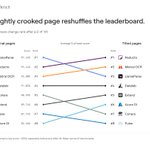
BenchBench tilted PDF pages by 2 to 4 degrees, and 6 of 12 document-parsing benchmarks picked a different winner.
8 parsers, 12 benchmarks, run on clean pages and then on slightly crooked ones. 7 of the 8 parsers changed rank. LlamaParse went from #1 to #3, Reducto moved up to #1.
They also built a site to run the parsers on your own documents, with provider names hidden from the judge:
parsejudge.com

Mr. Ånand retweeted
𝗧𝗼𝗼𝗹𝘀 𝘁𝗵𝗮𝘁 𝘀𝘁𝗼𝗽 𝗖𝗹𝗮𝘂𝗱𝗲 𝗖𝗼𝗱𝗲, 𝗖𝘂𝗿𝘀𝗼𝗿 𝗼𝗿 𝗖𝗼𝗱𝗲𝘅 𝗳𝗿𝗼𝗺 𝘀𝗵𝗶𝗽𝗽𝗶𝗻𝗴 𝗽𝘂𝗿𝗽𝗹𝗲 𝗴𝗿𝗮𝗱𝗶𝗲𝗻𝘁𝘀
→ unslop
Spots the slop first (gradients, glows, emoji labels, shouty copy), then fixes the screen pass by pass
→ Hallmark
Builds the page around what the visitor came to do, then checks it in a real browser for machine-made tells
→ Impeccable
Design commands for your agent, like polish and bolder to steer, critique and audit to review
→ DESIGN .md (Google Labs)
A spec for describing a visual identity to coding agents, with a CLI that lints and diffs it
→ awesome-design-md
DESIGN .md files modelled on popular brands' design systems
→ AssetSnip (we built it at Studio1)
Captures a live page's real colours, fonts, SVGs and images and writes a DESIGN .md from them
assetsnip.com

Mr. Ånand retweeted
DrivingBench hooked AI models up to a real Tesla Model 3 and let 8 frontier VLMs and 6 robot models drive courses none of them had seen
one VLM made it to the finish. it took 26 minutes on its best run

Introducing DrivingBench v2 🧵
We wired a Tesla Model 3 so any AI model can drive it, and put 8 frontier VLMs (Claude, GPT, Grok, Gemini models) and 6 fine-tuned robot models (VLAs & WAMs) behind the wheel.
A new lot and two new courses, none of which they’d seen. Only one VLM ever reached the finish, and its fastest run took 26 minutes. 🏁
Mr. Ånand retweeted
A 27k-star GitHub repo for anyone whose local AWS setup broke this year.
LocalStack's community edition was sunset in March 2026 and now needs an auth token.
Floci is a free, MIT-licensed AWS emulator. Point your AWS CLI, SDK, Terraform or CDK at localhost:4566 and keep your workflow:
floci start → eval $(floci env) → aws s3 mb s3://my-bucket
The project's own numbers vs LocalStack Community:
→ ~24 ms startup vs ~3.3 s
→ ~13 MiB idle memory vs ~143 MiB
→ ~90 MB image vs ~1.0 GB
→ Lambda, RDS, ECS and EKS on real Docker, not mocks
Those are their numbers, so time your own CI before you switch.
100% free and open source.
Mr. Ånand retweeted
Anthropic gave 50 professional analysts a coding agent with a hidden coin-flip opinion on four analysis choices. The analysts went with the coin 86% of the time.
It was a realistic causal-inference task in VS Code, using Claude Code on Opus 4.8. The agent was told to argue for its assigned lean, change its mind if the evidence called for it, and never mislead. If the lean made no difference you'd expect about 50%.
When an analyst had already said what they preferred, they switched 60% of the time if the agent disagreed, and 6% of the time if it agreed.
Afterwards 77% explained their choices using the agent's own arguments, sometimes nearly word for word. Only 15% credited the agent.
The group with the agent also made far fewer serious errors, 3 of 50 against 6 of 11 without it (a smaller, less experienced group), so this isn't a case for dropping agents. Anthropic says the lean was made stronger on purpose, and it's one task with one model.
The cheap fix I see is writing down your own pick before the agent weighs in, then asking it for the best case for the other option.
When did you last overrule your agent on a judgment call?

Mr. Ånand retweeted
does the teacher need to write every token when you distill new docs into a model?
a Stanford paper says no. the student writes the rollout, and the teacher (same model, doc in context) steps in only where their next-token guesses split
near on-policy accuracy, 38–69% fewer supervised tokens, and less forgetting
arxiv.org/abs/2611.12016

Mr. Ånand retweeted
JetBrains open-sourced ThinkRail, an IDE built around the pi coding agent, and it's at 6,800 GitHub stars.
Each task gets its own git worktree and branch, so agents work in parallel without touching your checkout. Merge the good branch, delete the rest.
The agent keeps project knowledge in SPEC.md files next to the code, so what it learned survives the session.
Apache-2.0. You connect your own model provider.
If you've been running three Claude Code tabs on one checkout, this is the setup to look at.
github.com/JetBrains/thinkra…

Mr. Ånand retweeted

We just open-sourced Trina AX, a Claude Code server for your whole team.
I help companies roll out Claude Code. The hard part is getting the whole team to use it well.
Usually one or two people get good at it. Everyone else opens it in an empty folder with zero company context.
And the best Claude skills are stuck on one person's laptop.
So we built Trina AX. One person connects the team's files, skills and MCP servers once, and everyone's Claude has them from the first prompt. Nobody else has to install Claude Code or copy skills around.
In a shared project, you can open a teammate's session and pick up where they left off.
In the video, a new hire asks for a proposal on her first day and gets a draft that reads like the team's last 12 proposals.
AGPL-3.0, free to self-host.
If it looks useful, a GitHub star really helps:
github.com/trina-app/trina-a…