

The American Museum of Natural History is one of the world's preeminent scientific and cultural institutions. This is not a monitored account.
- Tweets25.1K
- Following866
- Followers469K
- Likes14.6K




ALT A photo of an Australian Brush-turkey. It has dark feathers on its body, a yellow band of flesh around its neck, and a red head and neck.

ALT A photo of a five-toed jerboa. The animal is standing on sandy terrain at night. It is tannish in color, with huge kangaroo-like hind feet and enormous ears. It has a long tufted tail and a small, mouse-like body.

ALT A photo of a granulated sea star on what appears to be a reef. The sea star is pink in color, with patterning of a slightly darker shade. It has thick arms with rounded tips.

ALT A photo of a giant wētā in a human hand. The animal resembles an enormous grasshopper. It has long antennae and a bulky, brownish body.

ALT A photo of a red-necked pademelon visible in profile, surrounded by grass. The animal resembles a miniature kangaroo. It’s gray in color with a pale underbelly and reddish fur at its nape.

ALT Head-on shot of a an Orange Dove perched on a branch in the treetop facing the left. It has bold orange plumage everywhere on its body, except on its head which is green. Green foliage is in the background.

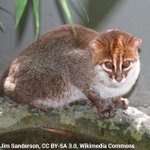
ALT Head on shot of a flat-headed cat sitting at the water's edge. It looks as if it's tucking its limbs close to its body. The cat has brownish-red fur and a flat head and is staring toward the viewer.

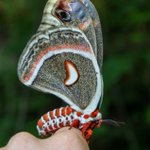
ALT A photo of a cercopia moth perched on a human hand. The moth’s wings are large. It is patterned with red and white and it has a fuzzy texture.

ALT Close up of a Cephea cephea jelly in bright blue water. Its body looks somewhat like an upside down cauliflower with tinges of magenta.

ALT A photo of a hog-nosed shrew rat. It resembles a mouse, with brown fur and a white underbelly. Its nose resembles that of a pig.

ALT A close up photo of a visored bat. The bat is covered in white fur and has a fleshy appendage above its green eyes. It has large ears and pink skin on its face.

ALT A photo of the Museum’s mummified hadrosaur. The animal is laying on its side, with its limbs in the air. It is brownish in color.

ALT Head-on shot of a group of vampire bats hanging upside down from the ceiling of a cave. They have brownish-black fur on their backsides, lighter gray fur on their bellies, triangular-shaped ears with bare pink skin, a flat pink nose, and dark gray wings with bare skin.

ALT A photo of a ghost mantis perched on a green leaf. The mantis is brownish in color with the texture and patterning of a dried leaf. It has spindly legs and a large cone-shaped head.

ALT A photo of a satanic leaf tailed gecko sitting on a branch. The reptile is dark in color with yellowish splotches. Its eyes, which are fixed directly at the viewer, are red.

ALT A close up photo of a wolf spider. The animal is covered in brownish fuzz. It is holding a wasp in its jaws.

ALT A photo of a striped pyjama squid. Its skin has a pattern of white and maroon stripes.

ALT A photo of a white Common Raven perched on a branch. The animal is covered in white plumage, has a downward-curved white beak, and blue eyes.

ALT A photo of a blue spotted stingray. The animal is a dark greenish gray with a multitude of vibrant blue spots. Its body is flat and pancake-shaped.

ALT Pale finger-like fruiting bodies protruding from the ground beside a tree trunk. It looks as if a pair of hands are reaching out from below.