

Our Institute brings together scientists and clinicians from all UCSF campuses to address the most critical and intractable questions related to Aging.
San Francisco, CA
Joined January 2021
- Tweets1.4K
- Following366
- Followers1.4K
- Likes546



Pinned Tweet
We bring together UCSF scientists and clinicians to uncover mechanisms behind aging, develop novel diagnostic/therapeutic tools, and establish best practices for providing equitable care to older adults in our communities. geroscience.ucsf.edu/

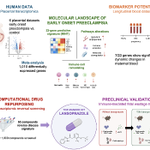
A common heartburn drug may have a new use. In iScience, BARI’s Marina Sirota and team used placental gene signatures to identify lansoprazole as a candidate for preeclampsia, and it improved outcomes in a mouse model. bit.ly/48nrnwH

2
126
The blood-brain barrier doesn’t just keep things out, it selectively lets protective proteins in. In Cell, BARI’s Andrew Yang and team show this transport breaks down early in Alzheimer’s models, and restoring one liver-made protein helps rescue brain function.
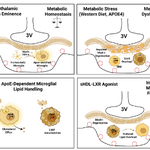
Microglia in a key brain region use ApoE to handle lipids and support metabolic control. In Cell Reports, BARI’s Martin Valdearcos and team show that APOE4 worsens lipid buildup and myelin changes on a Western diet, and that boosting LXR can help. bit.ly/4kOWmZQ

Osteoarthritis pain doesn’t always match the damage in the joint, especially with obesity. In Osteoarthritis and Cartilage, BARI’s Kelsey Collins and team show that leptin drives pain by reprogramming sensory neurons, not by signaling through cartilage. oarsijournal.com/article/S10…

124
Meet this year’s BARI Postdoctoral Fellows! Their work spans stem cells, metabolism, reprogramming, glia, and lung fibrosis. Congrats to these early-career scientists advancing independent research in aging biology. geroscience.ucsf.edu/news/ba…

BARI’s Diana Laird is part of the Tabula Sapiens Consortium behind a major Cell resource: an expanded single-cell atlas of 1.1million+ human cells across 28 tissues. Among the insights is how senescence looks different depending on cell type and tissue. bit.ly/4zoEngJ

1
2
283
Congrats to the new BARI/Hillblom Graduate Fellows! Since 2021, BARI/Hillblom has supported 35 graduate students across 13 programs. Excited to see the next gen of aging researchers thrive! geroscience.ucsf.edu/news/ba…

Some patients with autoimmune lung disease develop progressive fibrosis that looks a lot like idiopathic pulmonary fibrosis. In a Thorax review, BARI’s Paul Wolters & team argue that different diseases can converge on shared fibrotic pathways, including age-related ones.

1
121

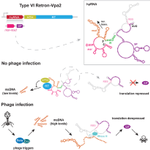
Bacteria have immune systems that kill infected cells to stop phage spread. In Molecular Cell, BARI’s Seth Shipman and colleagues show a non-canonical retron that only makes DNA when phage arrives, then uses that DNA to unlock translation of a toxin. sciencedirect.com/science/ar…

1
121
Exciting opportunity at UCSF!
The Department of Cell and Tissue Biology is recruiting a tenure-track Assistant or Associate Professor studying the cell biology of disease, with applications on the cell biology of aging especially encouraged!
Join a vibrant, collaborative community of researchers across the Parnassus campus. Apply by Dec 1: aprecruit.ucsf.edu/JPF06272 #FacultyJobs #UCSF #CellBiology #AgingResearch #Geroscience

2
157
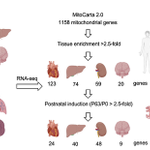
BARI’s Guo Huang & colleagues identify Coq10a, a muscle-enriched mitochondrial protein as a regulator of postnatal heart growth. In PNAS, loss of Coq10a drives heart enlargement via altered coenzyme Q distribution and PPAR signaling, without hurting normal energy production.


New tools for phage therapy screening: BARI’s Seth Shipman reports Detectrons, which converts a detected RNA sequence into a durable DNA barcode. In Nature Biotechnology, they show multiplexed, live-cell detection of which phages infect bacteria. pubmed.ncbi.nlm.nih.gov/4283…

1
120
BARI’s Aric Prather reports a small randomized trial of lemborexant for daytime sleep in night-shift workers. The drug didn’t beat placebo overall, but participants on the 10mg dose showed a signal worth testing in larger studies. link.springer.com/article/10…

1
119
BARI’s Dengke Ma reviews strategies to take on APOE4 in Alzheimer’s. The focus is restoring healthy cholesterol handling in the brain, with approaches that range from small molecules to antibodies and systemic lipid drugs. febs.onlinelibrary.wiley.com…

86
When TBK1 doesn’t work well enough, cells struggle to clear waste and control inflammation. In this new review, BARI’s Daniel Mordes explains how this dual hit contributes to ALS and related dementias, and what it means for future therapies. frontiersin.org/journals/neu…


